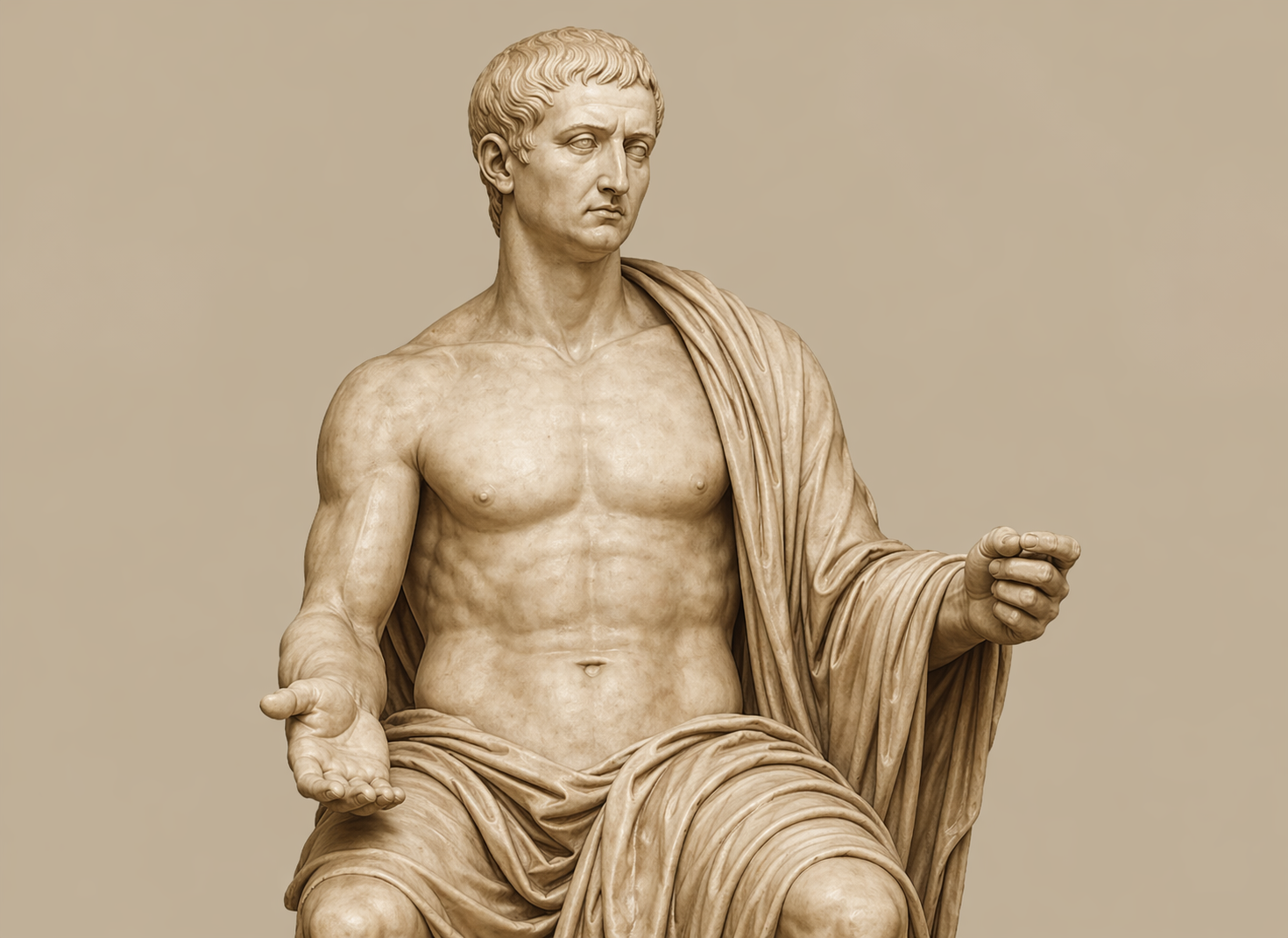
History
Nikita Tsybikov
Historian
The Stepson of the Princeps
The future emperor was born in 42 BC at the height of the civil war between the allies of the slain Caesar and the republicans. He came from the ancient patrician Claudian family, and his father, Tiberius Claudius Nero, was an experienced military leader who first served under Caesar and then Mark Antony.
The Claudians found themselves in the whirlwind of political storms. Initially in Mark Antony's camp, they fled Rome after the defeat in the Perusine War against Octavian. However, in 39 BC, shortly after the amnesty, Octavian fell in love with Tiberius's mother, Livia, secured her divorce, and married her, even though Livia was already pregnant with Drusus. Thus, Tiberius became the stepson of the most powerful man in Rome.
Nevertheless, Tiberius and his younger brother Drusus were raised in their biological father's house, receiving an excellent education in the Greek spirit along with thorough military training. Both boys were exceptionally talented and healthy, although they differed markedly in character: the reserved and restrained Tiberius was the complete opposite of the sociable and good-natured Drusus. Despite their differences, the brothers maintained a warm relationship throughout their lives.
After their father's death in 33 BC, nine-year-old Tiberius delivered his first public speech at his funeral, demonstrating abilities beyond his years. The perceptive Octavian immediately recognized the potential of both stepsons. During the triumph in 29 BC, following the final victory over Mark Antony, the emperor took them as his companions.
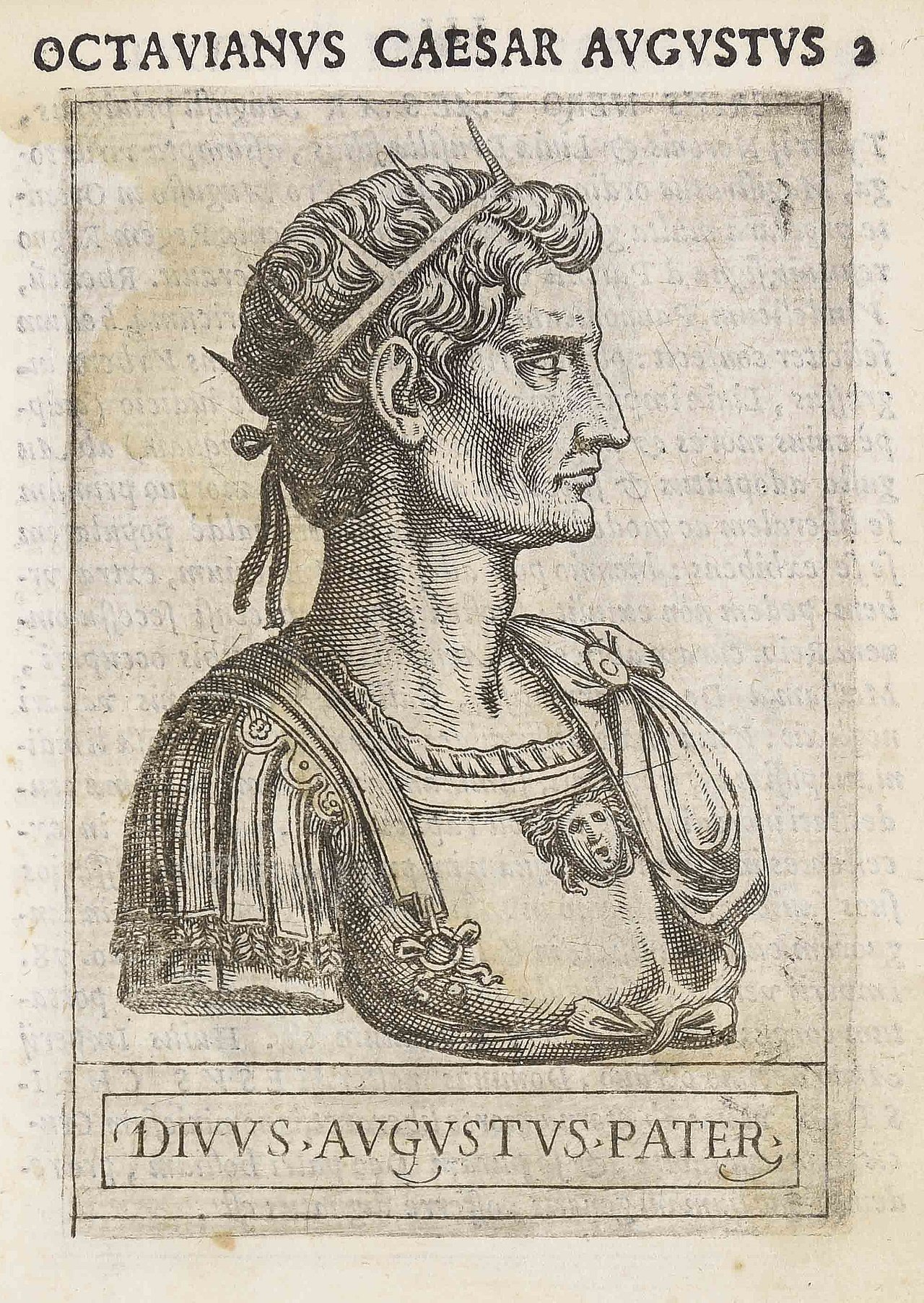
Commander and Administrator
Tiberius began his military career at the age of 15. In 26 BC, he became a military tribune in Cantabria, where under the command of Agrippa, Augustus's best general, he participated in the war against the local tribes. This campaign became an excellent school of military art for him.
Three years later, in 23 BC, Tiberius brilliantly resolved the crisis of Rome's grain supply, demonstrating extraordinary administrative abilities. Velleius Paterculus aptly noted: "By how he acted, he revealed what he would become", predicting Tiberius's future successes.
Augustus began to entrust his stepson with increasingly responsible tasks. Tiberius participated in important legal proceedings and investigated abuses in Italy. In 23 BC, he acted as a prosecutor against the conspirator Fannius Caepio, when he first applied the law on insulting the majesty of the Roman people – a tool that would later play a sinister role.
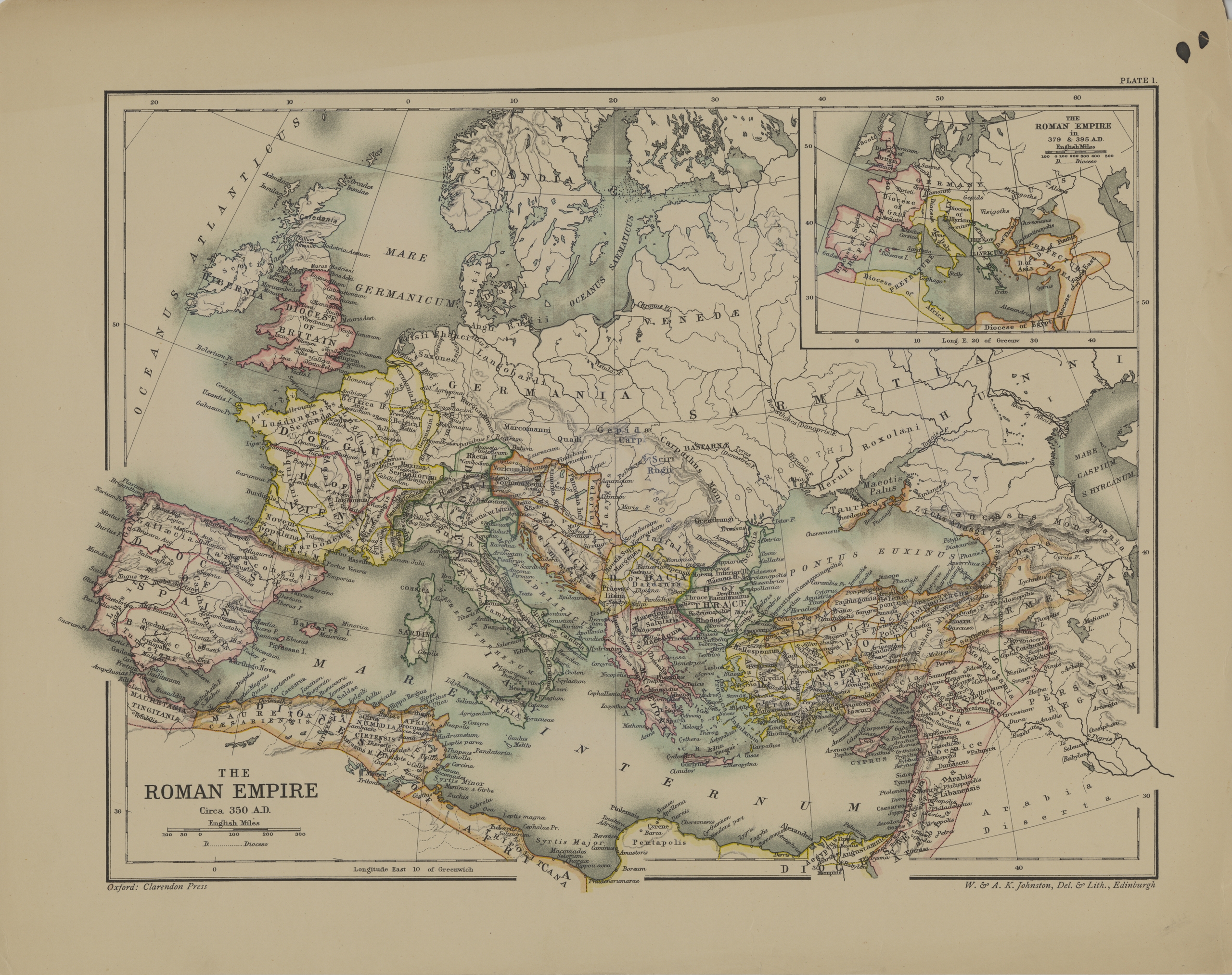
In 20 BC, Tiberius led a crucial diplomatic mission to Parthia, where he brilliantly resolved the Armenian question. He managed to place the loyal Tigranes III on the Armenian throne and secured the return of Roman standards lost at Carrhae in 53 BC. This diplomatic triumph significantly strengthened Rome's position in the East.
As a reward for his successes, Augustus appointed Tiberius as governor of Transalpine Gaul in 19 BC. The young governor proved himself to be a capable administrator, successfully dealing with regular rebellions and barbarian raids.
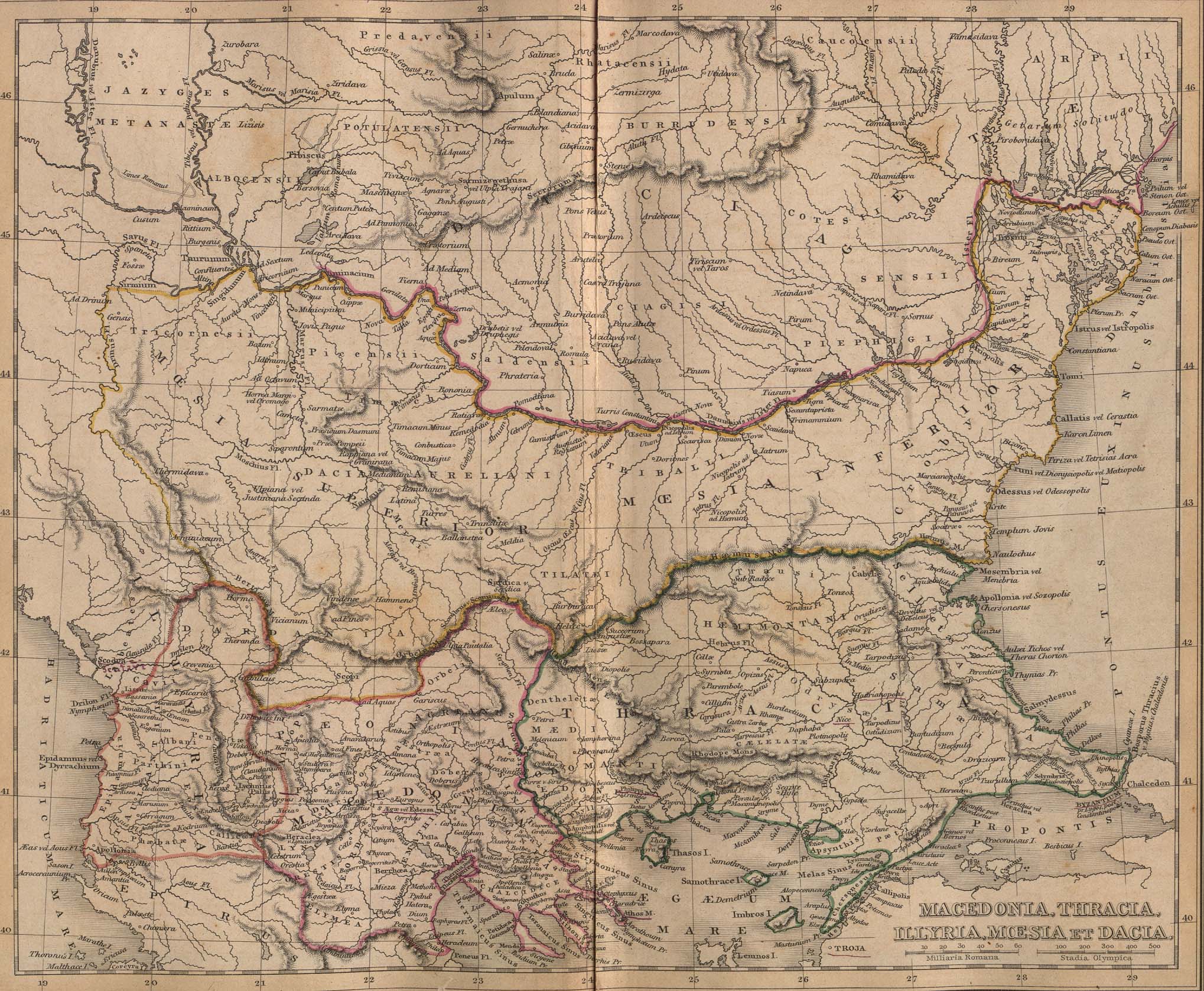
In 16 – 15 BC, Tiberius, as praetor, led a campaign against the Alpine tribes of the Raeti and Vindelici. He was accompanied by his younger brother Drusus, who proved to be a worthy companion. Tiberius himself demonstrated outstanding qualities as a commander: careful treatment of soldiers, willingness to share all the hardships of campaign life, and the prudent caution of a strategist. Drusus, following his elder brother's example, earned the same loyalty among the soldiers. Their joint efforts culminated in complete success: the Roman borders in the north were extended to the Danube.
Augustus highly valued the military talents of both brothers. Soon, Tiberius, as consul, was tasked with continuing the campaign in Pannonia, where he replaced the suddenly deceased Agrippa – his mentor and father-in-law. This fact testified to the recognition of Tiberius as Augustus's best commander. From 12 to 7 BC, despite fierce resistance from the Breuci and Dalmatians, Tiberius completely subdued Pannonia and expanded the Empire's Danubian territories. Meanwhile, Drusus reached the Elbe in Germany.
Problematic Heir
In 12 BC, Agrippa, the most likely successor to Augustus, passed away, after which Tiberius found himself among the probable heirs. To secure this status, the emperor insisted that Tiberius divorce his wife Vipsania, the mother of his son Drusus, and marry Octavian's daughter and Agrippa's widow, Julia. The relationship between the forced spouses did not work out, and Julia became known for her disdain for her new husband and open infidelities. She considered her own children from Agrippa – Gaius and Lucius – as potential heirs.
In 9 BC, Tiberius's brother Drusus died in his arms after an unfortunate fall from a horse during the German campaign.
Divorce from his beloved woman and marriage to one he did not love, the death of his brother, and competition from younger rivals weakened Tiberius. In 6 BC, despite being a tribune and the de facto co-ruler of Augustus, Tiberius unexpectedly withdrew into voluntary exile on the island of Rhodes.
For some time, he continued to be perceived as a significant political figure, but in 1 BC, his tribune powers expired, and Tiberius completely lost political influence. His requests to return to Rome as a private citizen were consistently rejected by the offended Augustus.
However, at the turn of the era, another unexpected twist of fate occurred. In 2 AD, the scandalous reputation of the dissolute Julia finally led to her exile, after which Tiberius, as a private citizen, finally returned to Rome. In the same year, Lucius died of illness, and in 4 AD, Gaius died in Armenia. Rumor attributed responsibility for these deaths to Livia, who was clearing the way to the principate for her own son. Augustus indeed had no heirs left except Tiberius.
In the same 4 AD, the emperor officially adopted Tiberius, and he, in turn, adopted his nephew Germanicus, the son of the late Drusus. Tiberius once again became a tribune, and in addition, he was granted imperium, the highest military authority.
As a successor, Tiberius once again went to war, leading the suppression of the Great Illyrian Revolt from 6 to 9 AD. As Suetonius noted: "He was entrusted with this war, the most difficult of all Roman wars with external enemies after the Punic Wars". Tiberius swiftly redeployed legions from other provinces and completely suppressed the revolt, restoring Roman control over Illyricum and Pannonia.
Having barely completed the Illyrian campaign, Tiberius received news of the disaster in the Teutoburg Forest, where three legions under the command of Quintilius Varus were lost. He immediately went to Germany, where he managed to stabilize the situation and strengthen the Rhine border, although full control over the region could not be regained.
On August 19, 14 AD, Emperor Augustus died, and Tiberius finally became princeps himself. Despite complex personal relations, Augustus made a wise choice—his successor was a 56-year-old experienced statesman and military leader with an impeccable reputation. The transfer of power went smoothly—the Senate, army, and magistrates swore allegiance to the new princeps without any issues.
The Beginning of the Reign
In his time, Augustus led Rome as a result of victory in a series of civil wars that had tormented Rome for several decades. Ending this bloody era, he proclaimed the “restoration of the Republic.”
Despite Tiberius's authority, the principle of hereditary power transfer still caused confusion among the uninitiated Romans, so the new princeps demonstratively emphasized his commitment to republican traditions. Suetonius cites the emperor's characteristic words: “I have said and repeat, senators, that a good and benevolent ruler, entrusted with such extensive and complete power by you, must always be a servant to the Senate, sometimes to the entire people...” Tacitus, however, explains this position as political calculation: “He tried to hide the true meaning of his motives as deeply as possible.”
Both historians describe in detail the scene of Tiberius's refusal of power, allegedly agreeing to take the reins only after persistent persuasion from the Senate. In their account, Tiberius sincerely tried to share power with the senators, but they voluntarily refused. A very telling detail.
Reserved and cautious by nature, Tiberius well understood the risks of the princeps position, having witnessed numerous conspiracies against Augustus. It seems the new emperor genuinely sought to share the burden of responsibility with the Senate, not wanting to become the sole target for criticism in case of political failures. Moreover, the publicity inevitably accompanying the position of “first citizen” clearly weighed on him. Tiberius became princeps more out of a sense of duty than a thirst for power. Tacitus is perhaps unfair here.
Tiberius began his reign with the diplomatic resolution of legionary mutinies in Pannonia and Germany, where their pay had been delayed. Subsequently, timely payments became a hallmark of his policy, as the emperor understood well what power relied on.
His financial policy was equally balanced. The emperor reduced large-scale construction and limited funding for lavish games, aiming to stabilize state finances depleted after the Illyrian uprising and German campaigns. At the same time, he wisely reduced taxes to increase their collection—a measure atypical for those times. Explaining his tax policy, Tiberius said: “A good shepherd shears his sheep, but does not flay them”. He left a full treasury to his successor Caligula.
Stable finances favored social policy: generous distribution of bread, control over food prices, and large-scale assistance in case of disasters. Although in the classic formula of “bread and circuses” the latter were rather lacking due to Tiberius's frugality, there was no shortage of bread.
Guided by principles of economy and caution, the emperor abandoned Augustus's expansionist policy. During Tiberius's reign, the empire did not engage in any conquest wars, except for the punitive expeditions in Germany by his stepson Germanicus. Instead of military adventures, Tiberius preferred diplomacy. For example, in 36 AD, he once again placed a loyal person on the Armenian throne and secured his recognition from Parthia.
The Illyrian uprising made a deep impression on Tiberius, showing that excessive exploitation of provinces could lead to a large-scale rebellion. The emperor tightened control over governors and, as mentioned above, reduced the tax burden. However, these measures reduced his popularity among senators and equestrians. For the senatorial class, plundering provinces was a traditional source of income, and equestrian publicans lost part of their profits from tax collection. Nevertheless, the effectiveness of such a policy is evident: no uprisings comparable to the Illyrian one occurred under Tiberius.
However, in historical memory, Tiberius unfortunately remained not as a wise administrator.
Consolidation of Power
The main weakness of the princeps was a lack of charisma. Unlike Augustus, who skillfully crafted his image and masterfully played to the public, Tiberius either underestimated the importance of propaganda or simply did not possess the necessary qualities. He seemed to deliberately minimize his public presence, appearing in public only when absolutely necessary.
One of Tiberius's most important reforms was the transfer of the right to elect and judge magistrates from the popular assemblies to the Senate. The reclusive emperor found it much more comfortable to control senators behind the scenes than to deal with restless plebeian gatherings. Paradoxically, the formal strengthening of the Senate simultaneously led to the strengthening of the emperor's sole power.
Tiberius methodically consulted with senators on all important issues, but never clearly expressed his own opinion. This strategy provoked endless strife among senators, preventing the formation of a unified opposition. The law on treason was most often used by the senators themselves against each other. The emperor himself preferred to spend time outside Rome, away from prying eyes. His "right hand" in the capital became the commander of the Praetorian Guard (Praetorian Prefect) Lucius Aelius Sejanus.
In 19 AD, his nephew and adopted son Germanicus suddenly died, and in 23 AD, his own son Drusus. Rumor attributed the poisoning of Germanicus to Tiberius himself, and Drusus's death was blamed on his widow Livilla, who had entered into a love affair with Sejanus. Now the potential successors were to be one of the young children of both deceased. Parties of supporters of the house of Germanicus, led by his widow Agrippina, and the house of Drusus, led by his widow Livilla and her lover Sejanus, emerged.
In 26 AD, Tiberius additionally quarreled with his mother Livia and finally retired to the island of Capri off the coast of Campania. Isolation on the island was his usual reaction to emotional upheavals.
"The Recluse of Capri"
Fearing that the young heirs would not be able to withstand the senatorial opposition, Tiberius began systematically "cleansing" the Senate. The law on treason was applied more and more often, and the main executor of repressions in Rome was, of course, Sejanus. Having withdrawn from affairs, the emperor gradually lost control over the capital, becoming dependent on the Praetorian Prefect. Sejanus, apparently, either aimed to become a successor himself or hoped to become a regent for the young Gemellus, the son of Drusus and Livilla.
As part of the struggle against the supporters of the house of Germanicus, Sejanus exiled his widow Agrippina, and his children Nero and Drusus were thrown into prison, where Nero either committed suicide or died of starvation in 31 AD. Only the youngest son of Germanicus, known by his nickname "Little Boot" - Caligula, was not subjected to repressions.
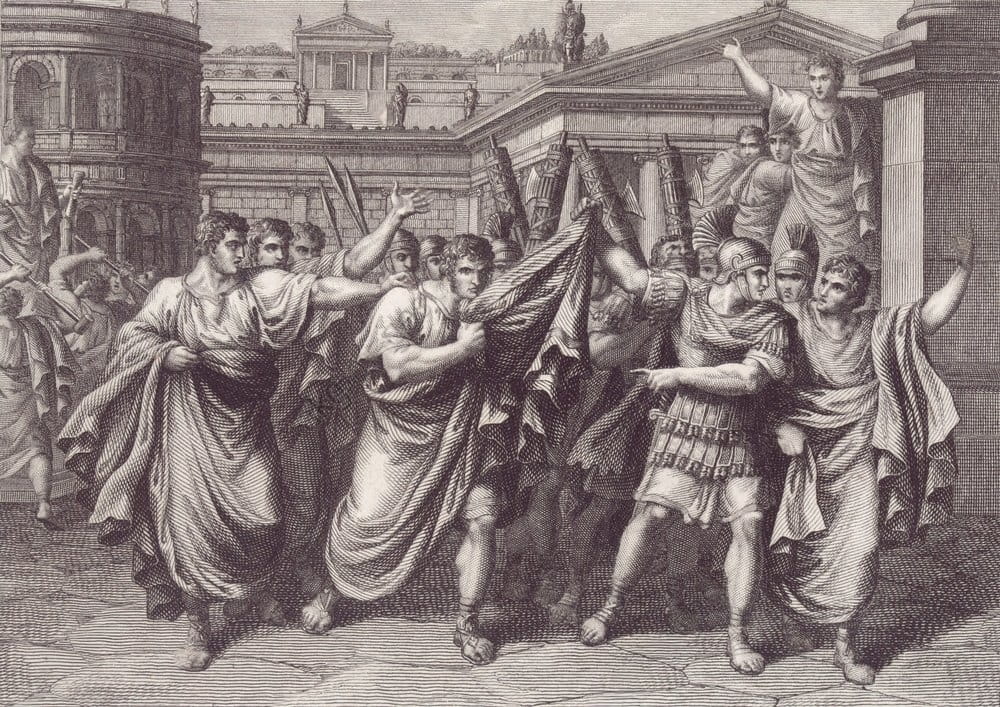
Finally, the Praetorian Prefect went all-in and, together with Livilla, organized a conspiracy against the emperor himself. However, the conspiracy was uncovered, leading some authors to suggest that Tiberius had initially manipulated Sejanus to deal with the house of Germanicus through him and then "disposed" of the executor. In 31 AD, Sejanus was arrested right during a Senate session by the new Praetorian Prefect Quintus Macro and immediately executed. Livilla either committed suicide or was sent to her mother's house, where she was starved to death.
The plot involving Sejanus heightened Tiberius's natural caution, which ultimately turned into paranoia. The period from 31 to 37 AD became the peak of repressions and trials for treason. Despite the deaths of the leaders of the Drusus family party—Livilla and Sejanus—Tiberius did not spare the disgraced leaders of the Germanicus family party. In 33 AD, Agrippina and her son Drusus died of starvation in prison.
However, it is important to understand the real scale of the repressions. Tacitus reports about 50-60 executions, while Suetonius mentions around a hundred. The victims of selective terror were exclusively representatives of the privileged senatorial and equestrian orders.
Despite the moral dubiousness, Tiberius achieved his main goal—clearing the entire political field of opposition for his successors. In 37 AD, the emperor intended to return to Rome, but fell ill on the way and died at the age of 77. The principate passed without any resistance into the joint rule of the last remaining men from both parties: Drusus's son—Gemellus, and Germanicus's son—Caligula. The latter, with the support of Macro, almost immediately seized real power and soon forced his co-ruler to commit suicide.
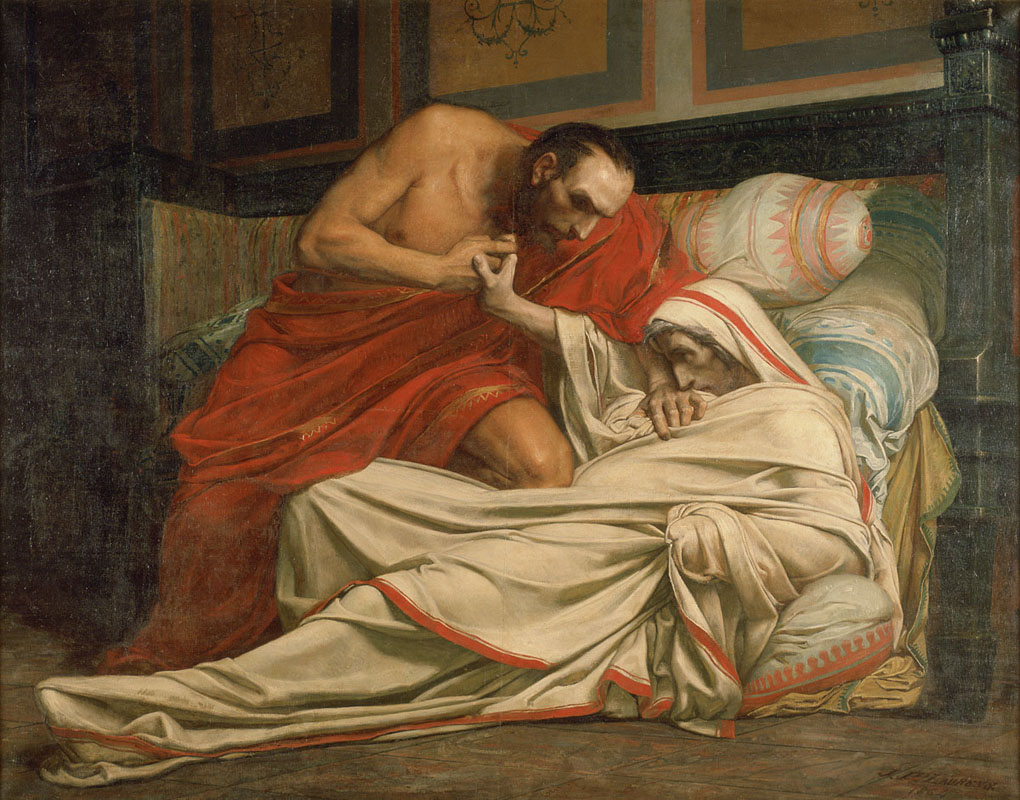
Dio Cassius gave an amazingly accurate characterization of Tiberius: "He was a man with many good and many bad qualities, and when he displayed the good, it seemed there was nothing bad in him, and vice versa." Indeed, his frugality, caution, and asceticism ensured financial stability for the state and peace in the provinces. However, the same caution, turning into paranoia, led to a regime of terror.
The reign of Tiberius became a watershed in the history of the principate. While Augustus, using his unquestionable authority, still maintained the illusion of co-ruling with the Senate, Tiberius by the end of his reign clearly demonstrated that the Senate henceforth depended solely on the will of the princeps.