History

Nikita Tsybikov
Historian
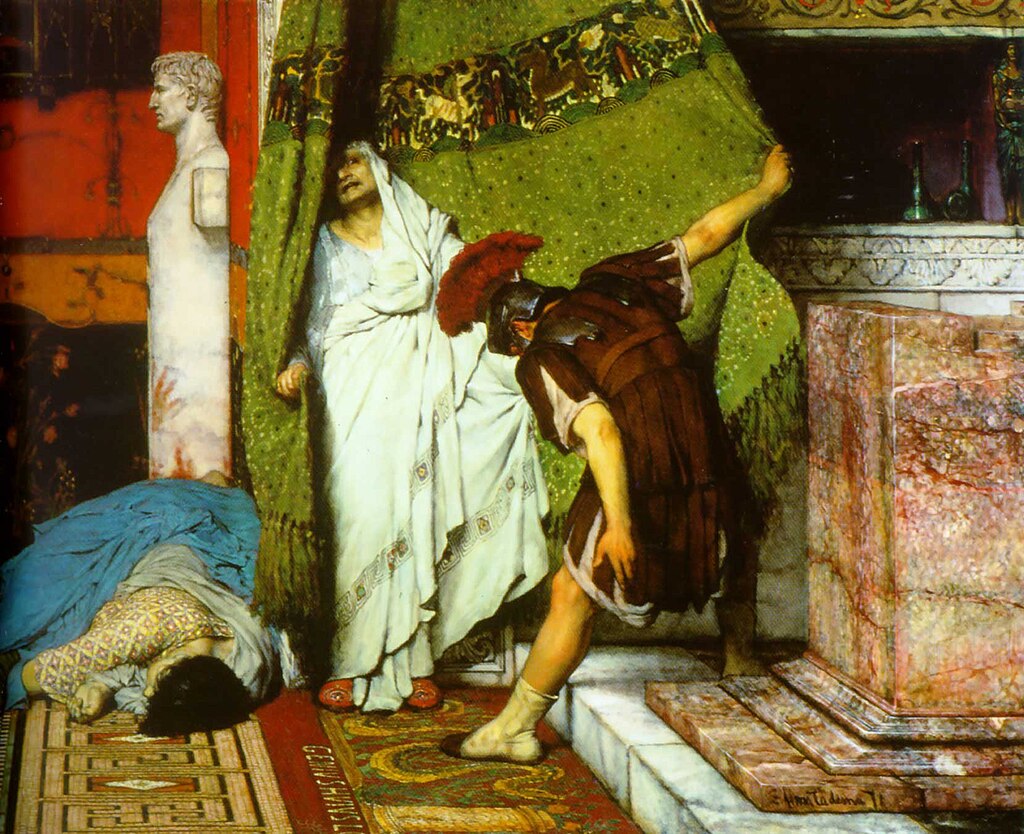
However, the situation remained uncertain, as the Senate had not yet recognized Claudius. Meanwhile, the republicans, having fortified themselves on the Capitol, instead of taking decisive action, were mired in power struggles between leaders Valerius Asiaticus and Marcus Vinicius. Claudius not only enjoyed the support of the Praetorian Guard but was also perceived by the people as the legitimate successor to the popular Caligula among the plebs. Eventually, the senators conceded and recognized him as the new emperor.
Emerging from the shadow of the curtain in Caligula's palace, Claudius finally stepped out of the shadow of his family.
Reign
This time, the emperor was a highly educated and scholarly man who had long endured humiliation from his own family and the upper nobility. Nevertheless, the public was aware of his historical writings, he was respected by the equestrians, and loved by the people.
The first thing Claudius did was generously reward the Praetorians. He dealt moderately with his opponents: only the direct murderers of Caligula—Chaerea and Lupus—and a few junior officers were executed. The rest were granted amnesty.
The legitimacy of the new princeps remained in question, as he came to power through a coup. While Tiberius was adopted by Augustus, and Caligula by Tiberius, Claudius had no direct connection to the Julian house, although he was a great-nephew of Augustus through his sister Octavia. Formally, he belonged to the Claudian family, not the Julian.
Claudius was aware of the precariousness of his position. His first step was to establish relations with the Senate, portraying himself as "first among equals," sitting between the consuls as a people's tribune rather than presiding over them. The Senate once again became a place for resolving important issues. Claudius considered Augustus his model, maintaining the illusion of a "restored Republic."
However, relying solely on the Senate was unsafe. An imperial chancellery was created—a bureaucratic apparatus personally subordinate to the princeps. Its core was made up of freedmen of the Julian house, entirely dependent on the emperor as his clients. An important advantage of former slaves was that they were legally unable to pursue a political career. Only two hundred years later would the children of freedmen, like Diocletian, aspire to supreme power.
The chancellery was divided into four departments:
the correspondence department headed by Narcissus;
the treasury headed by Pallas;
the justice department headed by Callistus;
all other matters were managed by Polybius.
Claudius discussed the most important strategic issues with them before presenting them to the Senate. The most loyal of them was Narcissus, whom Claudius personally freed.
The dominance of freedmen caused discontent among senators, who were outraged by the influence and wealth of yesterday's slaves. Rumors spread that the emperor was dependent on them. However, this was not the case. If his subordinates failed him, they were overthrown, as happened with Polybius or Pallas's brother, Felix.
By 48 AD, Claudius had mostly formed a bureaucratic apparatus, and the emperor decided to take control of the Senate. In 47 AD, taking the position of censor, he began a purge among senators based on property qualifications, excluding those whose wealth was less than 900,000 sesterces. In their place, the Senate was replenished with representatives of the Italian and Gallic nobility, grateful to the emperor for their promotion.
At the same time, the Senate lost the right to mint its own coins. The old aristocracy expressed dissatisfaction, but their protests were suppressed, and conspiracies were uncovered. Suetonius reports that during Claudius's reign, he executed 35 senators and more than 300 equestrians.
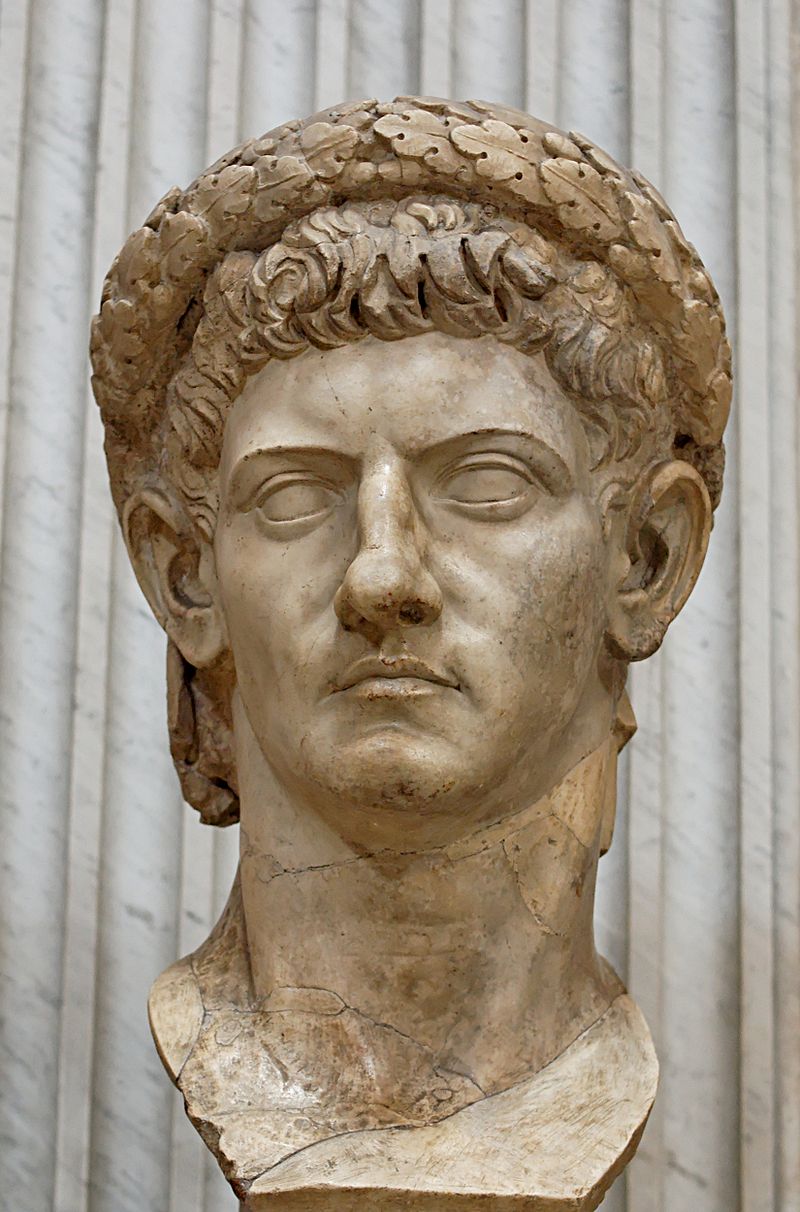
In foreign policy, Rome for the first time since Augustus moved to active expansion. Claudius needed to enhance his prestige, and a successful war was the best way to achieve this. Remembering Caligula's dubious "successes" in Germany and Britain, he decided to achieve a real victory.
Britain, already economically linked with Gaul, became an ideal target. In 40 AD, the Catuvellauni tribe expelled the Roman ally Verica, which became a pretext for invasion. The campaign was led by Aulus Plautius. In 43 AD, four legions landed in Kent and defeated the Catuvellauni on the River Medway. Claudius personally arrived on the island to accept the surrender of the chiefs in Camulodunum. In 16 days, the Romans conquered the entire southeast of Britain. Plautius became the first governor and was awarded an ovation, while Claudius received the right to a triumph. The Senate awarded him the honorary title "Britannicus," which the emperor declined in favor of his son, who went down in history under this name.
However, maintaining troops overseas proved to be extremely expensive. Modern historians believe that the costs of the province exceeded the revenues. Britain became a "subsidized region," and its conquest, while solving immediate tasks, in the long term brought more problems than benefits.
Claudius's conquests were not limited to Britain. Under him, Thrace, Noricum, Lycia, Mauretania, and Judea became part of the Empire. In terms of the scale of foreign policy successes, Claudius was surpassed only by Augustus and Trajan.
The emperor's reign was marked by his active involvement in all spheres of public life. He personally presided over court sessions, resolving disputes both in the Eternal City itself and in the Roman provinces. Under him, large-scale construction was carried out: roads, aqueducts, and canals were built, and to solve the food crisis in Italy, a new port was constructed in Ostia. Claudius did not neglect entertainment either, being known as a great lover of gladiatorial combats and public games. It was to him, according to historical tradition, that the gladiators addressed the famous greeting: "Those who are about to die salute you!"
Family and Heirs
Before coming to power, Claudius was married twice. His third wife was Valeria Messalina, the great-niece of Augustus, who bore him his only son, Britannicus. However, she became famous not for this, but for her insatiable lust—there were the dirtiest rumors about the empress.
Messalina sought at any cost to secure power for the young Britannicus and continued the bad tradition of the Julio-Claudians by eliminating relatives: on her accusations, Julia Livilla (sister of Caligula), Julia Livia (granddaughter of Tiberius), and many others were executed. On her denunciation, the Stoic philosopher Lucius Annaeus Seneca was also sent into exile.
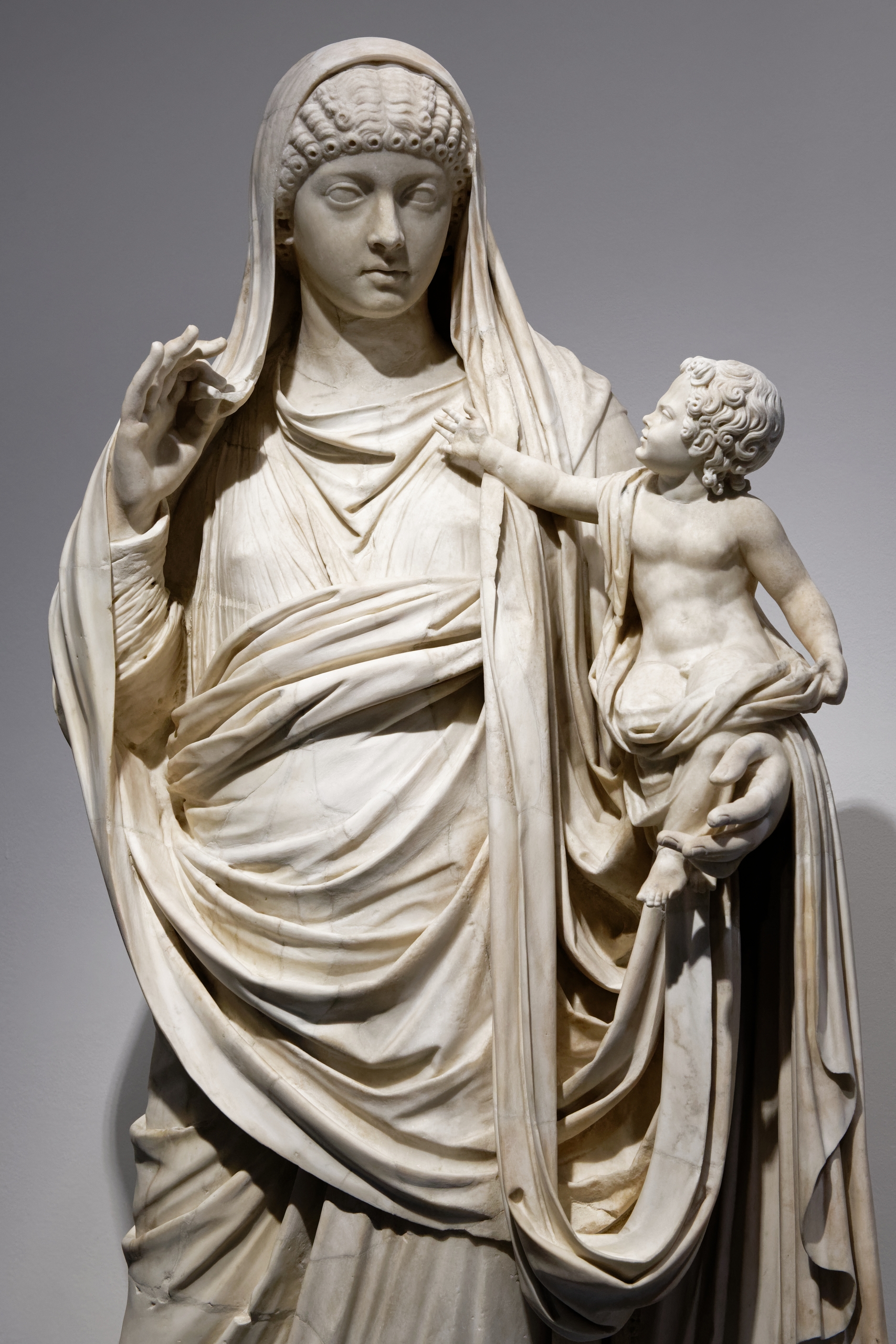
Messalina's intrigues caused discontent at court. A "party" formed against her, led by Julia Agrippina—another sister of Caligula, niece of Claudius, and mother of Lucius. In 47 AD, Pallas became Agrippina's lover and personally interested in her fate, and later Narcissus joined the "party."
Having lost influence, Messalina went all-in. In 48 AD, she organized a conspiracy to kill Claudius so that her lover Gaius Silius could become regent for the young Britannicus. Narcissus exposed the plot, and Messalina and her lover were executed.
Pallas proposed a new wife for Claudius—his lover Agrippina. She was renowned for her beauty, charisma, and authority, and greatly appealed to the passionate womanizer Claudius (interestingly, Suetonius specifically notes that Claudius never liked men). The problem was that marriage to a niece was illegal, but the Senate made an exception for the princeps.
However, the intrigues did not stop there: now Agrippina sought power for her son Lucius. In 49 AD, Seneca was recalled from exile and became the boy's mentor. In 50 AD, the wife convinced Claudius to officially adopt the stepson, which further weakened the already declining position of Britannicus. Lucius received the family name of Claudius—Nero—as a prenomen.
Nevertheless, Claudius still wavered between Nero and Britannicus as his heir. Narcissus sided with the latter, and the emperor once again favored his biological son.
The situation remained uncertain for several more years, but chance decided everything. In 54 AD, Narcissus fell ill and went to Campania for treatment. Agrippina took advantage of the enemy's absence and poisoned her husband by adding poison to his favorite white mushrooms. However, Tacitus believes that Claudius died of old age. In any case, at the decisive moment, Britannicus had no loyal supporters in the capital, and the seventeen-year-old Nero became emperor. Narcissus was killed on Agrippina's orders.
Conclusion
Thanks to Seneca, who was exiled to Corsica under Claudius, the emperor remained in historical memory as an old fool. The philosopher took revenge by writing a biting satire "The Pumpkinification of the Divine Claudius," in which he mocked Claudius's supposed stupidity, his interest in history, his weak oratory skills, and the supposed omnipotence of freedmen. Notably, Seneca remained silent about the wives' debauchery, sparing his patroness Agrippina. Ultimately, the philosopher stooped to childish pettiness, claiming that the emperor soiled himself at death...
According to the more complimentary opinion of Dio Cassius, Claudius was a worthy ruler but easily succumbed to the corrupting influence of wives and freedmen.