History

Nikita Tsybikov
Historian
Antony
Mark Antony was born either in 86, 83, or 82 BC and came from the ancient and influential plebeian family of the Antonii, whose members participated in the drafting of the Law of the Twelve Tables as early as the 5th century BC. His grandfather, Mark Antony the Orator, was a consul and then a censor of the Senate. However, crises and turmoil did not spare the family— the Orator was killed as a result of Marius's repressions because he sided with Sulla. Mark Antony's parents were forced to hide from persecution, which is why the exact place and year of his birth are unknown.
Antony's early years fell during a relatively peaceful time after the war between Marius and Sulla. The young man was not lacking in beauty and physical form, possessed a striking charisma, and spent his youth in "drunkenness, debauchery, and monstrous extravagance," as Plutarch wrote. For Romans, it was not a vice to indulge in passions in youth, but in adulthood, it was deeply condemned. Like any Roman aristocrat, Antony received a good education and, like his grandfather, excelled in oratory, which even his future enemy Marcus Tullius Cicero noted. However, while Cicero belonged to the conservative "Attic" school, which emphasized facts and precision, Antony belonged to the "Asiatic" school, which emphasized spectacle and clarity.
His high birth allowed Antony to take the position of prefect of the cavalry in the troops of the governor of Syria, Aulus Gabinius, where he commanded between 400 and 500 cavalrymen. Together with Gabinius, he went to Judea, where he participated in suppressing the uprising in the vassal kingdom. Antony captured the rebellious Judean king Aristobulus II and his son, and for storming the fortress of Sartaba, he was awarded the honorary military decoration "corona muralis" ("mural crown"), which was given to the first soldier to climb the walls of a besieged city. Antony proved himself a talented commander and gained popularity among the soldiers, which he would not lose until the fateful Battle of Actium.
In 58 BC, in Egypt, Princess Berenice overthrew King Ptolemy XII Auletes, and the latter asked Rome for support. The Senate refused, and then the king offered a huge bribe to the commander of the Roman troops, Gabinius. Going against the Senate was a risky venture, and Gabinius hesitated. Antony, however, persuaded the commander to take the gamble, and in 56 BC, he invaded Egypt, defeated Berenice, and restored Ptolemy to the throne. Antony actively defended the local residents against the embittered Ptolemy and even buried Berenice and her husband with royal honors, earning the love of the Egyptians. In 54 BC, after his term ended, Gabinius returned to Rome, where he was convicted of disobeying the Senate and exiled. Antony managed to avoid prosecution.
Nevertheless, Antony had no desire to remain in Rome, and Gaius Julius Caesar came to his aid, needing talented commanders for the Gallic War. Antony accepted the offer. In Gaul, he served as a legate, that is, a legion commander, and carried out important assignments for Caesar. In 50 BC, Antony was elected a tribune of the people and represented the commander's interests in Rome. It was he who tried to veto the Senate's decision to declare Caesar an outlaw, but under threats of violence, he was forced to leave the Eternal City. In 49 BC, Caesar crossed the Rubicon and began another civil war.
In the struggle against Pompey the Great, Antony enjoyed Caesar's special trust, who, having taken the position of dictator, appointed his associate as the master of the horse, that is, his deputy. In 48 BC, Antony participated in the decisive Battle of Pharsalus, in which Pompey's forces were completely defeated. In his absence, the dictator entrusted the governance of Rome to Antony. Taking advantage of his high position, he began to live lavishly: he confiscated Pompey's villa and led a luxurious lifestyle while harshly managing the city, which, in the difficult time of civil war, provoked the anger of the Romans. Caesar realized that Antony was more of a hindrance than a help and for a time, Antony fell out of favor. However, Antony's talents eventually outweighed his shortcomings, and Caesar secured his election as consul. It was in this position that Antony faced the fateful Ides of March in 44 BC.
Antony was with Caesar on the day of the assassination. However, he was not in the Senate building at the crucial hour and failed to save the dictator from the numerically superior conspirators. The Caesarian camp rallied around Antony as the most prominent supporter of the dictator, and many insisted on the execution of Marcus Junius Brutus and Gaius Cassius Longinus. However, the new leader sought a truce with the conspirators, knowing about the republican opposition in the Senate.
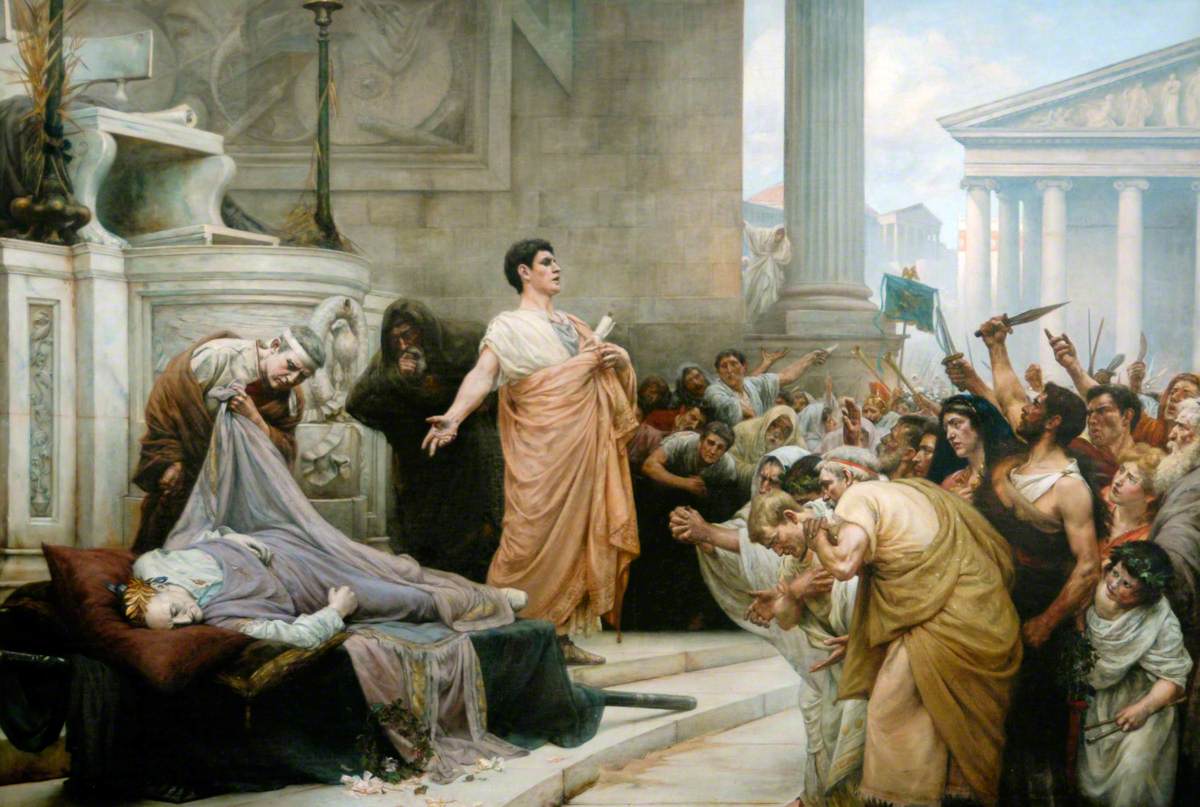
Only after consolidating his forces did he enter into conflict with the Senate and Caesar's adopted son Octavian, but soon they joined forces and, together with Lepidus, formed the Second Triumvirate to fight against the Republicans and Caesar's assassins. Cicero was beheaded, and Brutus and Cassius met their deaths in 42 BC at the Battle of Philippi.
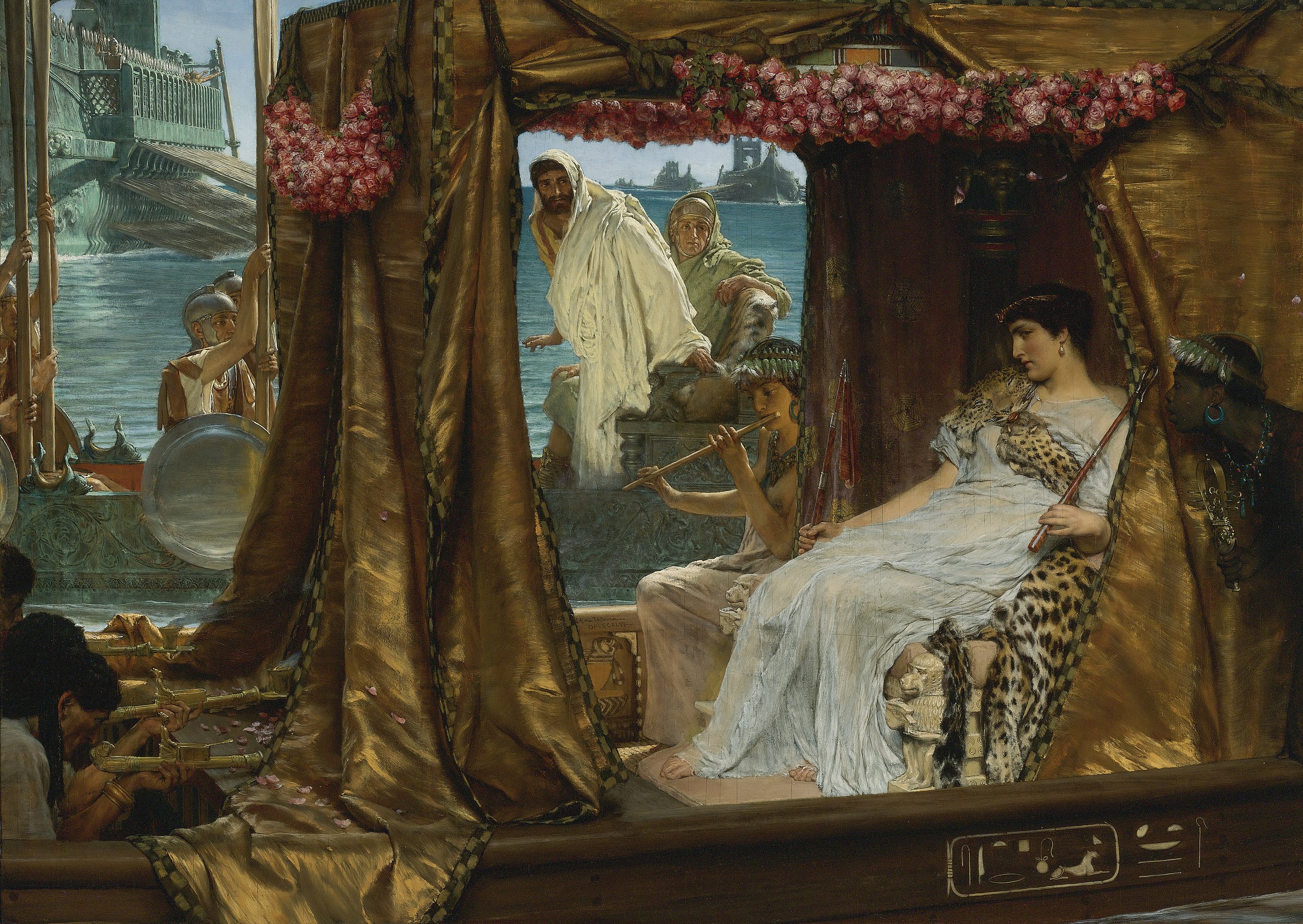
The Second Triumvirate divided the provinces of the Republic. Antony, as the leading figure, received the wealthy East with Gaul, and he departed to Cilicia on the southern coast of Asia Minor to restore order. For this purpose, in 41 BC, he summoned Cleopatra to confirm the agreements between Rome and Egypt. At that time, Egypt was the largest of the eastern states subordinate to Rome, supplying grain to the Eternal City. Before meeting Cleopatra, Antony was already one of the foremost figures of the Republic and an outstanding military leader, but his fate changed dramatically after becoming closely acquainted with the Egyptian queen.
Cleopatra
The last ruler of Ptolemaic Egypt was born at a very difficult time for her state. Hellenistic Egypt, once founded by Alexander the Great's general Ptolemy Soter, was in decline—constant internal strife among Ptolemy's descendants led the country to heavy defeats by the Seleucid kingdom and dependence on Rome.
Cleopatra was born in 69 BC, being the second daughter of the aforementioned Ptolemy XII Auletes. Cleopatra's father was not an outstanding politician, preferring festivities and revelries to state affairs, which were costly to the royal treasury. Cleopatra grew up in an atmosphere of court intrigues and constant palace coups. The princess received an excellent education, was not lacking in intelligence, spoke nine (!) languages fluently, and the environment of the Ptolemaic court nurtured her into a cunning intriguer. The future queen of Egypt, judging by surviving sculptural portraits and coin images, was not the unearthly beauty as depicted in films, but she possessed a captivating charisma and charm that allowed her to get her way. Plutarch gave a good description of the queen's talent:
"For the beauty of this woman was not such as to strike those who saw her, but her presence, combined with the persuasiveness of her speech, had an irresistible charm, and her appearance, together with her rare ability to speak, left a deep impression on the soul. The very sound of her voice was a delight and a pleasure to hear, and her tongue was like a many-stringed instrument."
[Plutarch, Antony, 27]
Ptolemy XII Auletes died in 51 BC, and the throne was inherited by Cleopatra VII along with her younger brother Ptolemy XIII. According to Egyptian custom, Cleopatra married her brother and became his co-ruler. However, soon a power struggle erupted between them. Cleopatra was forced to flee Alexandria but did not abandon her ambitions. Caesar came to the young queen's aid.
After the fiasco at Pharsalus, Pompey was forced to flee to Egypt in search of support but was killed at the initiative of Ptolemy XIII's supporters to win Caesar's favor. Caesar arrived in Egypt following Pompey but was enraged when he learned of such an end for his enemy—it was not for the Egyptians to decide the fate of a Roman citizen, no matter who he was.
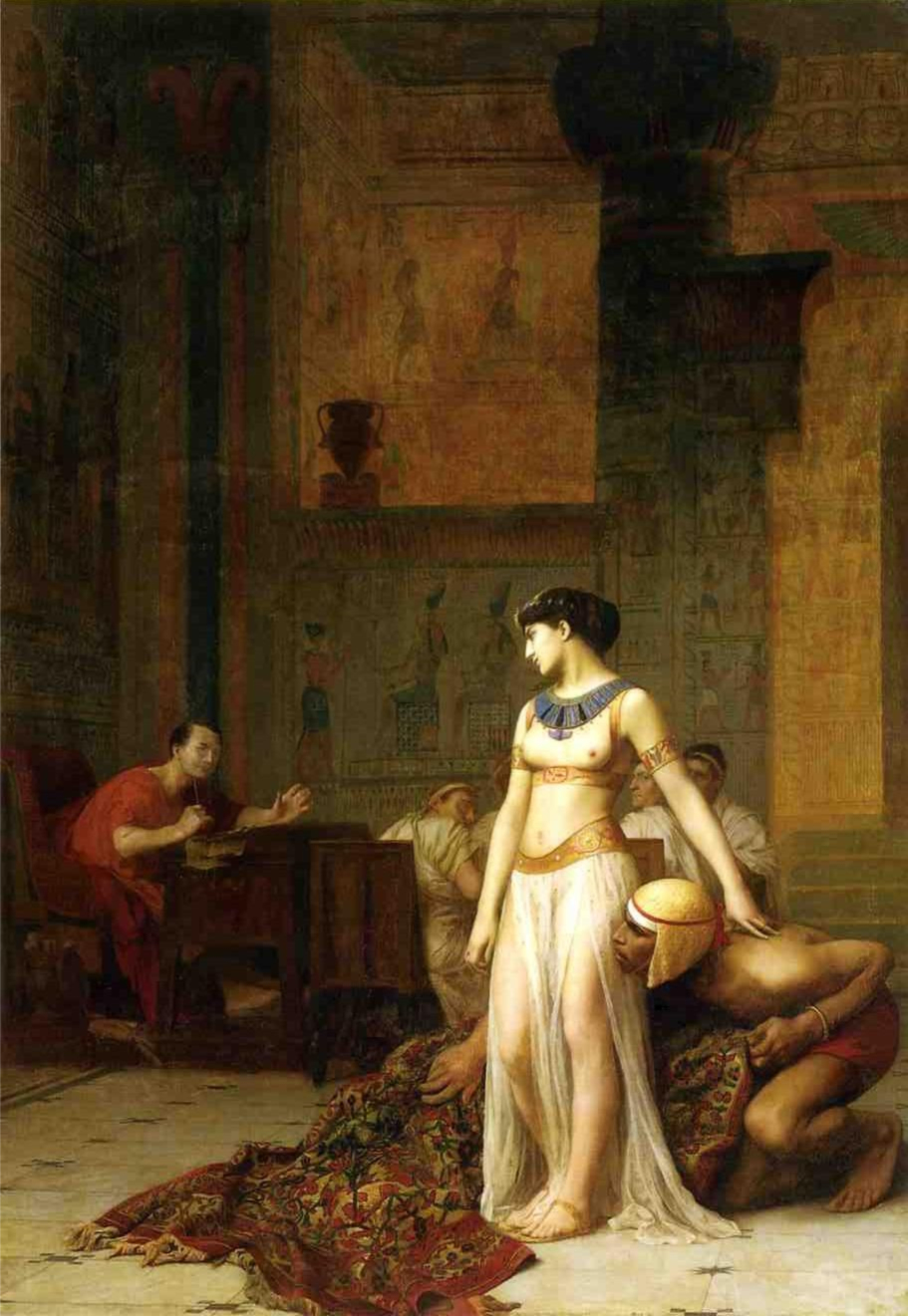
Then Cleopatra's supporters secretly brought the queen to Caesar, hidden in a bed sack. The 52-year-old dictator was charmed by the intelligence and charisma of the 22-year-old queen, and he firmly took her side. Ptolemy XIII perished during street battles, and Cleopatra began to rule jointly with her other brother Ptolemy XIV, although the real power belonged to her alone.
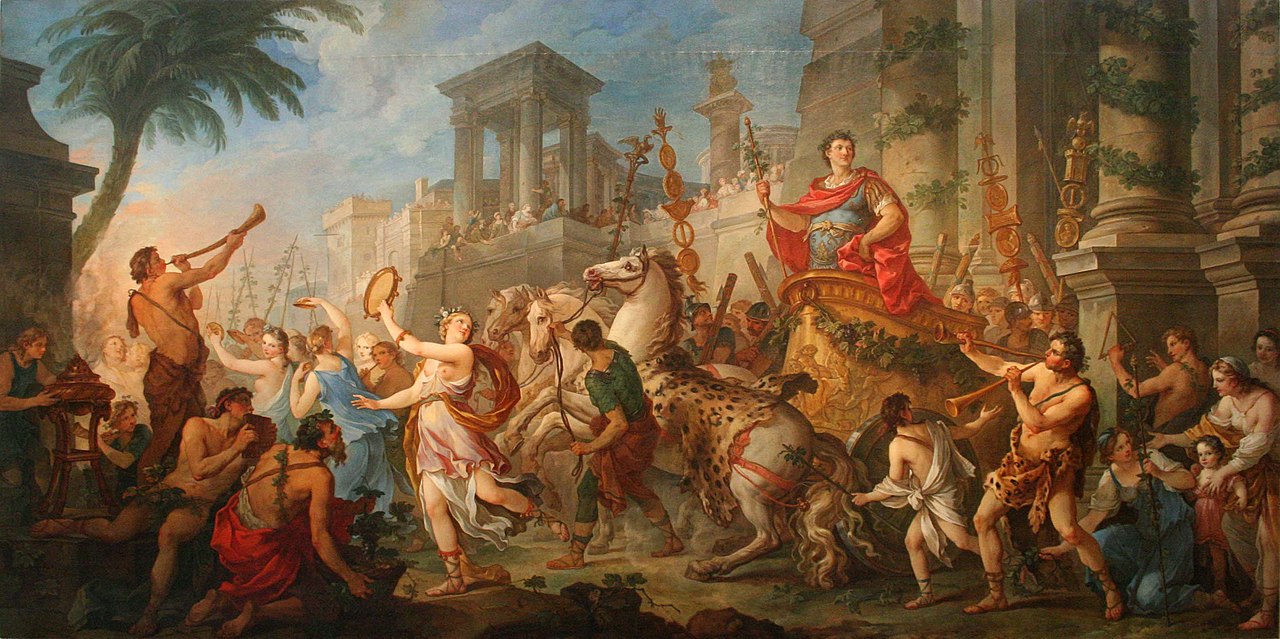
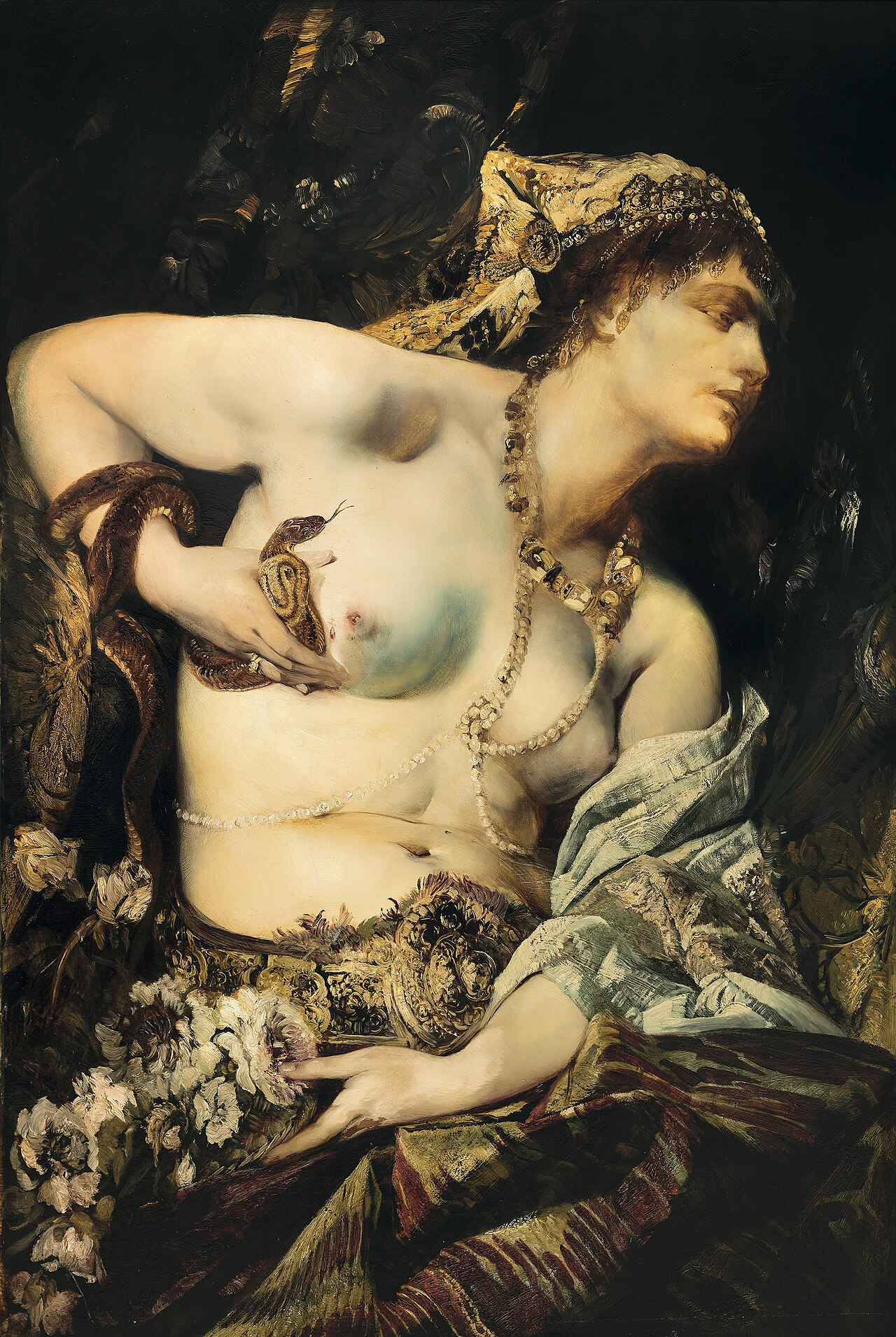
Egypt became a Roman province, and Octavian became the sole ruler of Rome with the title of Augustus. The eccentric and passionate Antony suffered a complete defeat before his cold and calculating rival.
Marriage to a foreign queen proved fatal for Antony's reputation. Cleopatra, even during Caesar's time, provoked the anger of the Romans and suspicions of striving for royal power, and Antony seemed to be repeating the fate of his late patron. Nevertheless, marriage to the queen alone could not be the reason for the fall of such a figure. Playing king and self-deification worked well in the East, but the Romans could not accept such behavior. They were outraged by Antony's monarchical pretensions and his extravagance towards Egypt.
In contrast, Octavian emphasized his "Roman-ness," his commitment to the interests of the Roman people and their traditions, so his opposition to Antony appeared not as a struggle for power, but as a struggle of Rome against an eastern threat. It can be said that Octavian completely won the information war and played on the national feelings of the Romans, forgive the author for such an anachronism.
The Romans, accustomed to republican rule, did not accept Antony, who openly imitated eastern kings. They wanted to see a living Republic, and Octavian gave them this illusion in the form of the principate—his own autocracy, carefully disguised as a "restored Republic."
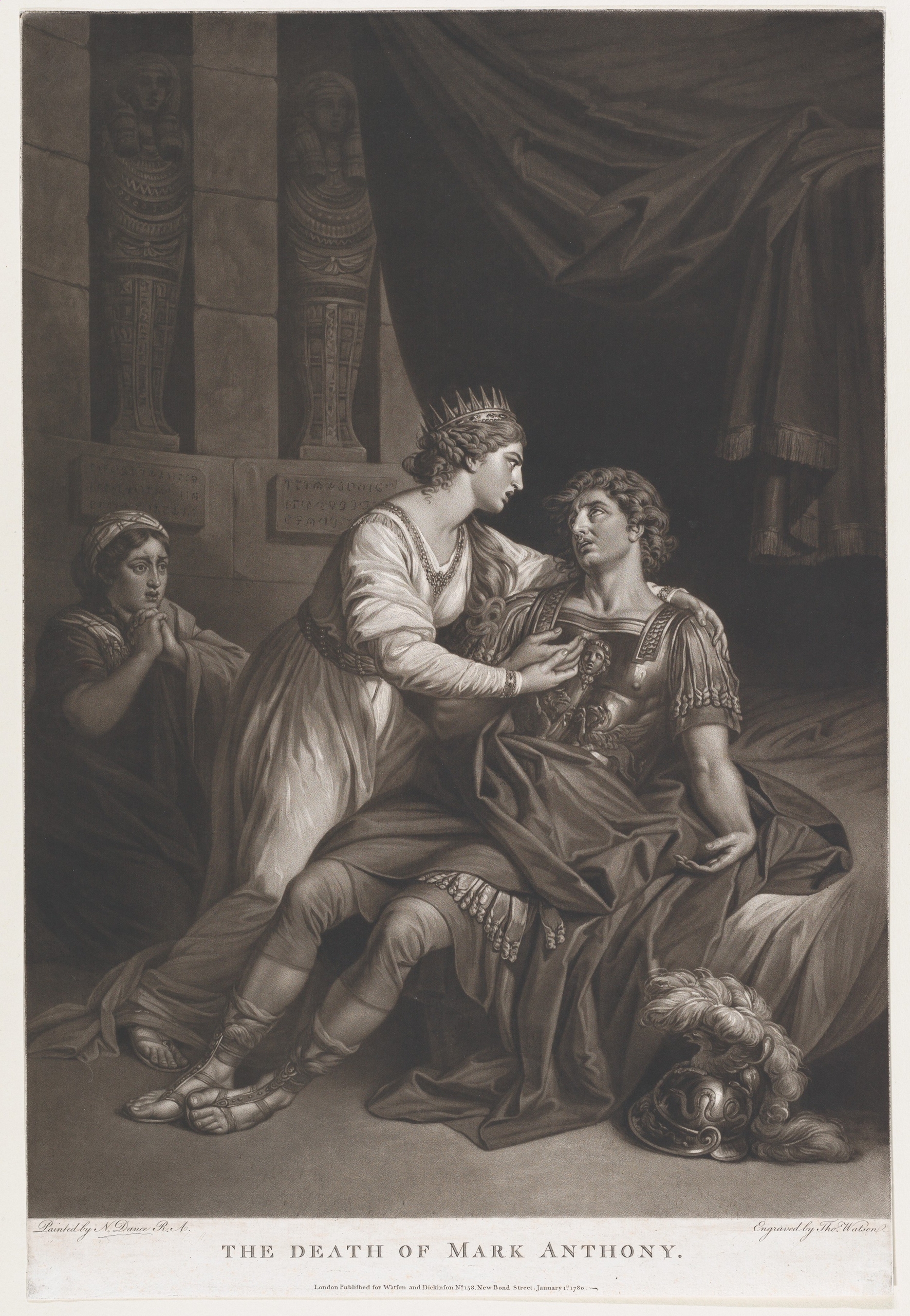
The image of Antony and Cleopatra in Roman historical memory was excellently summarized by Dio Cassius in his "Roman History":
"Antony was second to none in fulfilling his duty, but he committed many follies; at times he was extraordinarily brave and yet often suffered failures due to his cowardice, he was at times noble in spirit, at times insignificant; he seized others' wealth, squandered his own, forgave some without any reason, and punished many unjustly. Therefore, although he rose from insignificance to omnipotence, from poverty to wealth, neither benefited him, and he, who hoped to become the sole ruler of the Romans, ended his life by suicide.
Cleopatra knew no bounds in either her passion or her acquisitiveness, was ambitious and power-hungry, and moreover arrogant and bold. She achieved royal power in Egypt through her charms, but hoping to achieve dominion over the Romans in the same way, she miscalculated and lost what she had. She subjected two of the greatest Romans of her time to her power, and because of the third, she ended her own life. Such were Antony and Cleopatra and thus they ended their lives."
[Dio Cassius, Roman History, LI, 15]