History

Nikita Tsybikov
Historian
Youth of the Future Dictator
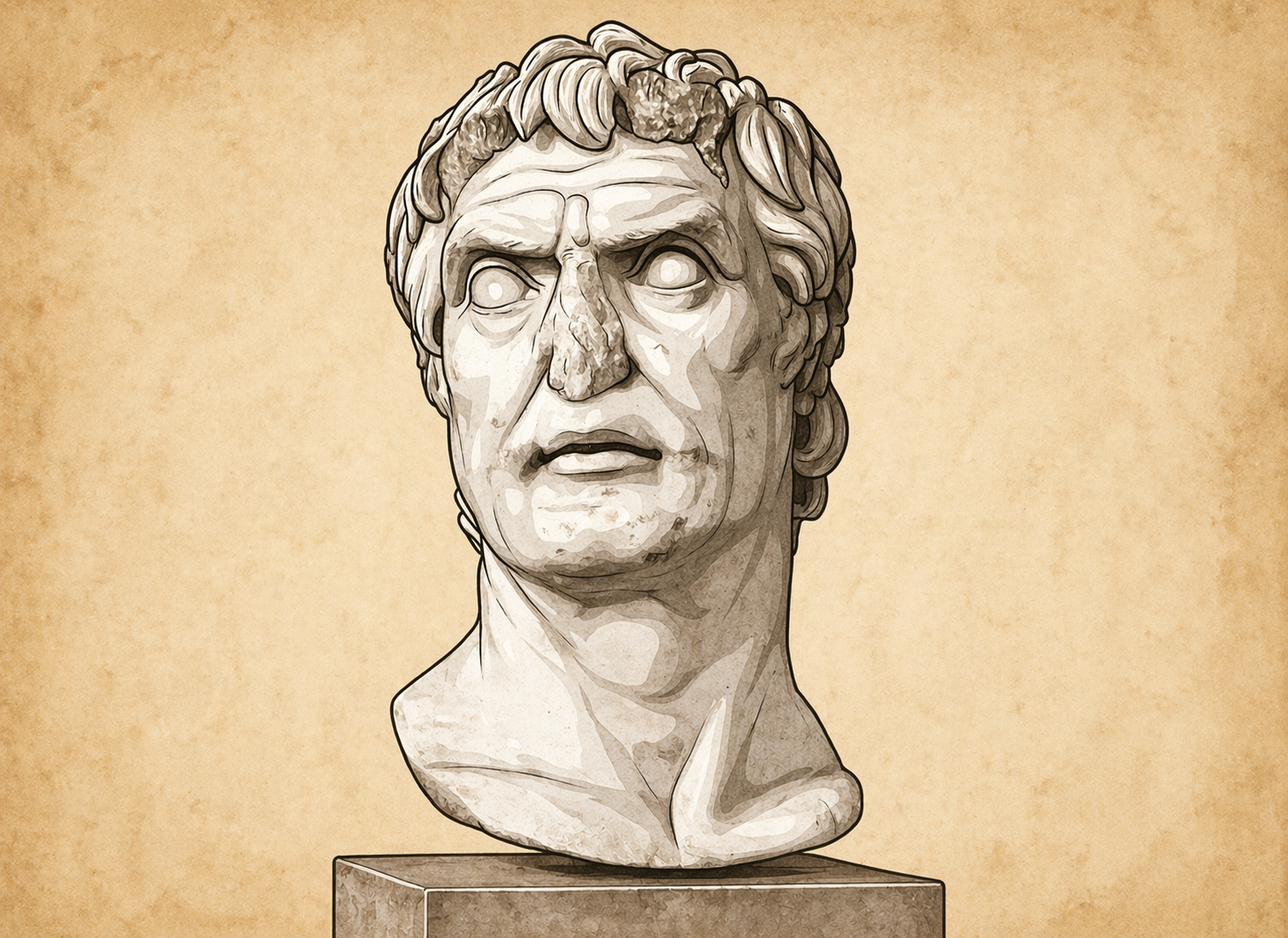
One of the most controversial figures of the late Republic, Lucius Cornelius Sulla, was born in 138 BC and came from an ancient but impoverished patrician family. As early as the 4th – 3rd centuries BC, his ancestors became consuls and dictators, but in 275 BC, Publius Cornelius Rufinus was expelled from the Senate for "having more than ten pounds of silverware" – an unforgivable luxury by the standards of the early Republic. This is how Plutarch explains the decline of the family, after which Sulla's ancestors did not rise above the position of praetor.
The future dictator, apparently, received an excellent education, was fluent in Greek, and was very successful with women. However, the poverty (by noble standards) of his father forced the young man to live in an insula (apartment building) rather than in his own mansion.
By that time, Rome was already the strongest power in the Mediterranean, where, as a result of numerous conquests, a stream of trophies, slaves, jewels, and tribute flowed. The main beneficiary of the successes was the nobility, which received huge profits from giant land holdings and distributed key political positions within its class. In turn, veterans of numerous wars could not compete with large estates and, having gone bankrupt, sold plots to the same nobles. The impoverishment of the class of small landowners, who had to buy their own equipment, undermined the mobilization base of the army.
Additionally, a conflict was brewing with the Italics – allied tribes in Italy without Roman citizenship, whose land was actively seized, although they made up a significant part of the army. For every Roman legionnaire, there were about 1.5 to 2 soldiers from the Italics.
In the 130s and 120s BC, the brothers Tiberius and Gaius Gracchus led a popular movement to redistribute land, but were ultimately killed.
Sulla himself at that time was unlikely to think about a serious political career due to the relative modesty of his position. He preferred a dissolute lifestyle in the company of jesters and mimes – people who, by Roman standards of the time, were at the bottom of the social hierarchy. At some point, Sulla became involved with an elderly but wealthy freedwoman, Nicopolis, who bequeathed her fortune to him. Thanks to the inheritance, in 107 BC he was able to be elected as a quaestor, that is, a treasurer.
By that time, Sulla was already 30 years old. Having experienced need and "hardened" by life, he had become skilled in the art of acting and was now determined to fight for his "place in the sun." As a quaestor, Sulla went to Africa to war with the Numidian king Jugurtha.
In the Shadow of Marius
Numidia was located in the territories of modern Algeria, Tunisia, and Libya and was an unpleasant place – the arid climate in the mountains and deserts was a serious test for the legionnaires. After the Romans' victory over Hannibal, this country effectively became a protectorate of Rome, but at some point, King Jugurtha overthrew another king, Adherbal. Since the latter was an ally of Rome, in 111 BC the Senate declared war on the new ruler.
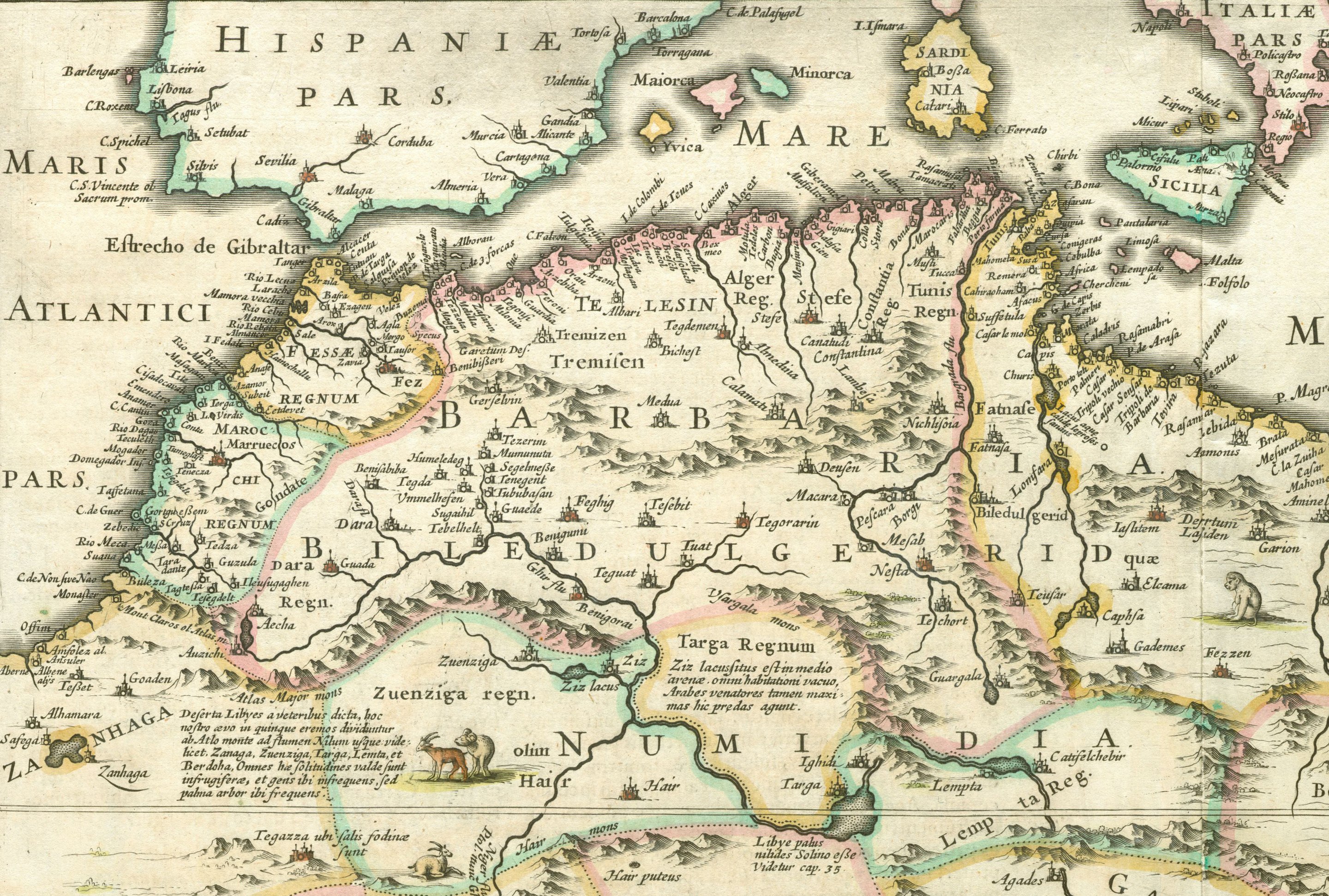
Jugurtha had experience serving in Spain under the command of the destroyer of Carthage, Scipio Aemilianus Africanus, and established himself as a talented commander who became familiar with the structure of the legions. The king understood the impossibility of defeating the Romans in direct confrontation and instead decided to take advantage of the terrain by engaging in guerrilla warfare.
To the displeasure of the plebs, none of the Roman commanders could achieve decisive success. After several changes of commanders, in the consular elections of 107 BC, the victory was won by the unremarkable Gaius Marius – another student of Scipio. He standardized the training and equipment system of the legionaries, and most importantly, abolished the property qualification, promising soldiers land for their service.
The successes of the "new type army" after thorough military training were not long in coming. Marius quickly captured the most important cities for Jugurtha – Capsa, Thala, the Muluccha citadel, and Phala. Along with these cities, the Numidian king lost a significant part of his treasury.
On Marius's orders, Sulla recruited cavalry in Italy and arrived in Numidia. According to Sallust, he quickly mastered all the intricacies of military affairs, adapted quickly to the army environment, and gained popularity among the legionaries.
However, Jugurtha did not waste time, recapturing Cirta – the capital of the Numidian kingdom – from the Romans. Marius, along with Sulla, moved to reclaim the city. A major battle took place near Cirta against the combined forces of the Numidians and Mauritanians. Sulla, leading the cavalry, successfully flanked the enemy and, together with the rest of the consul's army, completed the rout.
Marius understood perfectly well that pursuing Jugurtha through the mountains and deserts of Numidia could continue indefinitely, so he resorted to cunning. The commander sent a diplomatic mission to the Mauritanian king Bocchus, led by Sulla and legate Aulus Manlius – apparently, the consul already highly valued the talents of the cavalry commander. Bocchus agreed to hand over Jugurtha in exchange for territories in Western Numidia. Then Marius tasked Sulla with conducting a special operation to capture the Numidian king. Under the pretext of a meeting with the Roman envoy, the Mauritanians lured Jugurtha, captured him, and handed him over to Sulla. The war was over.
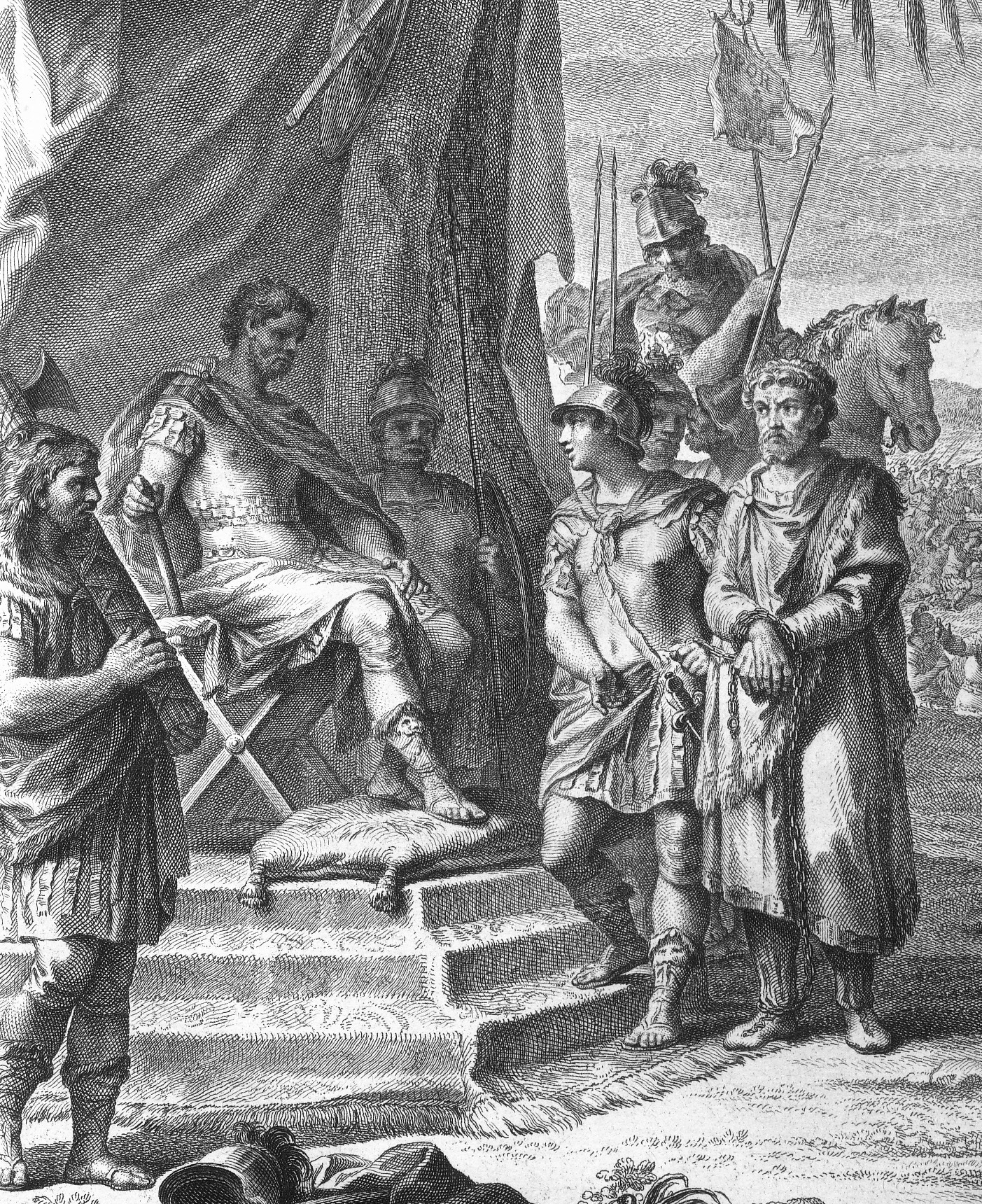
In 105 BC, Marius finally suppressed the resistance of the Numidians and placed a king loyal to Rome on the throne. In the same year, the general returned to Rome and celebrated a grand triumph. The captive Jugurtha was paraded in the triumph and starved to death after the celebration. The glory of the victor also went to Sulla, who successfully commanded the cavalry and personally captured the king. Later, as an old man, Sulla would insist that he was always Fortune's favorite, "fortunate for himself and the Republic" – was it not then that he believed in his "star"?
While Marius and Sulla were fighting in Africa, a Germanic invasion occurred in the north. In 105 BC, the tribes of the Cimbri and Teutons invaded the province of Narbonese Gaul. At Arausio, the Roman army was defeated with catastrophic losses – Titus Livius mentions a number of 80,000 soldiers and 40,000 camp followers with servants. Although these are clearly fantastical and exaggerated figures, the historian cited them to emphasize the complete rout. Panic erupted in Rome, as the path to Italy was open to the enemy. However, the leaders of the Germans and Celts preferred to invade Spain. The capital of the Republic was given a respite.
Marius, not yet returned from Africa, was elected consul in absentia, which was already an exceptional measure, as usually a candidate for consul was required to be personally present at the elections. Upon arriving in Italy, Marius immediately began reorganizing the remnants of the Roman army, scaling his previous reforms to all Roman legions. He preferred to leave his veterans in Africa, as the soldiers were exhausted after a long war and needed a break. Only his "officers," including Sulla, went to war with the consul.
Already in 102 BC, Marius defeated the Teutons at Aquae Sextiae, and in 101 BC, the Cimbri were defeated at Vercellae. Marius became not only the hero of the Jugurthine War but also the savior of the Fatherland. Sulla, during the war, captured the leader of the Tectosages tribe, Copillus. Later, he managed to prevent the Marsi tribe from siding with the Germans and convinced them to form an alliance with Rome.
During all the wars, Marius continuously held the position of consul for 5 years – an unprecedented honor since the early Republic and quite symptomatic. Sulla was still serving as Marius's legate, but soon he would step out of his commander's shadow.
The Rise of Sulla
The 90s BC were surprisingly calm for Rome. So calm that sources barely cover this decade. We know that Sulla, thanks to his military successes and friendship with the Mauretanian king Bocchus, was able to be elected to the position of urban praetor – the ancient Roman equivalent of a civil judge.
After his praetorship, Sulla was appointed proconsul in Cilicia in the southeast of Asia Minor. Here, in the rank of governor, he had to intervene in the civil war in Cappadocia on the side of the pro-Roman king Ariobarzanes against the usurper Gordius, who was supported by the Pontic king Mithridates VI Eupator. Leading a small detachment, Sulla managed to defeat Gordius's forces. At the same time, an embassy from Parthia arrived to the governor, making Sulla the first Roman official to establish diplomatic contact with the powerful eastern neighbor of the Republic.
Returning to Rome, Sulla found it in a state of another crisis. This time, passions were boiling around the Italics – the people's tribune Marcus Livius Drusus was promoting a bill to grant the Italics the rights of Roman citizenship, as the Republic's army was largely replenished by them.
Suddenly, Drusus died. His death aroused suspicion among the leaders of the Italics, who believed that Drusus's "murder" put an end to the possibility of negotiating with the Senate. The Italic communities of southern and central Italy rose in rebellion. The Social War (91 – 88 BC) began.
Sulla and the elderly Marius participated in it as legates. The troops under Sulla's command defeated the Italics in Samnium and Campania and captured the capital of the rebels, Bovianum. Nevertheless, the Senate made concessions – citizenship was granted to the communities in the north that remained loyal to Rome. Subsequently, it was extended to the rebellious regions, although the votes of the "new" citizens were not equal to those of the "old" ones. As a result of the pacification of the Italics, Sulla became a hero of the Republic and in 88 BC aimed to achieve the position of consul.
Meanwhile, the previously mentioned Pontic king Mithridates invaded Roman Asia, causing a real massacre – according to Appian, 150,000 people were killed. Against this backdrop, Sulla was successfully elected consul and led the army to a new war. However, after his departure, Marius, who wished to regain his glory as the chief general, organized a conspiracy. Together with the people's tribune Publius Sulpicius, they managed to push through a law transferring command to Marius.
Then Sulla made a counter-move. His army had many veterans of the Social War. Now, thanks to Marius's reforms, the legionaries were more loyal to their own commanders than to the "Senate and people of Rome," as it was the general who promised them trophies and land grants. The change of commander threatened Sulla's veterans with being bypassed by Marius's veterans. With the support of the army, the consul refused to obey the law and turned the army on Rome, which he captured by storm for the first time in the history of the Eternal City.
Marius fled to Africa, and Sulpicius was betrayed by his own slave. The slave was freed for his assistance and immediately executed for treason as a free man.
War and Dictatorship
In 87 BC, as proconsul, Sulla went to war against Mithridates, after which his unfinished enemies rose again. Marius returned to Rome and was even elected consul along with his supporter Lucius Cornelius Cinna. They conducted a series of show executions, but soon the 70-year-old Marius died. Cinna, having lost his ally, was forced to seek new support and found it in the Italics – he equalized their votes with the Romans.
Meanwhile, in the East, Mithridates captured vast territories in the Roman province of Asia in the west of modern Turkey and invaded Greece. First, Sulla took Athens, then defeated the Pontics at Chaeronea in 86 BC and Orchomenus in 85 BC. For his victories, the army proclaimed Sulla "imperator." At that time, this title meant a victorious general, not a ruler of the state. Mithridates was forced to leave the Balkans and agreed to peace. Due to the civil war in Italy, Sulla did not finish off the external enemy: Mithridates simply renounced his conquests and paid a contribution that allowed Sulla to maintain his army.
Cinna sent legions to Greece to capture Sulla, but they preferred to side with the proconsul. In 84 BC, while attempting to gather a new army, Cinna was killed. After his death, the Marian faction was led by the son of the deceased commander, Gaius Marius the Younger, who could not organize a worthy resistance. In 83 BC, Sulla landed in Brundisium in southern Italy and took Rome for the second time.
In 82 BC, he appointed himself dictator "for writing laws and strengthening the Republic." Dictators had not been appointed since the Second Punic War. Moreover, instead of the usual 6 months, Sulla's dictatorship was declared indefinite. Cicero would later say that "the nobility regained power in the Republic with fire and sword."
Now, on the Roman Forum, tablets with the names of those declared outlaws – proscriptions – were posted. A reward was promised for each killed, and slaves were granted freedom. The property of the proscribed was subject to confiscation. In this simple way, the dictator spared himself the need to conduct search operations, as money-hungry citizens themselves brought everyone needed.
The process immediately got out of control, and not only Sulla's enemies but also many wealthy citizens not connected with Marius's party fell under the terror. However, many of the dictator's friends enriched themselves by buying up the confiscated property of the repressed. The most famous of them was Marcus Licinius Crassus – the future victor over Spartacus. But the future political ally of Crassus – Gaius Julius Caesar, whose family was connected with Marius – miraculously escaped death thanks to the intercession of friends. Sulla yielded to persuasion and did not execute Caesar, but nevertheless saw in the young man a potential threat, saying that "there are many Mariuses in him." And he was not mistaken: a few decades later, Caesar himself would become a perpetual dictator.
Having rid himself of the opposition, Sulla set about reforms. He clarified the cursus honorum – the order of holding offices, so that now, to avoid the usurpation of power, no magistrate could be re-elected to office within 10 years after the previous term. The dictator doubled the number of senators from 300 to 600, the number of praetors from 6 to 8, and the number of quaestors from 8 to 20. The courts were transferred to the Senate's jurisdiction, and Sulla's veterans were universally granted land plots in Italy at the expense of the Italics. At the same time, to avoid new unrest from the latter, the dictator retained Cinna's law on the equality of votes with the Romans.
Most importantly, Sulla deprived the people's tribunes of most of their rights. Now they could not convene the Senate, were deprived of the right of legislative initiative, and could not be elected to any other position while holding this office. The dictator intended to nip in the bud the possibility of new "Gracchi" appearing.
Sulla realized that his reforms were primarily upheld by the power of the legions, not the laws. To ensure that no one in the future could repeat his own success, the dictator forbade commanders from appearing in Italy with an army – the general was obliged to disband it before returning to Rome. The northern border of Italy was designated as the Rubicon River.
The dictator did everything to strengthen the senatorial aristocracy and weaken the grassroots populist movement, trying to roll back the Republic to the times of undisputed dominance of the nobility, when the Sulla family itself "shone." Paradoxically, the usurper used tyrannical methods to try to return to times when such usurpation was impossible, and dictators laid down their powers months, or even days, after appointment, rather than holding the position indefinitely. It is thanks to Sulla that the word "dictator" acquired the familiar association with usurpation and tyranny, rather than with the heroic "saving of the Fatherland," as it was before.
Having considered his work done, in 79 BC, Sulla suddenly resigned and declared that he was ready to be held accountable for all his actions. No accusers were found. The nobles highly appreciated the dictator's efforts, and even Cicero, who would later brand Caesar a tyrant and usurper, called Sulla's reforms "a morally beautiful deed." Did contemporaries realize that Sulla had created a dangerous precedent that would allow another eminent general to cross the Rubicon and take Rome again in just 30 years? Or did they sincerely believe that "the Republic was strengthened" and "the cause of the nobles" had triumphed? Ironically, Cicero himself would also be killed, ending up in Mark Antony's proscriptions.
It should not be thought that Sulla was the cause of the fall of the Republic. Rather, he was a vivid symptom, like Marius, who held the position of consul an abnormal seven times. Researchers see in Sulla's dictatorship a prologue to the activities of Gaius Julius Caesar and Octavian Augustus. Some even call him the first Roman monarch.
The man who for the first time in the history of the Eternal City took it by storm and seized power by force, voluntarily relinquished it. Sulla spent the rest of his days on a villa, hosting lavish feasts as in his youth, and in his free time, he read literature obtained in Greece. He died in 78 BC from an unknown illness, having lived a life certainly "fortunate for himself," but "fortunate for the Republic"?