Article
SOCIAL DEMOCRATIC PARTY OF GERMANY (SOZIALDEMOKRATISCHE PARTEI DEUTSCHLANDS)
The history of German social democracy began even before the creation of a unified German state. The theoretical foundations for the formation and subsequent activities of the labor movement were laid by the works of Karl Marx.
The first mass socialist organization was the "General German Workers' Association," founded in 1863 by Ferdinand Lassalle. He rejected revolution and believed that socialism could be achieved through peaceful transformation by fighting for universal suffrage and winning elections. Moreover, Lassalle even allowed for an alliance between the working class and the Prussian authoritarian monarchy to jointly fight against the bourgeoisie and create a unified German national and social state.

Not all socialists liked Lassalle's program, and in 1869, orthodox Marxists August Bebel and Wilhelm Liebknecht founded the Social Democratic Workers' Party in the Thuringian town of Eisenach, which focused on trade union struggle and the development of the cooperative movement. Furthermore, unlike Lassalle, the "Eisenachers" were opposed to the forcible unification of Germany under the leadership of the Prussian monarchy.
Nevertheless, despite the differences, both organizations targeted the same working audience, and by 1875 they merged into the Socialist Workers' Party.
The government saw a threat in the new movement, and in 1878, Chancellor Otto von Bismarck succeeded in passing the "Anti-Socialist Law," which banned the activities of any socialist organizations in the empire. Simultaneously, Bismarck began implementing social support measures to win over the working class's sympathies and deprive the socialists of mass support. Thus, old-age and disability pensions appeared in Germany, and a health insurance system was created.
However, Bismarck's policy proved unsuccessful. Despite the repression, socialists continued to be elected to the Reichstag as private individuals, and with each election, more voters supported them. In 1890, the new Emperor Wilhelm II dismissed Bismarck, and the "Anti-Socialist Law" was repealed. The following year, the Socialist Workers' Party was finally renamed the Social Democratic Party of Germany (SPD).

The 12-year underground period only united German socialists. A peculiar working-class subculture emerged – their own trade unions, sports associations, creative circles, and other clubs of interest. If desired, a conscious worker could live their entire life in a completely homogeneous socio-political environment.
During Wilhelm II's reign, the Social Democrats remained a legal political force that gradually increased its influence, and as a result of the 1912 elections, they gained a relative majority of seats in the Reichstag. However, due to the Marxist nature of the party, the state power, conservatives, and even right-wing liberals still perceived the socialists as the main threat to national security.
In August 1914, a sensation occurred. The overwhelming majority of German socialists supported Germany in the war that had begun and unanimously voted in parliament for war credits for the Kaiser’s government. From their point of view, the German Empire, with its limited parliamentarism and social security system, represented a "golden mean" between "reactionary" Russia and "bourgeois" England and France.
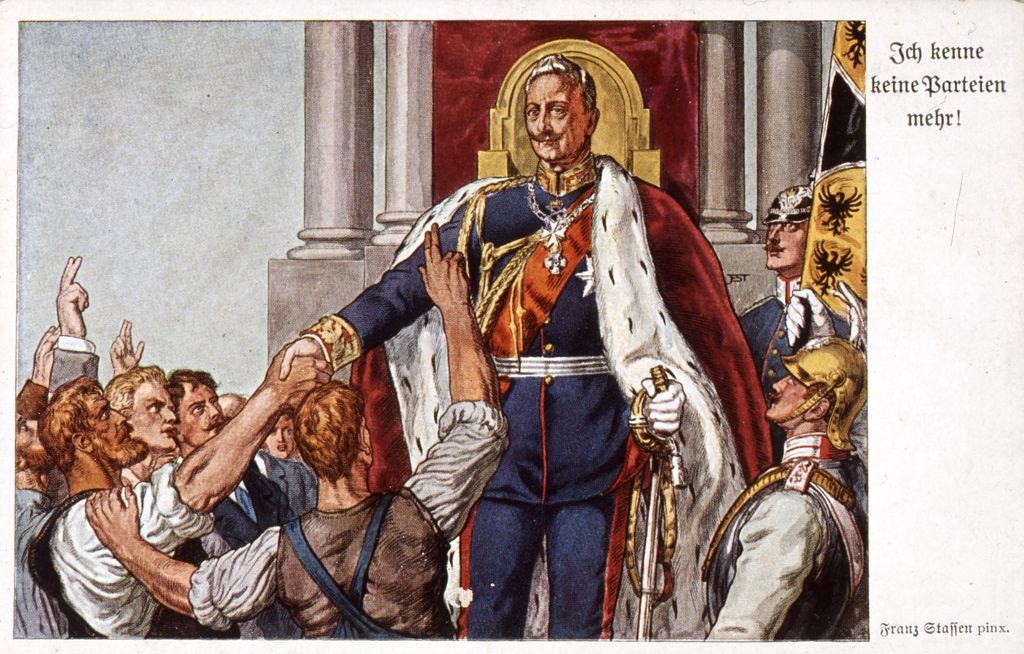
From 1914 to 1918, the SPD acted as an intermediary between the government and factory workers. However, while supporting the "defensive war," the Social Democrats sharply opposed the annexationist plans and demanded peace based on mutual agreement. In the Reichstag, the SPD formed a coalition with the Catholic Center and the left-liberal Progressive Party, which demanded regime liberalization and democratic reforms.
Not all socialists supported the party leadership's course. A smaller part split into a separate Independent Social Democratic Party (USPD), which refused to support the government and advocated for revolutionary transformation of society. The "Independent" Social Democrats welcomed the February and October revolutions in Russia but opposed active actions within Germany, preferring to wait for the "objective" historical process to bring about revolution in Germany.
In turn, within the USPD itself, the "Spartacus" group was formed, led by Karl Liebknecht and Rosa Luxemburg, who believed that the revolutionary situation should not be awaited but hastened. As a result, Liebknecht and Luxemburg were arrested and imprisoned.
In October 1918, liberalization of the regime began in the "Second Reich." The generals recognized Germany's hopeless situation and convinced the Kaiser to share power with the parliamentary majority. Firstly, this was supposed to soften the Entente, which actively used the slogan "war for world democracy." Secondly, the participation of civilian politicians in peace negotiations shifted the responsibility for defeat from the generals. The Social Democrats entered the government for the first time and, along with their allies from the Center and Progressive Party, gained the constitutional ability to dismiss chancellors with a vote of no confidence.
However, at the very beginning of November, liberalization got out of control. The naval command planned to send ships to sea and engage in a suicidal "last battle" with the English squadron, but the plan ended with a sailors' uprising in Kiel, which escalated into the general November Revolution. Activists from the USPD and the "Spartacus" group were at the forefront of street demonstrations.
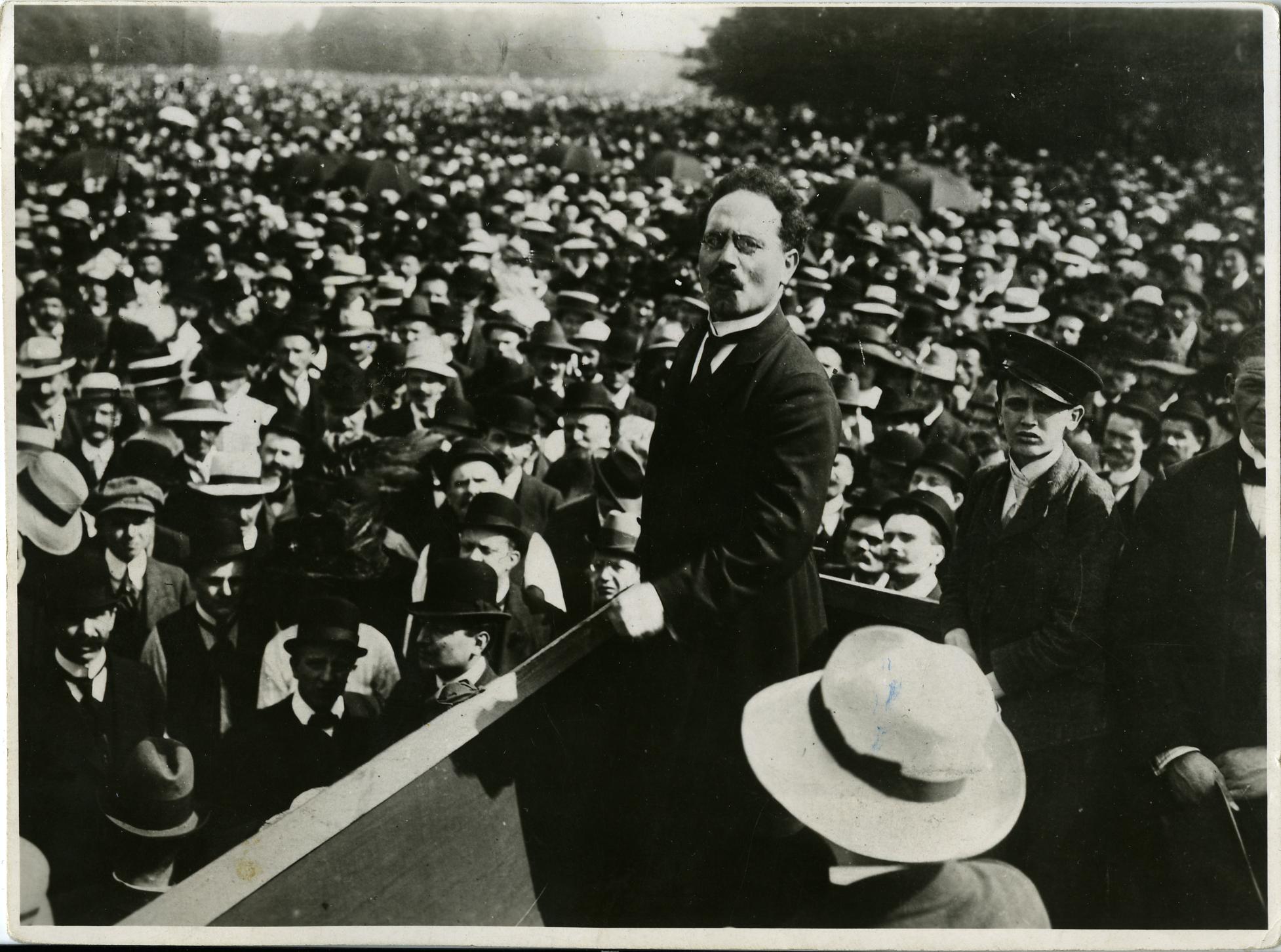
The SPD leadership reluctantly had to join the revolution to end it quickly and return to constitutional order. The party leader and new chancellor, Friedrich Ebert, even advocated for the preservation of the monarchy, but his comrade Philipp Scheidemann proclaimed the German Republic on November 9 to pacify the crowd in Berlin.
The first revolutionary government consisted of representatives from two socialist parties – the SPD and the USPD. However, their alliance was short-lived. The SPD advocated for a coalition with Catholics and liberals to lay the foundations of a democratic republic and only then begin a long parliamentary struggle for the evolutionary transformation of capitalist society into a socialist one. In contrast, the USPD believed that the moment for a socialist revolution had already arrived. As a result, at the end of December 1918, the "Independent" Social Democrats left the government. At the same time, the released Liebknecht and Luxemburg founded the Communist Party.
In January 1919, supporters of the Soviet Republic staged an uprising in Berlin, after which the Social Democratic Minister of Defense Gustav Noske began creating volunteer corps (Freikorps), recruiting veterans, many of whom held right-wing radical views. They disliked the Social Democrats, but the "non-systemic left" seemed an even greater threat to them. The volunteer corps suppressed the January uprising and killed Liebknecht and Luxemburg without trial. In the following months, the same fate befell other Soviet republics in the rest of Germany, including Bremen and Bavaria. Thus, blood divided the Social Democrats and communists.
As a result of the elections to the Constituent Assembly in January 1919, the SPD confirmed its status as the most popular party in the country – 38% of voters supported it. The Catholic Center Party came second with 20%, and the left-liberal German Democratic Party came third with 18.5% of the votes. These three parties formed the ruling "Weimar Coalition," named after the city of Weimar in Thuringia, where the Constituent Assembly met.
In June, deputies from the three parties voted for the Treaty of Versailles after lengthy debates, which all political forces in the country considered "unfair." For example, the SPD advocated for general disarmament, but it should have applied to everyone, not just Germany.
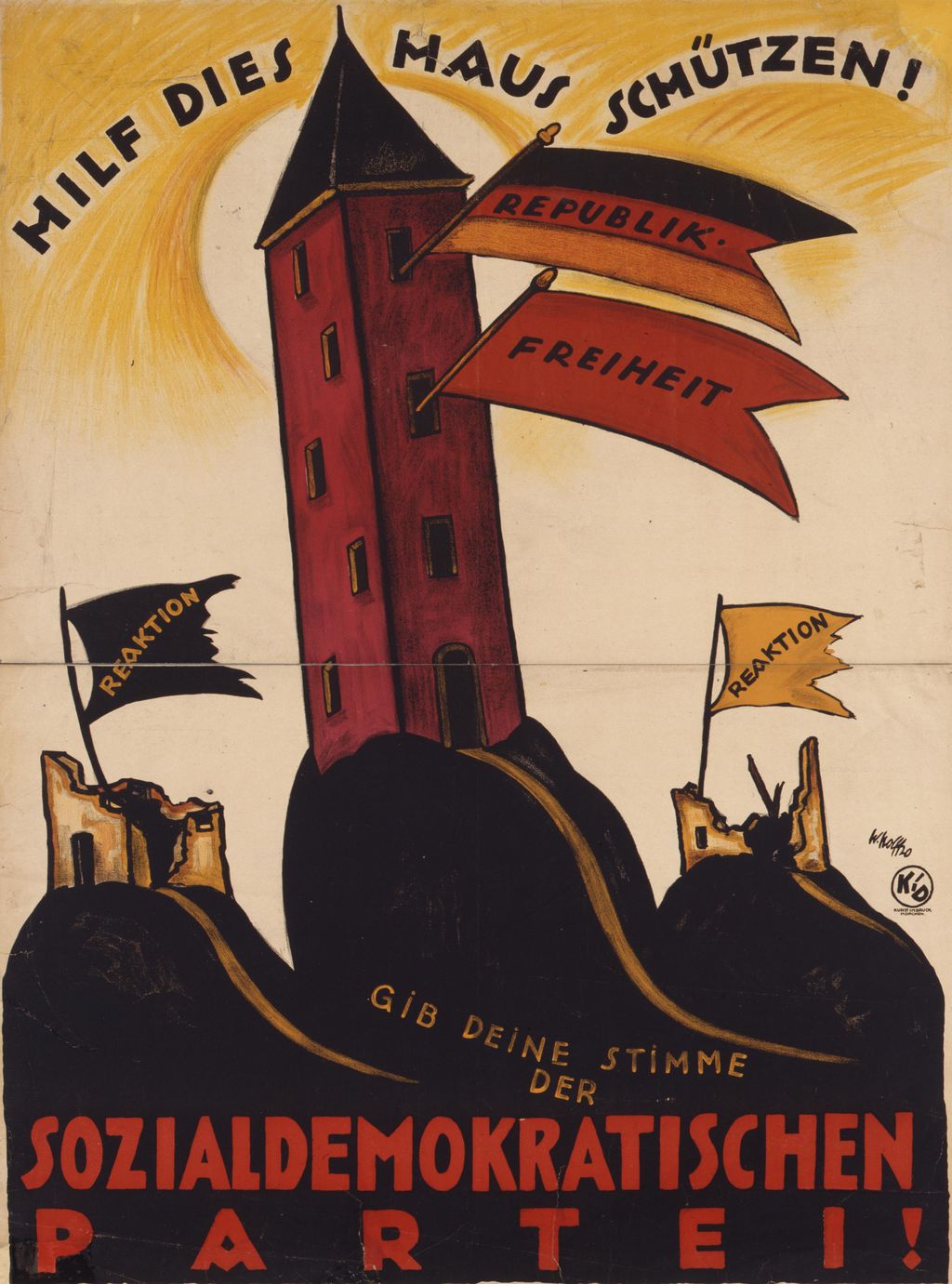
In July, a new republican Constitution was adopted, which established liberal political institutions and enshrined the right to private property. To maintain civil peace, the Social Democrats effectively postponed the implementation of their socialist program indefinitely. Nevertheless, the SPD managed to push through provisions such as the possibility of compulsory expropriation of property for public needs with compensation, state regulation of labor relations, and the right of workers to create trade unions and works councils with the ability to control employers' actions.
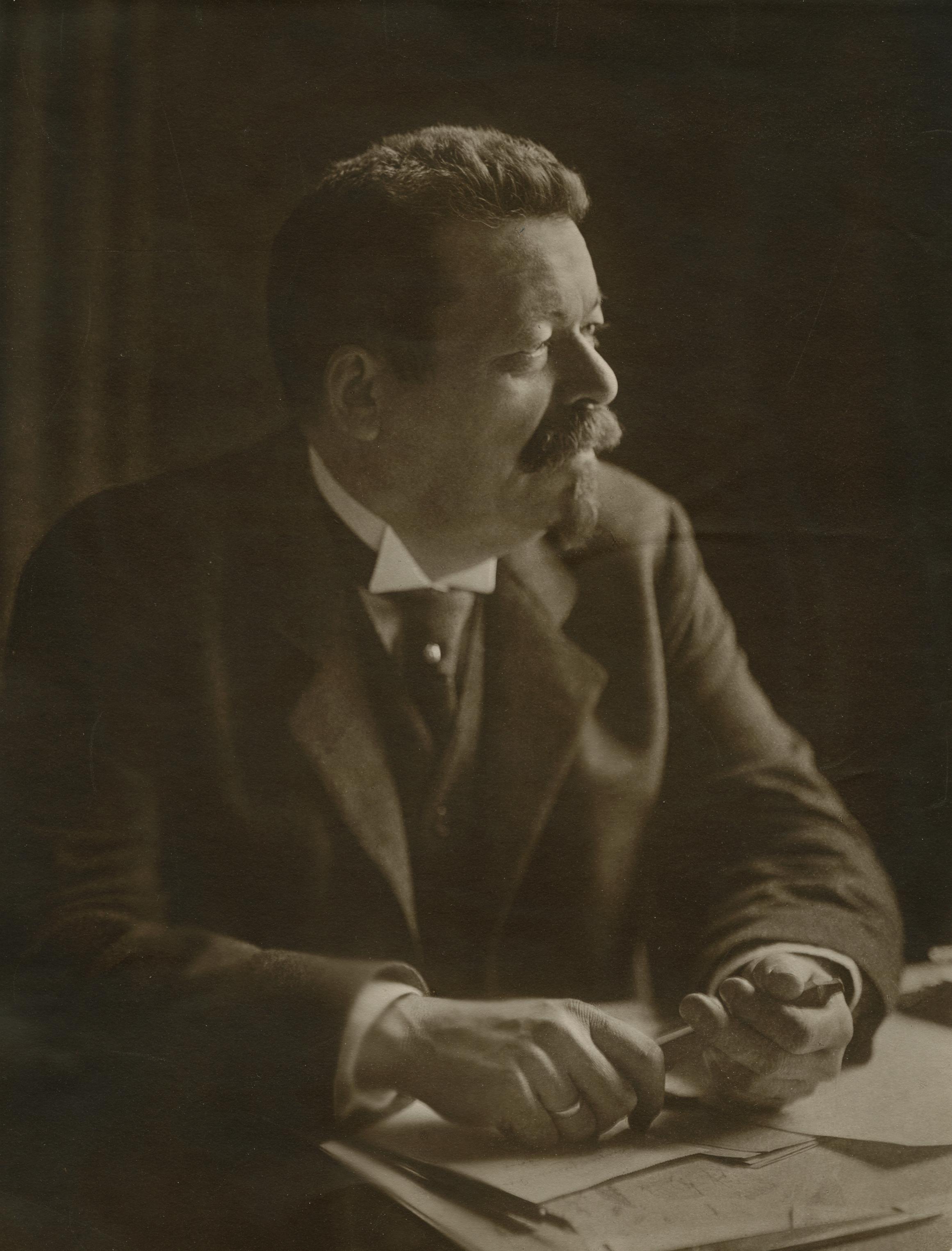
From November 1918 to June 1920, SPD representatives headed the first republican cabinets, and of the thirteen people who were heads of governments from November 1918 to January 1933, four were Social Democrats. In 1919, the Constituent Assembly elected party leader Friedrich Ebert as the country's first president. He held this position until his death in 1925.
Responsibility for the Treaty of Versailles negatively affected the Social Democrats' reputation among the right. By early 1920, the left-radical Soviet republics had been suppressed, meaning the common threat no longer united the SPD and the volunteer corps. In March 1920, the Freikorps staged a coup against the "Weimar Coalition" and briefly captured Berlin. The Social Democrats organized a general strike that paralyzed the rebels' actions. The Kapp Putsch failed. However, since then, the SPD always had to consider the threat from both ends of the political spectrum – the far left and the far right. The party became the main guardian of the centrist character of the new republic.
Due to its compromise policy, some left-oriented voters became disillusioned with the SPD. Already in the next parliamentary elections in June 1920, the party fell from 38% to 22%. Almost all the disillusioned voters shifted to the more left-wing USPD, which received 17.5%.
In turn, right-oriented voters became disillusioned with the SPD's "bourgeois" allies, who also lost many votes. The "Weimar Coalition" permanently lost its majority in the Reichstag and could no longer form governments without the participation of other parties. As a result, the Center and left liberals formed a coalition with the right-liberal German People's Party, which defended the interests of large industrialists. The SPD was not ready to join such a coalition. Nevertheless, it remained the most popular party in the country, so the right-centrist "minority governments" tried not to quarrel with it to avoid a vote of no confidence.
In 1920, the "Weimar Coalition" led by the Social Democrats failed at the federal level, but in Prussia, which covered 60% of the country's territory and population, the coalition continued to win and form governments until 1932. This was because most industrial centers and large cities, where workers predominantly voted for the Social Democrats, were located there. For most of the Weimar period, the Prime Minister of Prussia was Social Democrat Otto Braun, who, contrary to the opinion of many of his party members, did not allow the division of the largest German state. Unified Prussia was considered the electoral stronghold of the SPD and the citadel of the republican regime throughout Germany.

All the activities of the Social Democrats in the Weimar Republic took place against the backdrop of internal debates about compromises with "bourgeois" parties and cooperation with radical socialists. For example, in September 1922, the SPD and USPD reunited, naturally shifting the party "to the left." Some regional branches of the Social Democrats, such as in Saxony and Thuringia, in October 1923, in the context of hyperinflation and the threat of a right-wing coup, allied with the communists. In 1926, the Social Democrats, together with the communists, campaigned for participation in a referendum on the expropriation of property from former royal dynasties without compensation.
Another part of the party, primarily its leadership, remained focused on compromises with the "bourgeois" part of the political spectrum. From August to November 1923, at the peak of economic and political crises, the SPD even joined the "Grand Coalition" government led by right-liberal Chancellor Gustav Stresemann from the very German People's Party that defended the interests of large entrepreneurs. At the same time, the imperial party leadership and Social Democratic President Ebert sanctioned the deployment of troops in Saxony and Thuringia to forcibly break the coalitions of local SPD regional branches with the communists. On May 1, 1929, the Social Democratic police in Berlin shot a communist demonstration, and in 1931, communists killed two capital police officers – members of the SPD.
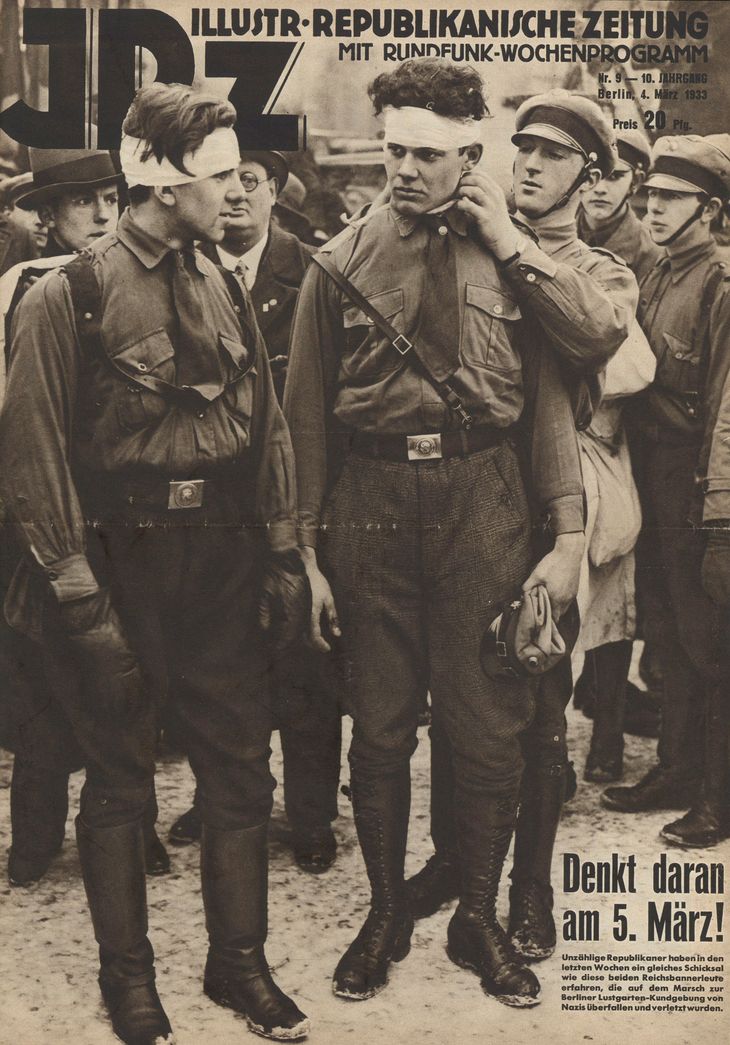
To protect the republic, the Social Democrats, together with Catholics and left-wing liberals, created the "Reichsbanner" organization in 1924. There was also a youth wing – the "Jungbanner." The total membership of the "Reichsbanner" as a civilian structure at its peak reached 3 million people, although the number of members of its paramilitary wing ("Schufo") did not exceed 250,000.
The Social Democrats returned to the "Grand Coalition" government and even led it after the 1928 elections when the SPD received 30% of the votes. The party reaped the benefits of those few years when it was in opposition to right-centrist cabinets. By that time, the economic situation had improved, and radicalism had subsided.
This prosperity ended just two years later when Germany became one of the hardest-hit countries by the Great Depression. The political crisis that killed the republic a few years later began due to the confrontation between the "right" and "left" wings of the SPD. In March 1930, the government led by Social Democratic Chancellor Hermann Müller proposed cutting unemployment benefits to save the budget. However, the SPD parliamentary faction voted against their own chancellor's initiative, and he was forced to resign.
A new right-centrist government came to power, led by Catholic Heinrich Brüning. The Social Democrats opposed his deflationary policy, leading to the dissolution of parliament and new elections in September 1930. The SPD's results fell from 30% to 24.5%, mainly in favor of the communists. These same elections were a triumph for the NSDAP, which gained over 18% and became the second party in the country.
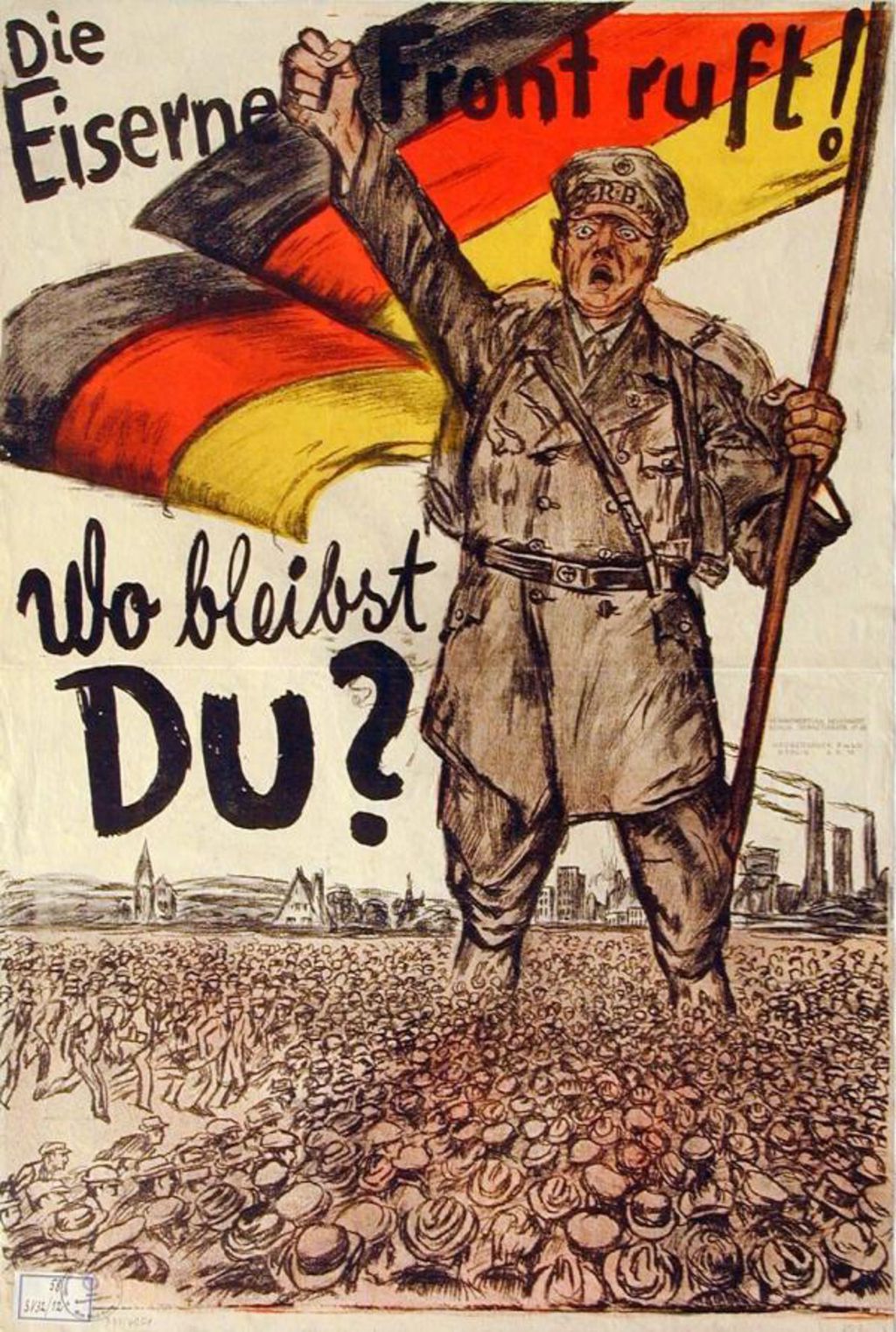
In 1931, the "Iron Front" emerged, which included the SPD, Social Democratic trade unions, "Reichsbanner," and various workers' sports associations. The "Iron Front" posters featured three arrows symbolizing the fight against three main enemies – monarchists, Nazis, and communists.

Despite disagreements, centrist Brüning and the Social Democrats did not go for a complete break, as the Center and SPD still had a joint "Weimar Coalition" in Prussia, where they together opposed the Nazis. In the spring of 1932, at the request of the chancellor, the Social Democrats even supported the conservative President Paul von Hindenburg as the only candidate capable of defeating Hitler.
But by mid-year, the situation worsened dramatically. In April, the Nazis won the Prussian Landtag elections, and the "Weimar Coalition" lost its parliamentary majority. However, the NSDAP could not form a cabinet alone, so Social Democrat Braun remained the head of Prussia's "minority government."
In May, as a result of intrigues, centrist Brüning resigned as chancellor, replaced by non-partisan conservative Franz von Papen. He was already openly hostile to the SPD. In July, Papen convinced President Hindenburg to declare a state of emergency in Prussia and remove the "Weimar Coalition" government under the pretext that it was unable to control street clashes between Nazis and communists. On July 20, the Reichswehr occupied Prussian government offices and ousted Braun's cabinet. All power in the largest German state passed to the imperial government. The legal support for the Prussian coup was provided by the famous jurist Carl Schmitt, who advocated the priority of strong executive power with emergency powers.
The Social Democrats did not undertake any forceful actions. Armed resistance by the "Reichsbanner" and Prussian police could have led to a civil war. A general strike by the unions could have failed because, in conditions of mass unemployment, workers were unlikely to risk their jobs for political demands. Instead, the SPD filed a lawsuit against Papen in the Constitutional Court, which upheld the legality of the state of emergency and left everything as it was.
The indecisive conciliatory policy once again collapsed the Social Democrats' popularity among the electorate, mainly in favor of the communists. In the July 1932 elections, the SPD fell to 21.5% and finally ceded the status of the most popular party in the country to the Nazis. The decline continued further – to 20.5% in November 1932 and to 18% in March 1933.
Having capitulated to Papen, the Social Democrats also capitulated to Hitler. In 1933, the SPD, trade unions, "Reichsbanner," and "Iron Front" were defeated without any armed resistance on their part. The most striking act of moral resistance can be considered the last opposition speech in the Reichstag, delivered by party leader Otto Wels on March 23, 1933, during the vote to grant Hitler's government emergency powers: "You can take away our freedom and even our lives, but not our honor!". The SPD faction was the only one to vote against the Enabling Act. By June, the party was banned. Some of its leaders and activists went into exile, while others were arrested and sent to concentration camps.
Several reasons can be identified for the ultimate failure of the Social Democrats in the Weimar Republic:
The SPD limited itself to "class" boundaries as a party for workers;
The reputation of a "revolutionary" Marxist party alienated the "middle class";
The reputation of an "anti-national" party, responsible for the defeat in the war and the signing of the Treaty of Versailles, turned the "patriotic" electorate against the SPD;
In 1920 and 1930, the party preferred to move into opposition rather than compromise principles and remain in government. This limited its scope for action;
In 1932 and 1933, the party capitulated to brute force and did not counter it with its own brute force.
During the Nazi dictatorship, those SPD functionaries and activists who did not go abroad were persecuted, and many were killed. There were Social Democratic underground resistance groups, and several prominent SPD figures (Julius Leber, Wilhelm Leuschner) participated in the July 20, 1944, plot against Hitler, for which they were executed.
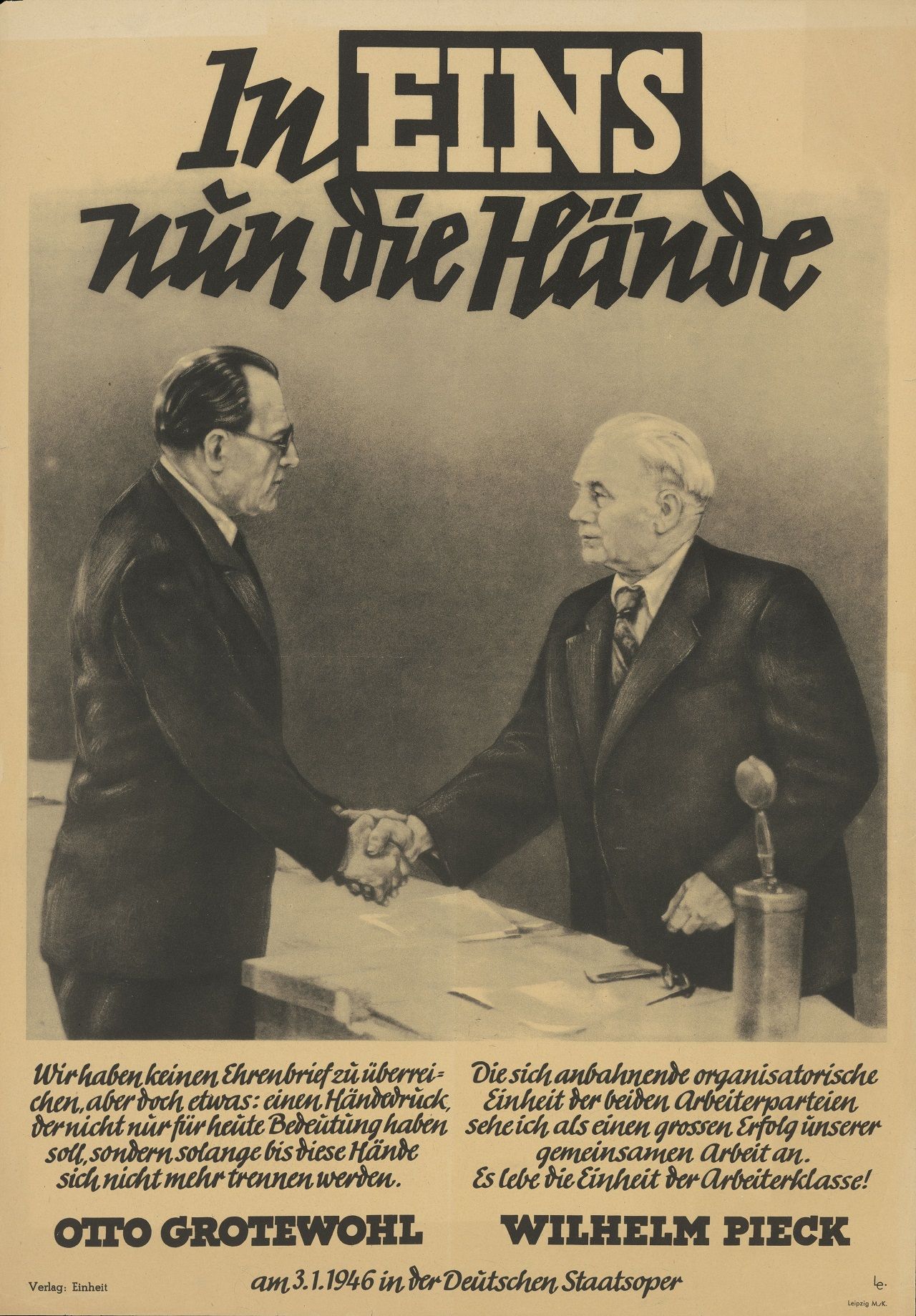
In 1945, the SPD was restored in both occupation zones. In the Soviet zone, efforts were made to overcome the split in the socialist movement, and by 1946, local Social Democrats and communists merged into the Socialist Unity Party of Germany (SED), which later became the ruling party of the GDR. Those Social Democrats who compromised with the communists took leadership positions in the new state. For example, Otto Grotewohl became the first head of government of the GDR.
The Western SPD refused to cooperate with the communists. Instead, the party became the left-centrist pillar of the bipolar party system in the Federal Republic. The first head of the revived SPD in the West was Kurt Schumacher – a one-armed World War I veteran, Reichstag deputy, and Nazi concentration camp prisoner. Marxist Schumacher considered himself a German patriot and set out to correct the SPD's "anti-patriotic" reputation. From now on, the party positioned itself as a defender of national sovereignty, in contrast to Konrad Adenauer's Christian Democrats, who sought to fully integrate into Western projects – NATO and the European Community.
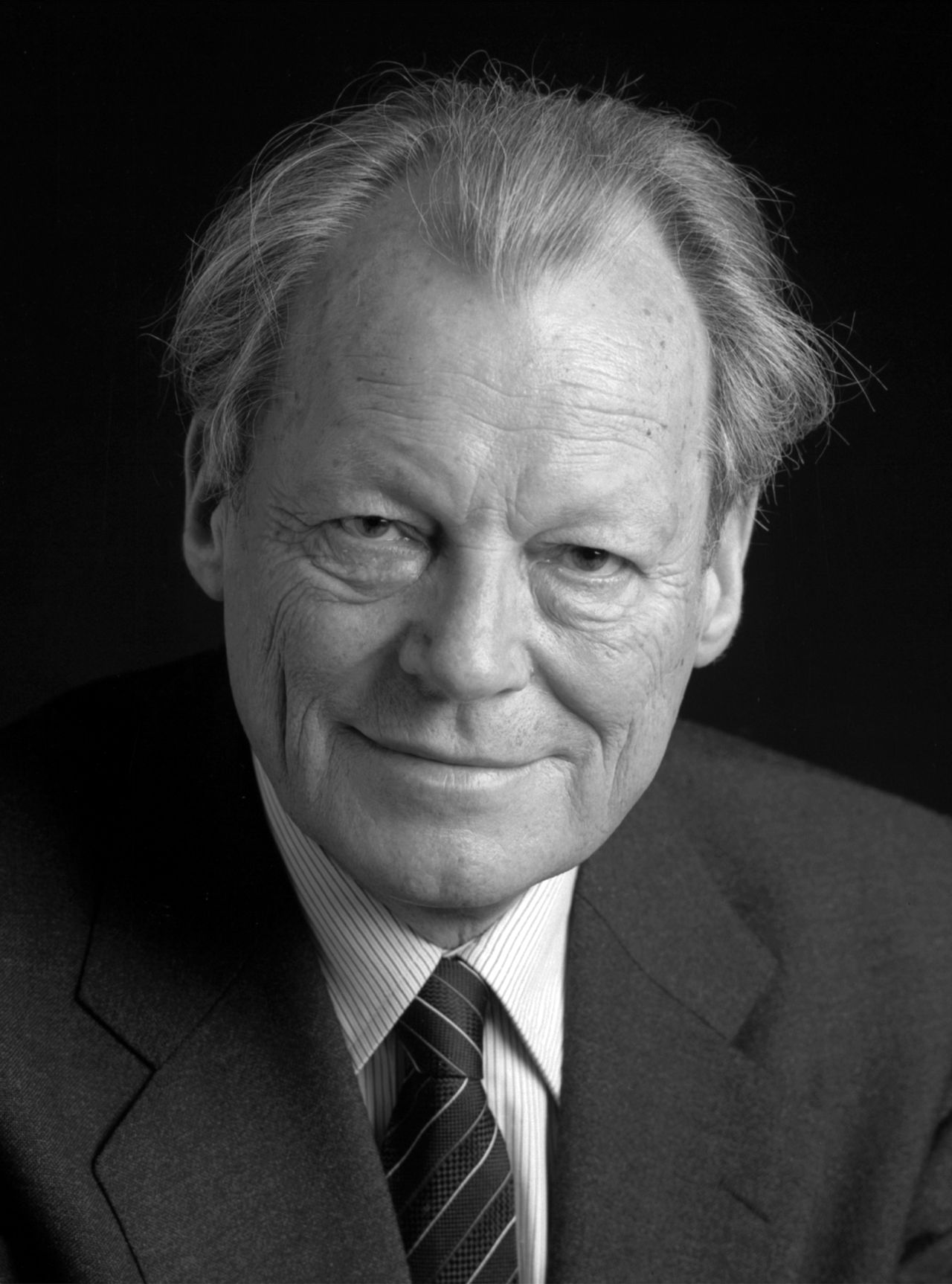
The next generation of SPD leaders, led by Willy Brandt, revised the party's class character. In 1959, references to Marxism were removed from the party program, and the SPD was declared a "people's party." Its election results improved, and in 1966, the Social Democrats entered the FRG government for the first time, and in 1969, Willy Brandt became the first Social Democratic Chancellor of Germany in 39 years.
The Social Democratic Party remains one of the leading parties in the country to this day.
Take the test on this topic
History
Social Democratic Party of Germany
Did you like the article? Now take the test and check your knowledge about German Social Democrats!