Political science

Pavel Dubravsky
Political Consultant, author of the Telegram channel "Campaign Insider"
First Steps in Politics
Because I think it's a very mean life. I would gladly dedicate my life to this country, but it would be a mean life. I also see that someone with strong views and slightly unpopular but correct views may not necessarily have a chance to be elected against someone who is not very smart but has a broad smile. And that's a sad commentary on the political process. Abraham Lincoln probably wouldn't be elected today because of television. He wasn't a handsome man and didn't smile.
Donald Trump on why he wouldn't run for president.
The newspaper The Washington Post tries to write a biography of each candidate before every presidential election. The editorial team is divided into those who study the Democratic Party representative and those who study the Republican Party candidate. In 2016, when Donald Trump won the Republican nomination, the editorial team faced problems. Describing Trump's political positions was impossible for several reasons. First, he changed party affiliation several times, being a Democrat, a representative of third parties, and a Republican. Second, he changed his political preferences and positions. On abortion, on gender issues, even on individual party members.
Let's take a look together at how Donald Trump's political preferences have changed and how his career began.
Since July 1987, he was registered as a Republican voter. From 1999, as an Independent Party voter — the New York branch of the Reform Party. In 2001 — Democratic Party, 2009 — Republican, 2011 — independent voter, 2012 — Republican Party.
You might logically ask why Trump was a registered Democrat voter. The fact is, Trump worked in New York and considered it his domain, and New York is a Democratic state, as is the city itself. These were times when liberal talk shows loved Trump, and his columns often appeared in the pro-Democratic newspaper New York Times.
One thing can be said with certainty: Trump has been thinking about politics since 1987. However, in the same year he gave an interview to Larry King, in which he stated his unwillingness to participate in the presidential elections. He said the same thing in 1988, when the famous journalist Oprah Winfrey asked about his presidential ambitions. Trump then replied that he was not going to run, because if he did run, it would only be to win. During his 2016 campaign, he repeatedly said the phrase: "If you vote for me — you're choosing a winner.".
In 1988, the US presidential elections were held, in which George H. W. Bush won. Before the primaries (party preliminary elections), three major media outlets published paid materials with Donald Trump's thoughts on US foreign policy. His views were roughly the same as they are today. Less money to other countries, more focus on domestic policy. " America First" (America First) and notes of neutrality (in Russia, they often write: "isolationism") were already observed then. The newspapers where the materials were published were: New York Times, Washington Post, and Boston Globe. Trump paid almost $95 000 for them.
Why was Trump even talked about as a politician? At that time, he was just over 40 years old, he had a successful real estate business, and his financial status was estimated at $3 billion. In 1988, he met with the leader of the USSR, Mikhail Gorbachev, and traveled to Moscow for negotiations. Trump was considering opening a network of expensive hotels in the capital of the Soviet Union.
Around the same time, Trump was invited to New Hampshire, one of the first states to vote in the primaries. A public movement emerged advocating for Trump's nomination in the Republican Party primaries. They invited Trump to join their event. This initiative was led by Mike Dunbar (Mike Dunbar), a well-known conservative in the state. He decided it was better to help Trump get elected than to support someone who would lose the election, as there were no strong candidates from the party at that time.
A year earlier, in 1987, the Democratic Speaker of the House, Jim Wright (Jim Wright) asked Trump to organize a gala dinner for the Democratic Party. Trump agreed but admitted that he was a Republican and did not plan to change his party affiliation.
Trump did not participate in the presidential elections, but in the book "Destiny and Power: The American Odyssey of George Herbert Walker Bush" the author claims that Trump asked George H. W. Bush's political consultant, Harvey Atwater (Harvey Atwater) to consider him as a vice-presidential candidate. Bush found this request strange and unrealistic, although Trump was already among the TOP-10 most popular and approved figures in the US according to Gallup.
Repeat the Good, and Repeat Again
Trump is the name of the show. And it's always sold out.
Donald Trump
Trump made a second attempt to storm into American politics in 2000. These were some of the most scandalous elections in US history, when Republican George W. Bush defeated Democrat Albert Gore. Trump didn't make it to them again, but he opened a "Research Committee." Its tasks included studying public opinion, fundraising, testing message hypotheses, and assessing Trump's real chances of winning. Obama opened a similar one in 2008 when he entered the Democratic Party primary race. Jesse Ventura, who became the governor of Minnesota from the Reform Party, convinced Trump to participate in the elections. Trump was also considering running from it.
The Reform Party was founded in 1995 by Ross Perot. He was a presidential candidate in 1992 and received 18.9%. This is a record in US history for independent candidates since Theodore Roosevelt in 1912.
His slogan was "America We Deserve," and a book of the same name was published in 2000. Releasing a book in an election year is a long-standing tradition in American politics. Recently, one can recall Trump's new book "Save America" (Save America) in 2024, his wife Melania's autobiography, or Ron DeSantis's autobiography "The Courage to Be Free" (The Courage to Be Free) during the primaries of the same year. The title of Trump's book became his slogan.
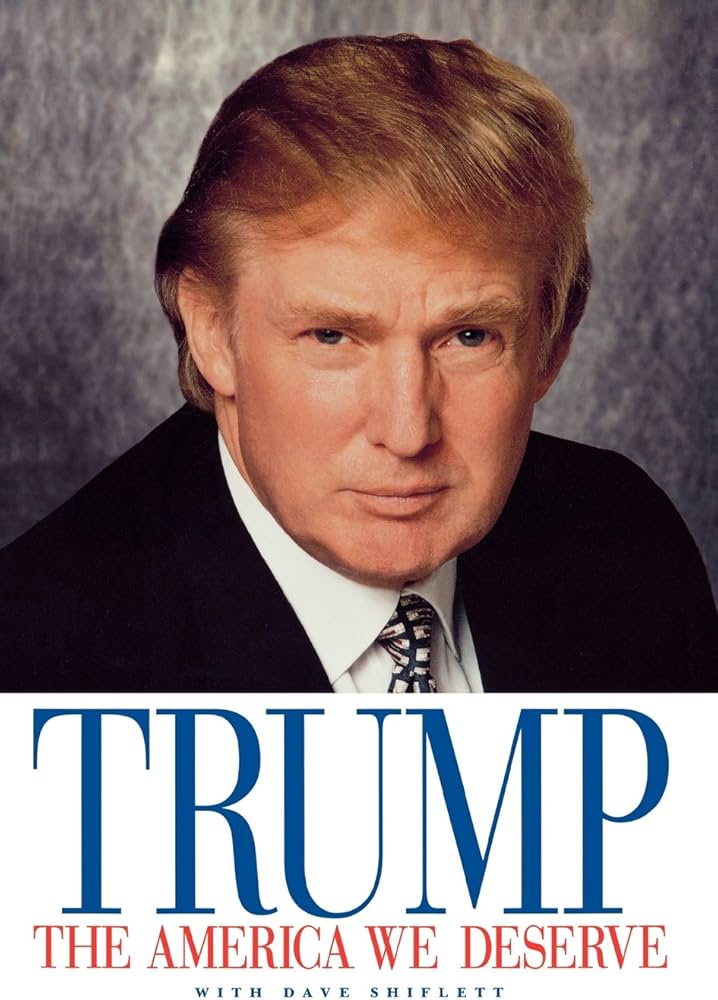
What did he stand for? The most surprising thing is for a universal healthcare system. Considering Trump's current positions, who would call his 2000 program communist, it indeed sounds unusual. During the 2024 elections, Trump criticized Kamala Harris for exactly the same position she voiced in the debates against Biden in 2019 during the Democratic primaries.
Kamala Harris participated in the 2020 presidential campaign. During the 2019 debates, she accused Biden of collaborating with segregationists and also supported women who accused him of harassment.
Trump proposed introducing a wealth tax of 14.24%. It would be paid by those whose wealth exceeded $10 million. He abandoned these two promises even before the 2016 campaign.
But another position is familiar to us today. Trump criticized illegal immigration to the USA. This topic would become the key to his victory in 2016 and 2024. He also said that illegal immigration could bring terrorism with it. He did not predict the events of September 11, 2001, although he claimed otherwise in 2015 during an interview with conspiracy theorist Alex Jones (Alex Jones). In foreign policy, he already proposed pressuring China, disarming North Korea, and promoting global trade freedom, albeit under the patronage of the USA. Today he takes more protectionist positions.
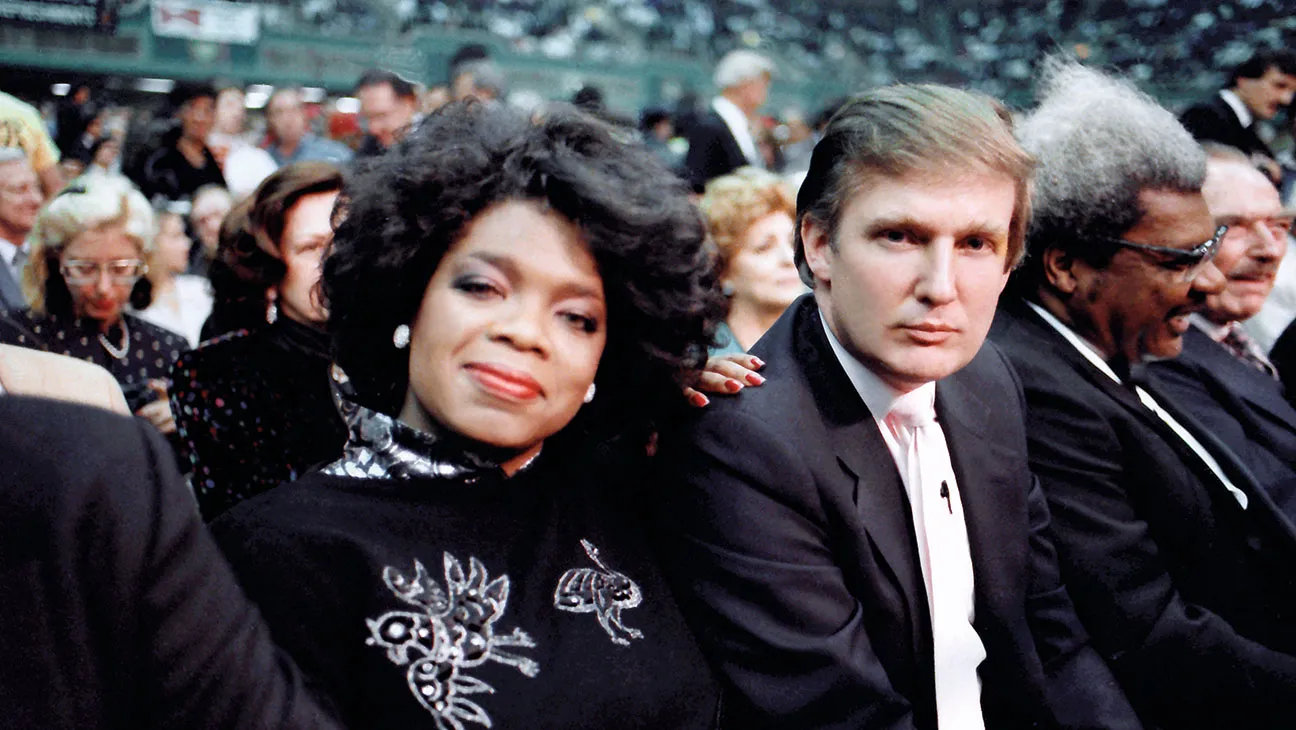
Politicians are not elected to the presidency alone; their constant companions and partners become vice-presidential candidates. Trump considered TV host Oprah Winfrey as his political partner, who today is one of his main critics. Her representative responded to this proposal that she does not plan to run, at least at the moment.
The 2000 campaign in the eyes of the American public looked like an attempt to sell a newly released book, strengthen his brand, and increase recognition. Trump limited his visits to three states — Florida, Minnesota, and California. His campaigning was limited to interviews and numerous broadcasts. He passed the qualifying round in two primaries and hired Roger Stone as his political consultant. It was he who found the ghostwriter (the real author) of Trump's book — Dave Shiflett (Dave Shiflett). Trump announced his candidacy on October 7, and the book was released only in January, so many thought it was a PR move. But working with Roger Stone suggested otherwise. So the version that Trump wanted to sell his book and didn't care about the elections is most likely not well-founded. He was eyeing the presidency but couldn't decide how best to approach it.
Moreover, Trump commissioned a sociological study, to find out which candidate would best suit the Reform Party and could run from it. Later he denied being the initiator of this poll. Be that as it may, Trump took third place, and after that, his campaign began.
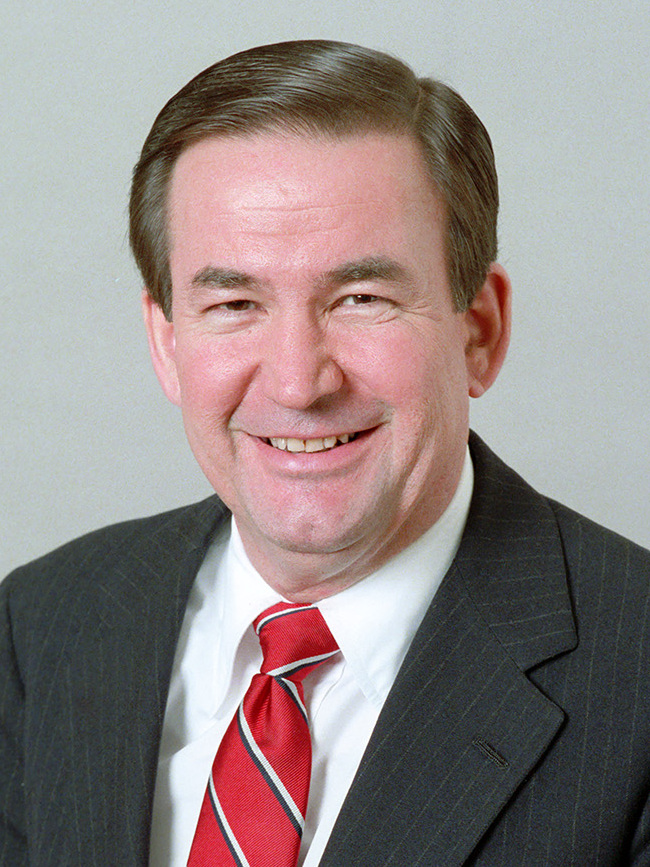
His main opponent was Patrick Buchanan — the ideologist of paleoconservatism, better known in Russia as the author of the book "The Death of the West." It must be said that his intellectual legacy still influences the minds of conservatives. Among those who voted for Ross Perot in 1996 (his second attempt), 32% were ready to support Buchanan against 29% for Trump. The poll was conducted among 500 respondents. At that moment, Ventura began having problems with the party, and his support for Trump was never publicly announced. Similarly, Buchanan asked for public support from Perot, but he refused.
During this mini-campaign, Trump revealed himself completely. His second ex-wife Marla Maples publicly stated that she was ready to tell what "Trump is really like." After that, the presidential candidate delayed the alimony payments he was supposed to make to her. He referred to the divorce agreement and later resolved the issue with his ex in court. She kept Trump's secret, and he resumed paying her money.
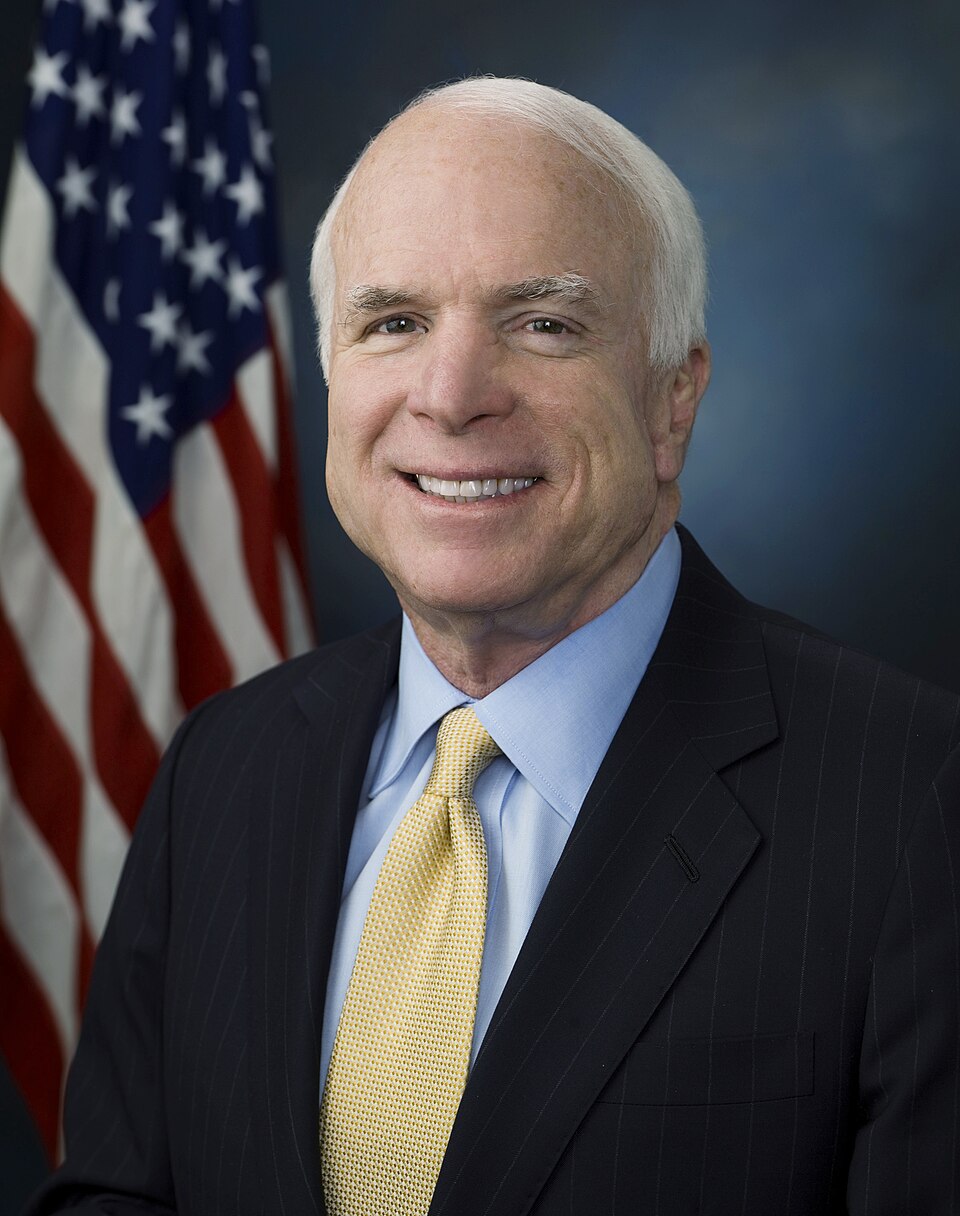
Having resolved the personal issue, Trump moved on to the public one — he attacked Buchanan. He called him a "Hitler lover" and a "hater of blacks and other minorities," including in matters of sexual orientation. In response, Buchanan subtly mocked Trump, saying that neither the Reform Party nor the presidency could be bought. Meanwhile, Trump presented his election platform to the public and even named a couple of people who were supposed to be part of his presidential cabinet. He saw Senator John McCain, whom he came to despise in 2016, as Secretary of Defense.
Captives are not heroes, but losers. I don't like losers. I like people who don't get captured.
Trump on McCain.
Beyond a couple of interviews, it didn't go further. Jesse Ventura, who convinced Trump to participate in the Reform Party primaries, left it himself due to internal conflicts. Trump was left without supporters within the party, which feared that the flamboyant billionaire might turn it into one of his expensive toys. Even Trump's first ex-wife, Ivana Trump, doubted that Trump was determined. When Trump's political consultant was asked live about future debates within the party, he didn't even know about them.
In the distant 1999, Trump tested his election strategy for future campaigns. It boiled down to constant TV appearances and loud soundbites – catchy headlines to attract attention. It worked, and in party preference polls, he was in 3rd-4th place. For a political outsider, this was a very good result. I remind you that all this time he was not running a full-fledged campaign but was only acting within the framework of the "Exploratory Committee." Therefore, he often said that he was still considering whether he should run.
In February 2000, he will end his campaign. In his column for NYT he will say that he didn't feel he could win with this party. He will also write a very important thing that will explain his victory in 2016. Trump thought that voters were ready for an anti-elite business candidate. This positioning will help him become president 16 years later. The almost false start nearly cost him his political career but taught him how to talk to voters. All that was left was to wait for the next opportunity to run.
Attack, Attack, Attack
You must keep raising the bar higher and higher. You must want more — otherwise, you will quickly slide down.
Donald Trump
In the film "The Apprentice: The Rise of Trump" about Donald Trump during his real estate business career, there is an amazing scene. Trump sits in a luxurious office, and political consultant Roger Stone flits around him, persuading him to try his hand in politics. Trump is not very engaged in the conversation but responds to Stone with something like: the government is for losers, and most politicians are dumb, why should he run? Then Stone shows him Reagan's slogan "Make America Great Again" and says that he is running on a business agenda: tax cuts, free trade, strengthening the military. Trump likes this approach, and according to the filmmakers, it is at this moment that the idea of going into politics comes to him.
How it really was, we do not know. The soul of another is a mystery, especially Trump's. What we do know for sure are the principles that formed the basis of his life: in politics, business, and love. They are most fully presented in the book "Never Give Up." Among them are obvious ones, like "Failure is not forever," or more realistic ones about assessing bad situations through the categories of "trouble" or "disaster." Categorizing a situation as terrible or not so much is one of the techniques in psychology. Of course, all these "be enthusiastic" and "remember the problems" sound like info noise or a set of online courses from another air seller. The book is structured so that each rule is supported by an example from Trump's life.
And everything would be fine, but Trump's real life rules are different. They were perfectly shown in the same film "The Apprentice." They were passed on to Trump by the "King of New York," lawyer and politician Roy Cohn, who greatly influenced Trump's career and, according to some biographers of the president, shaped him as a person. Here they are:
Attack, attack, attack;
Admit nothing and deny everything;
Whatever happens, always declare yourself the winner and never admit defeat.
These are the real rules of Donald Trump's life. We saw them in action during the 2016 Republican Party primaries when he was handing out nicknames to his opponents left and right. The second rule accompanies all lawsuits against Trump and dozens of legal proceedings. The third rule we saw after the Republican's defeat in the 2020 election when he did not acknowledge Biden's victory. He still hasn't acknowledged his loss back then.
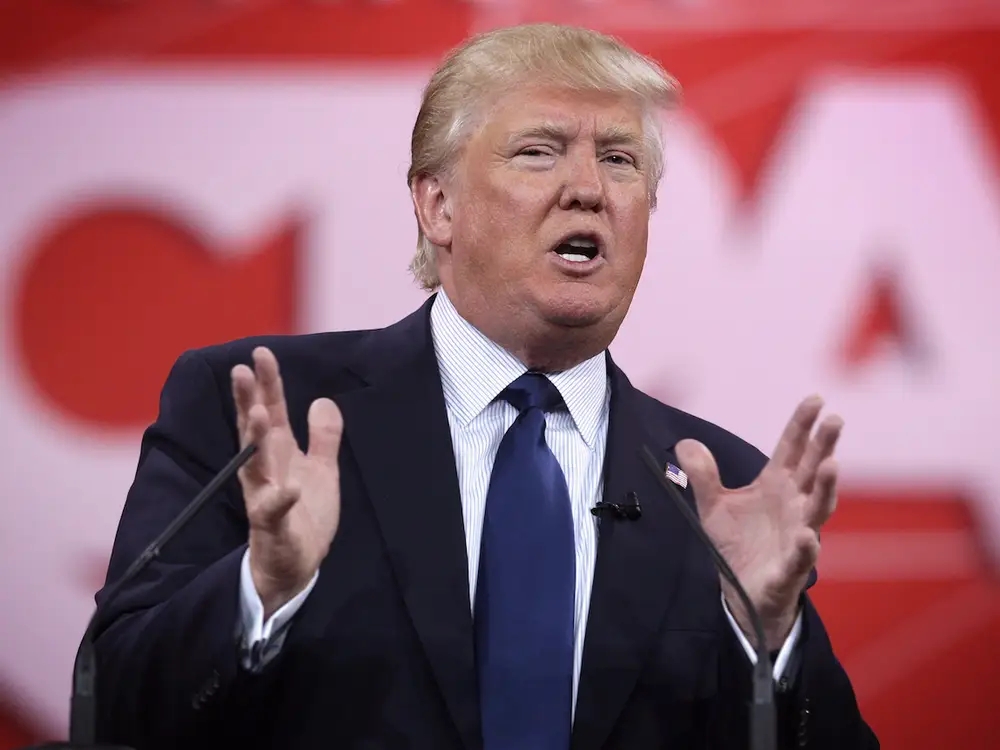
After the 2000 campaign, Trump repeatedly got involved in American politics. The next stage was the 2012 election when Barack Obama was re-elected for a second term. In 2011, Trump attended the Conservative Political Action Conference (CPAC).
The Conservative Political Action Conference (CPAC) — an annual political conference of American conservatives. It is attended by prominent Republicans as well as non-partisan politicians and activists. Tickets for the event are sold openly. The event format implies networking, acquaintances, and informal communication among people with common views.
According to experts, it was his speech among the most conservative part of the Republican Party that helped him build a career within it. Trump loudly declared himself, staked out his political values, and became part of the larger Republican team. However, his "campaign" ended almost as soon as it began. By May, he announced that he did not plan to run. Shortly after, Trump endorsed Mitt Romney — Obama's main opponent in that election.
The media once again started talking about Trump's "campaign" as a PR move for promotion. This time he was promoting the TV show "The Apprentice," where he became famous for his iconic "YOU'RE FIRED!" I would argue with that, as it was in 2011 that Donald Trump's real campaign began; he had already decided then that he would definitely run, but not necessarily in that campaign.
In the USA, there is a tradition of "public dinners." One such event is the gathering of journalists who work in the White House. This is an annual event known for its frivolity and "roast" format, where famous politicians joke about other people. Shortly before the event, Trump repeatedly questioned Obama's citizenship, claiming he was not born in the USA and therefore could not be president. This conspiracy theory was repeatedly debunked.
Barack Obama's birth certificate. Posted on the White House website.
Obama remembered Trump's attacks and during the dinner with journalists, he took a jab at him. The director's excellent work allowed everyone to fully grasp the thoughts of the future president, who forced a smile and didn't utter a word. Obama joked about Trump, repeatedly mocking his ambition to become president. He said Trump would make a great president because his dream and project would be to turn the White House into a casino with a rooftop jacuzzi.
In 2013, Trump spoke again at CPAC, where he more clearly focused on criticizing Obama, the unfair media that protect Democrats, and illegal immigration. He was offered to run for governor of New York, but Trump declined, believing that the voters of the Democratic state would not like his agenda anyway.
He took a wait-and-see approach and began preparing for the first real elections of his life in 2016.