Political science
Mikhail Sosnovsky
Author of the Telegram channel “Stahlhelm”
00:00
The origins of the Communist Party of Germany should be sought in the split of the Social Democratic Party (SPD) during the years of the First World War. The majority of socialists at that time supported their own government and voluntarily began to cooperate with the state system as intermediaries between the Kaiser government and the workers.
A smaller group of socialists did not agree with this course. As a result of the split in 1917, the Independent Social Democratic Party (USPD) emerged, whose members refused to support their own government. The "Independent" Social Democrats welcomed the February and October revolutions in Russia, but did not take active steps in Germany itself, waiting for the "objective" historical process to lead the country to revolution on its own.
Within the USPD, a radical group "Spartacus" was formed, led by Karl Liebknecht and Rosa Luxemburg. The former was the son of one of the founders of the SPD, Wilhelm Liebknecht, and even before the war, he became famous as a principled anti-militarist. The latter was an outstanding figure in the transnational socialist movement. A native of the Russian Kingdom of Poland, Luxemburg was initially one of the leaders of Polish social democracy, and after moving to Germany, of the German one as well. Moreover, Luxemburg established herself as a theorist of Marxist thought. Her work "The Accumulation of Capital" (1913) is considered one of the first conscious attempts to comprehend global capitalism as an interconnected and integral phenomenon. In her pamphlets on the Russian Revolution, published posthumously, Luxemburg criticized Lenin and the Bolsheviks for suppressing civil and political freedoms.
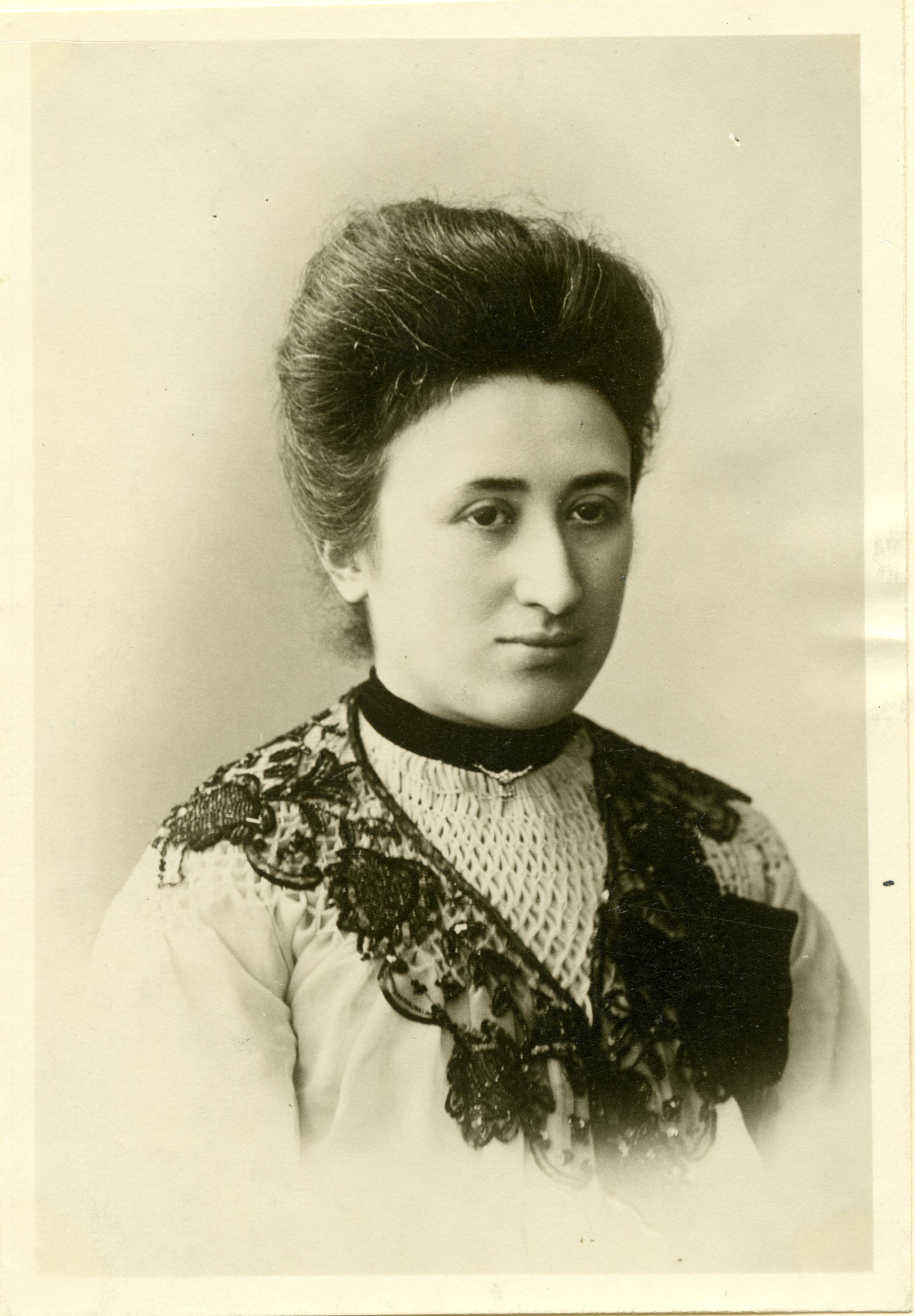
Liebknecht and Luxemburg believed that the "revolutionary situation" in Germany should not be awaited but hastened. For their revolutionary calls, they were arrested, and until October 1918, the leaders of the Spartacus group were in prison.
In October 1918, liberalization of the Kaiser regime began in Germany to appease the Entente before peace negotiations. Liebknecht and Luxemburg, as political prisoners, were released from prison and once again launched revolutionary agitation. In early November, a sailors' uprising began in Kiel, after which supporters of the USPD and Spartacus led street demonstrations across the country. On November 9, Social Democrat Philipp Scheidemann proclaimed the German Republic, and a few hours later, Karl Liebknecht proclaimed the Soviet Socialist Republic.
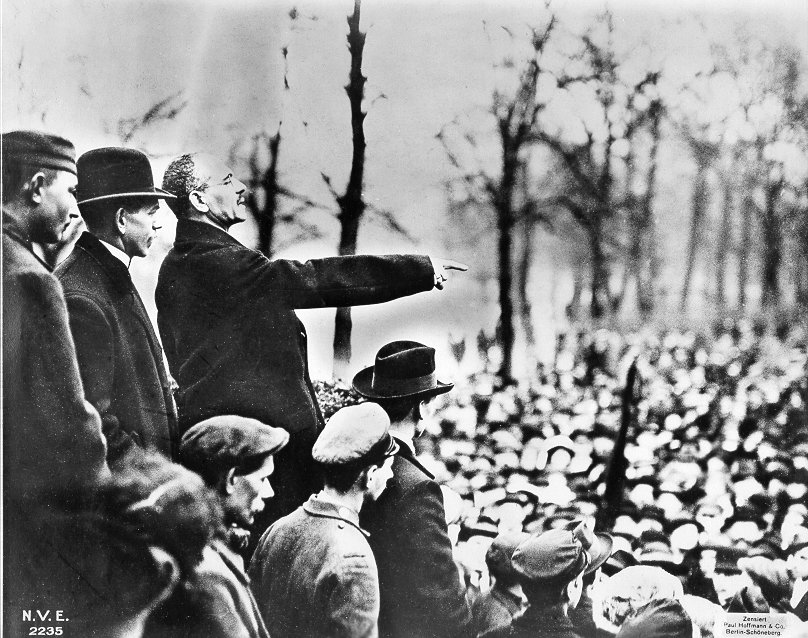
However, the full extent of real power after the revolution passed to the "systemic" SPD, which intended to govern jointly with moderate "bourgeois" parties – the Center and the left liberals. Although representatives of the USPD joined the first revolutionary government, they left it by the end of December. On the eve of the new year 1919, Liebknecht and Luxemburg completely separated from the "independent" social democrats and founded the Communist Party of Germany (KPD).
In the early days of January 1919, left-radical groups in Berlin, including the USPD and KPD, attempted to overthrow the government of the "right" social democrats and establish a Soviet republic in Germany. This January uprising was suppressed by volunteer corps (Freikorps), which included a significant number of front-line veterans with ultra-right views. They disliked the social democrats, but the "non-systemic left" seemed an even greater threat to them. Liebknecht and Luxemburg were captured and killed without trial. According to an unproven version, the secret order for their extrajudicial execution was given by SPD leaders – head of government Friedrich Ebert and military minister Gustav Noske.
Throughout 1919, communists and other left-radical groups attempted to create Soviet republics across Germany. The most notable examples of this were the Bremen and Bavarian Soviet republics. All of them were soon crushed by the Freikorps.

The communists boycotted the elections to the Constituent Assembly and therefore had no representation in this body, which in July voted by a majority for the Weimar Constitution. Germany became "bourgeois-democratic" rather than a Soviet republic.
Subsequently, the communists made several more attempts to overthrow the newly formed regime. In the wake of resistance to the right-wing Kapp Putsch in March 1920, workers' self-defense units formed the Ruhr Red Army, which temporarily took control of Germany's most industrial region. A year later, in March 1921, a communist uprising occurred in Central Germany. In the fall of 1923, amid hyperinflation, the Comintern was seriously preparing for the "German October." The communists then joined the regional governments of Saxony and Thuringia in coalition with the "left" Social Democrats and were ready to turn these states into a springboard for spreading the communist revolution throughout Germany. At the same time, an uprising occurred in Hamburg.
However, all these actions were suppressed by the Social Democratic state power with the support of the Freikorps and the Reichswehr. The putschist strategy of the communists did not find support even among the leftist popular masses. At the turn of 1920 and 1921, the KPD finally merged with the USPD, but within a few months, a significant part of the "independent" Social Democrats left the party. During this period, the KPD was torn by constant splits, and each faction had its own vision of party tactics and strategy.
By the mid-1920s, the KPD shifted from organizing senseless putsches to participating in elections, and this strategy began to bear fruit. If in their first elections in June 1920 the communists received only 2% of the votes, by May 1924 they had already received 12.5%.
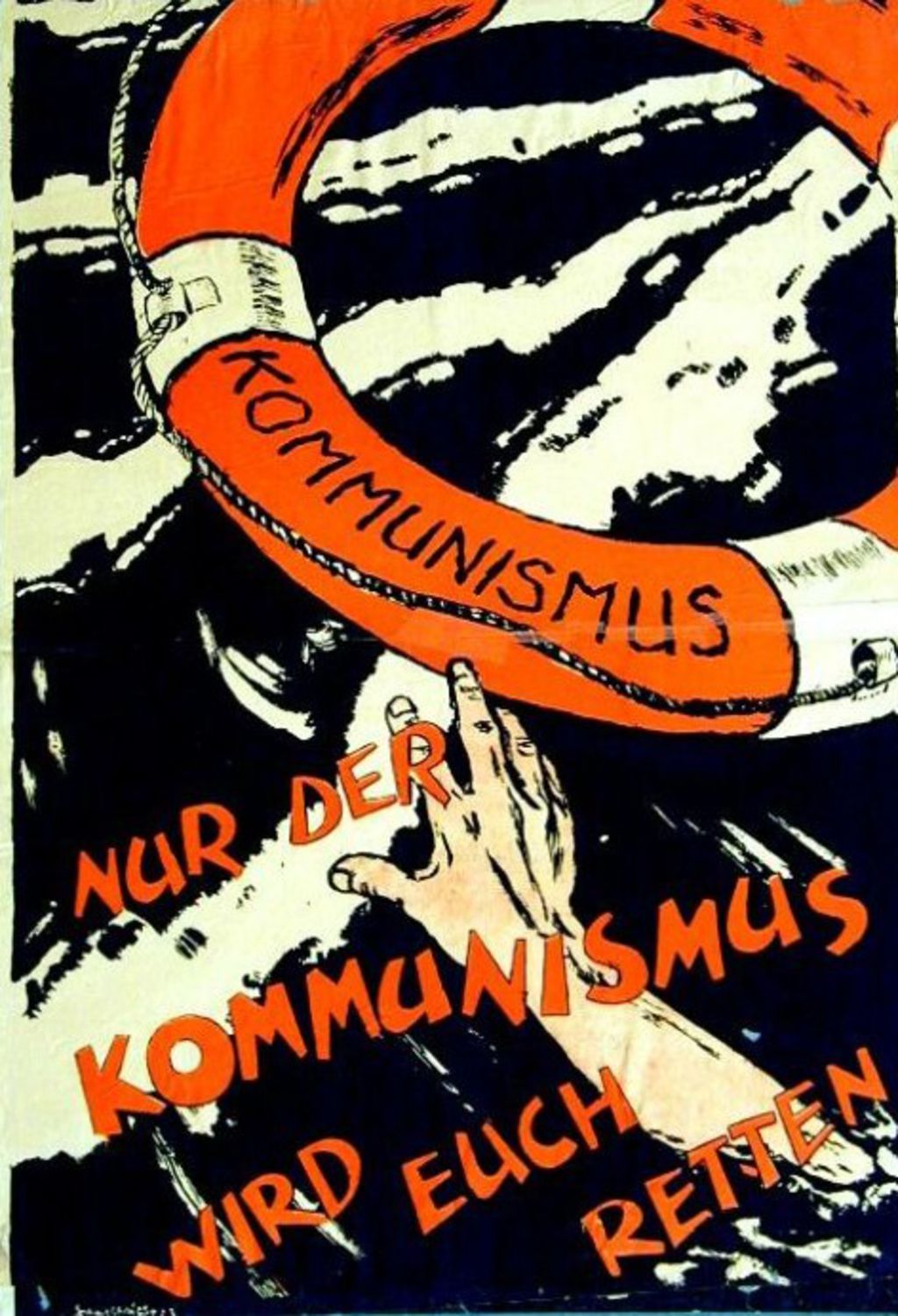
In the spring of 1925, the organizer of the Hamburg uprising and the new head of the party, Ernst Thälmann, was nominated as a candidate for the country's presidency. In the first round, he received 7% of the votes and took fourth place. In the second round, a contest was to take place between the consolidated candidate from the right, Kaiser Field Marshal Paul von Hindenburg, and the consolidated candidate from the Republicans, the chairman of the Catholic Center Party, Wilhelm Marx. The Communists refused to support the "bourgeois" Marx and did not withdraw Thälmann in the second round. He received 6.5% of the votes, while the monarchist Hindenburg surpassed the Republican Marx by 3%—with 48% against 45%. The Social Democrats then declared that Hindenburg became president "by the grace of Thälmann."
In 1928, Thälmann, who began to orient himself towards Stalin as his Moscow patron, managed to finally defeat all "opposition" factions within the Communist Party. The expelled communists formed their small Trotskyist or Bukharinist groups, but they had no serious influence.
During the Great Depression, the KPD became the main electoral beneficiary of the crisis alongside the National Socialists. The results of the communists consistently grew: 10.5% in 1928, 13% in 1930, 14.5% in July 1932, and 17% in November 1932. The KPD became the third most popular party in the country after the Nazis and Social Democrats. In Berlin and the Ruhr area, it was the most popular party.
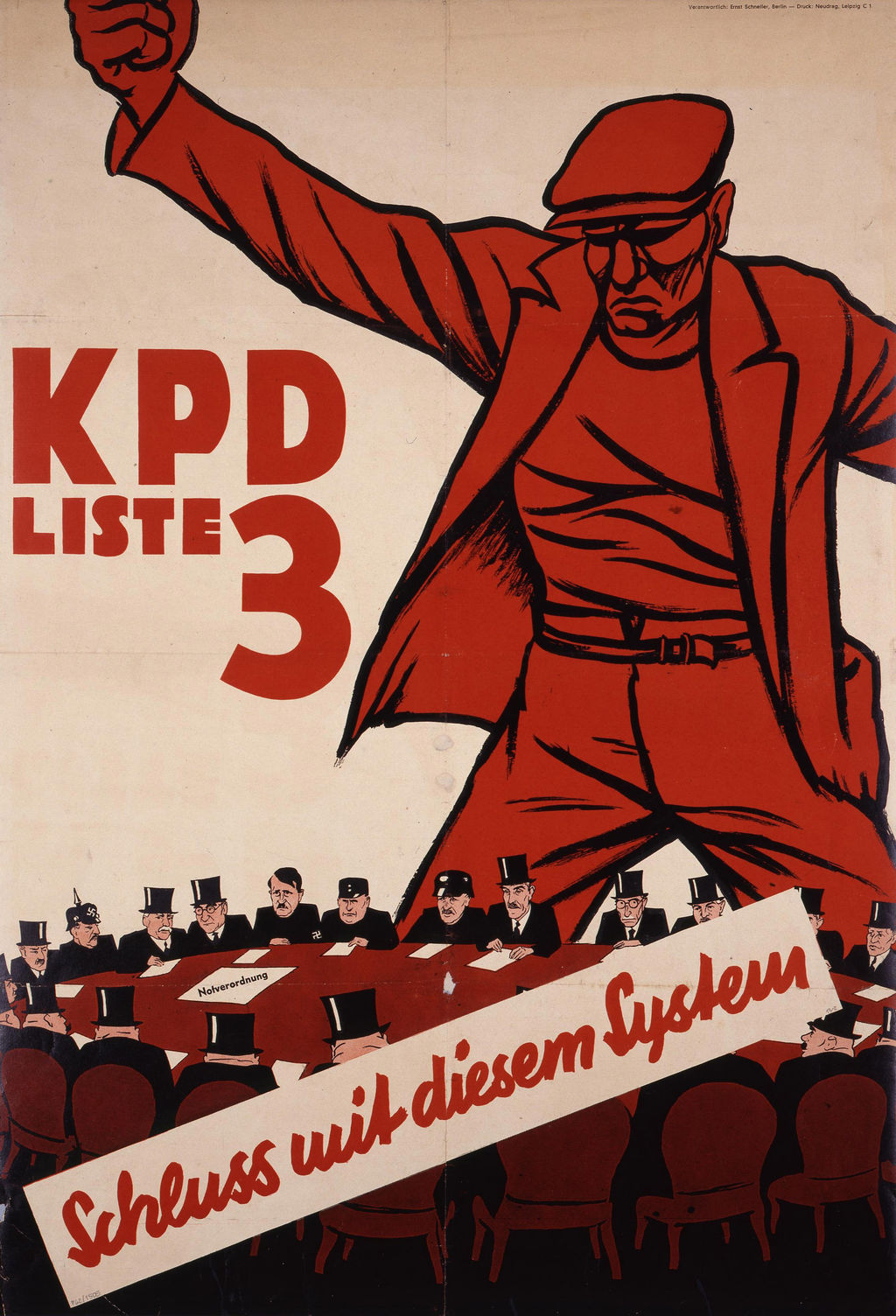
In the 1932 presidential elections, the KPD again nominated Thälmann. In the first round, he received 13% of the votes, while Hitler got 30%, and the incumbent President Hindenburg received 49.5%. In the second round, Thälmann received 10%, compared to 37% for Hitler and 53% for Hindenburg.
In addition to revolutionary rhetoric, the Communist Party actively flirted with nationalism. The KPD demanded a revision of the Treaty of Versailles as unfair to Germany and called for the right of Germans to reunite with all their compatriots in a single socialist state.
Paramilitary communist organizations were very active. In the first half of the 1920s, these were the "Proletarian Hundreds," then the "Red Front Fighters' League" ("Rotfront"), and after its legal ban in 1929, the anti-fascist "Kampfbund." Communist militants regularly engaged in street clashes with Nazi stormtroopers, the right-conservative "Steel Helmet," and the Social Democratic "Reichsbanner."

According to the instructions of the Comintern, in the early 1930s, the leadership of the KPD considered the main opponent of the labor movement not to be the National Socialists, but the party leadership of the SPD. Fascism and the capitalism that spawned it were "objectively" supposed to soon suffer an inevitable historical defeat by the working class, but the Social Democrats, labeled as "social fascists," confused the broad working masses and delayed the moment of their final victory. The KPD called for a "united anti-fascist front" of the entire labor movement, but this front implied the overthrow of the Social Democratic party leadership and the further following of the Social Democratic masses to communist instructions. In turn, the Social Democrats saw the communists as "red fascists"—enemies of the Weimar Republic just like the Nazis, and therefore also refused to form an alliance between the two Marxist parties.
In fairness, it should be noted that uniting efforts did not automatically mean the defeat of the Hitler movement. Indeed, if you add the votes for the Social Democrats and Communists in the Reichstag elections in November 1932, their 37.5% is more than the Nazis' 33%. However, the question of power was no longer decided in the Reichstag, but in the office of the conservative President Hindenburg. The number of parliamentary mandates had no practical significance. Moreover, a united Marxist front would most likely have united the "bourgeois" flank, which made up the remaining 60% of the electorate. Then it would have been even easier for the Nazis, who positioned themselves as defenders against the "red threat," to gain power.
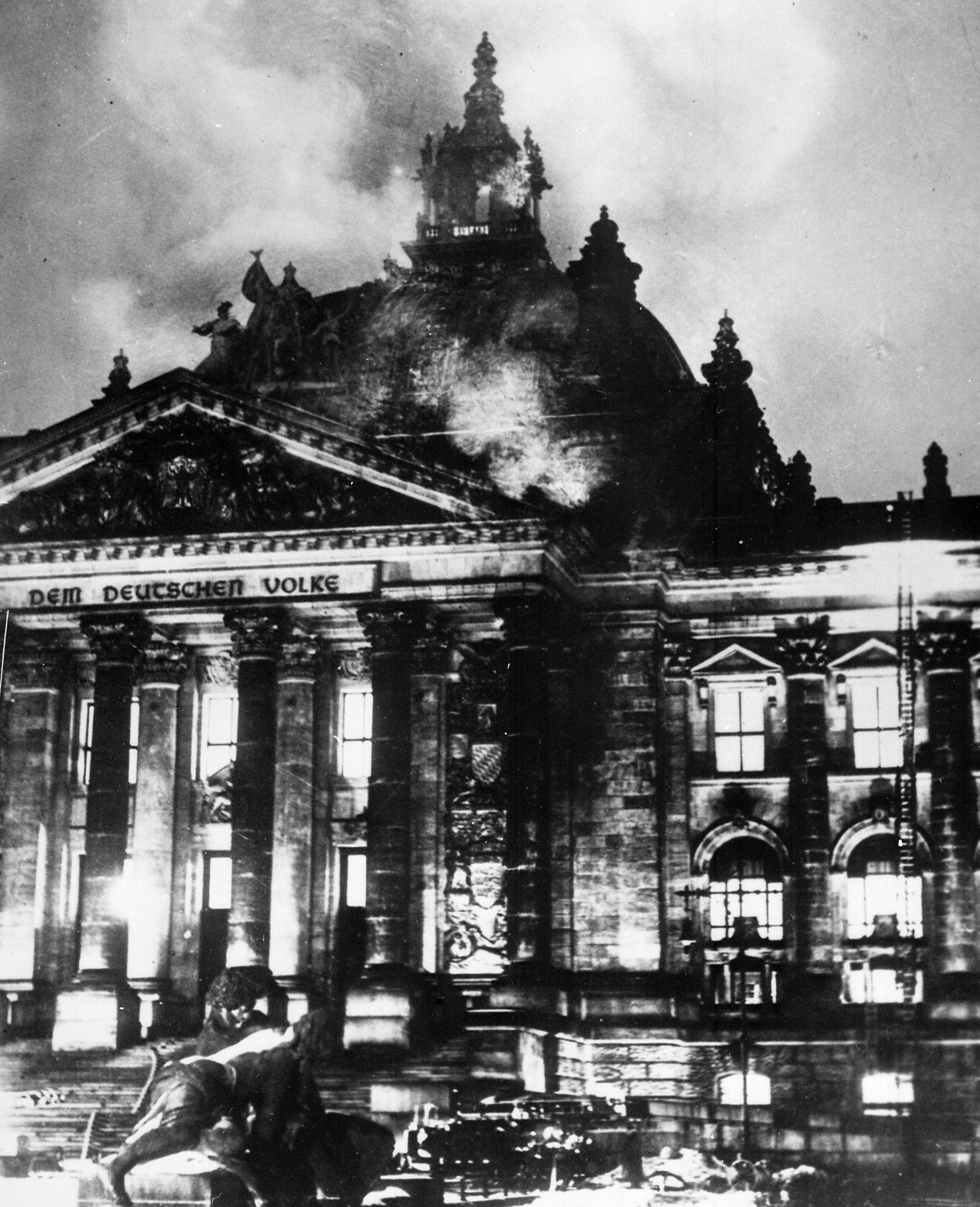
Immediately after Hitler was appointed Chancellor in January 1933, state repression against the communists began. On the night of February 28, a Dutch communist from a marginal left-radical group, Marinus van der Lubbe, set fire to the Reichstag building, which gave Hitler a pretext to move to full-scale legalized terror against all political enemies. The communists were considered the main target, and the KPD was effectively banned.
The communists did not offer any organized resistance. The main reason should be considered their belief in the "objectivity" of the historical process, according to which the Nazis were supposed to fall within a few months, and therefore the Communist Party should not risk its cadres in an uprising.
Despite intimidation and pressure in the last semi-free elections to the Reichstag in March 1933, the Communist Party still gained more than 12% of the votes. However, the communist deputies' mandates were immediately annulled. During this period, many party officials were captured, thrown into prisons and concentration camps, or even killed. Among those arrested was the party leader Thälmann. Some party activists managed to emigrate, while others went underground and continued the struggle.
Reasons for the ultimate failure of the communists in the Weimar Republic:
The KPD limited itself to "class" boundaries as a workers' party;
Orientation towards the working class led to a priority struggle against the Social Democrats, who fought for the same electorate, rather than against the Nazis;
The reputation of "revolutionaries" scared off the vast majority of the population;
Organizational and ideological dependence on the Comintern and the Politburo in Moscow;
Belief in the "objectivity" of historical processes led to an underestimation of the Nazi threat.
During the Nazi regime, many illegal communist groups continued to conduct underground struggle, engaging in agitation and sabotage. The party leadership in exile, following the instructions of the Comintern, recognized the thesis of "social fascism" as erroneous and began to call for the unification of all anti-fascist democratic forces within the "Popular Fronts".
Some KPD leaders were destroyed in the USSR during the "Great Terror". In Germany itself, communist underground fighters were also regularly exposed, arrested, and executed. Ernst Thälmann was executed without trial in the Buchenwald concentration camp in August 1944.
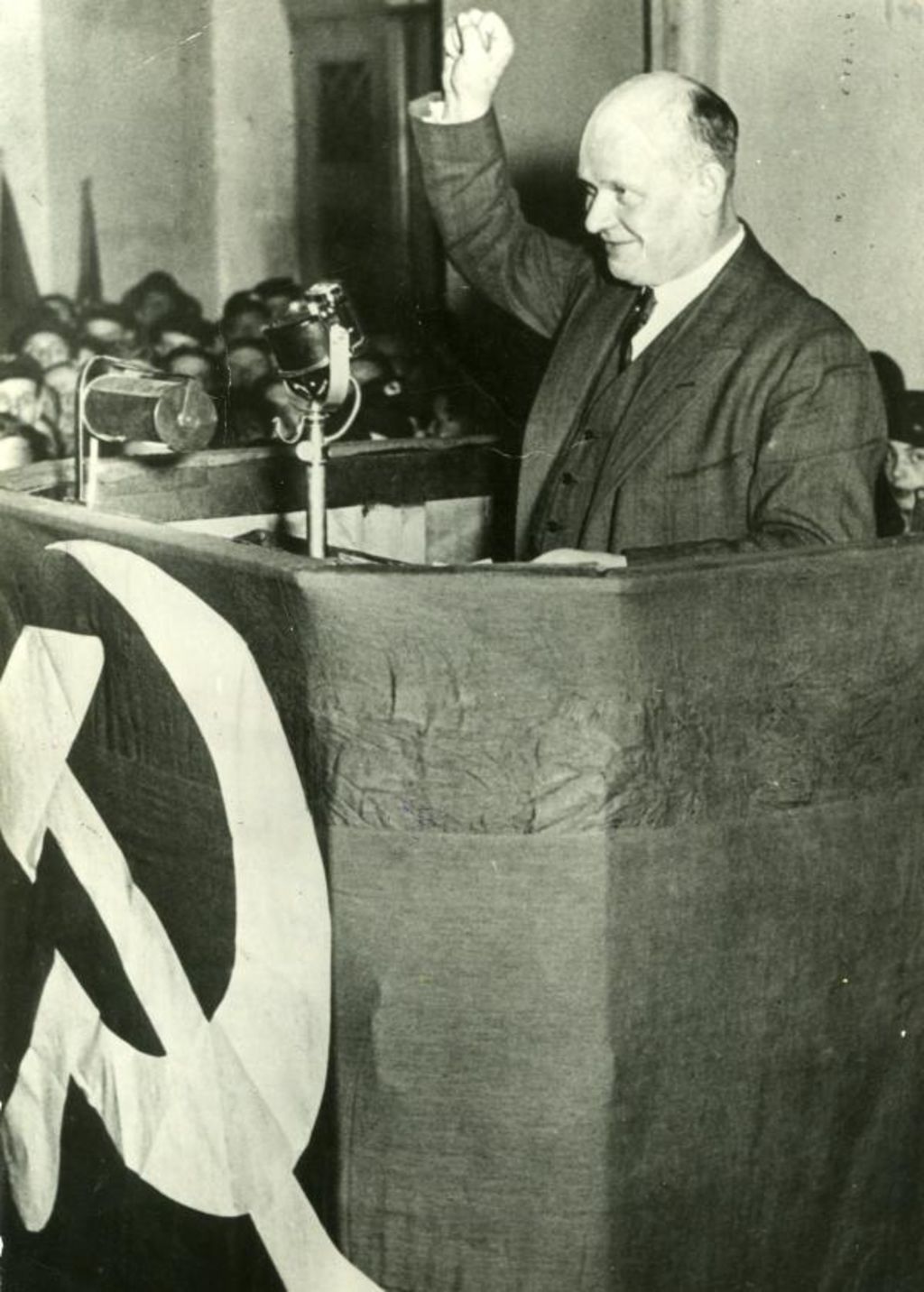
After the defeat of Nazism in 1945, the negative experience of the split in the socialist movement was taken into account in the Soviet occupation zone. In 1946, local Social Democrats and Communists united to form the Socialist Unity Party of Germany (SED), which was the ruling party of the GDR until 1990. Former members of the KPD – Wilhelm Pieck, Walter Ulbricht, Erich Honecker, and many others – formed the ruling elite of the new state.
Social Democrats in West Germany refused to unite with the Communists. In the first Bundestag elections in 1949, the KPD gained almost 6%. However, in the next elections in 1953, it failed to overcome the five percent barrier and did not enter the West German parliament. By 1956, the Federal Constitutional Court banned the Communist Party as extremist. Communists had to continue their activities as part of smaller and more isolated groups.
In 2007, the historical successors of communist organizations from West and East Germany united to form the "Left" party, which remains the main proponent of leftist ideas in German politics.