
Literature
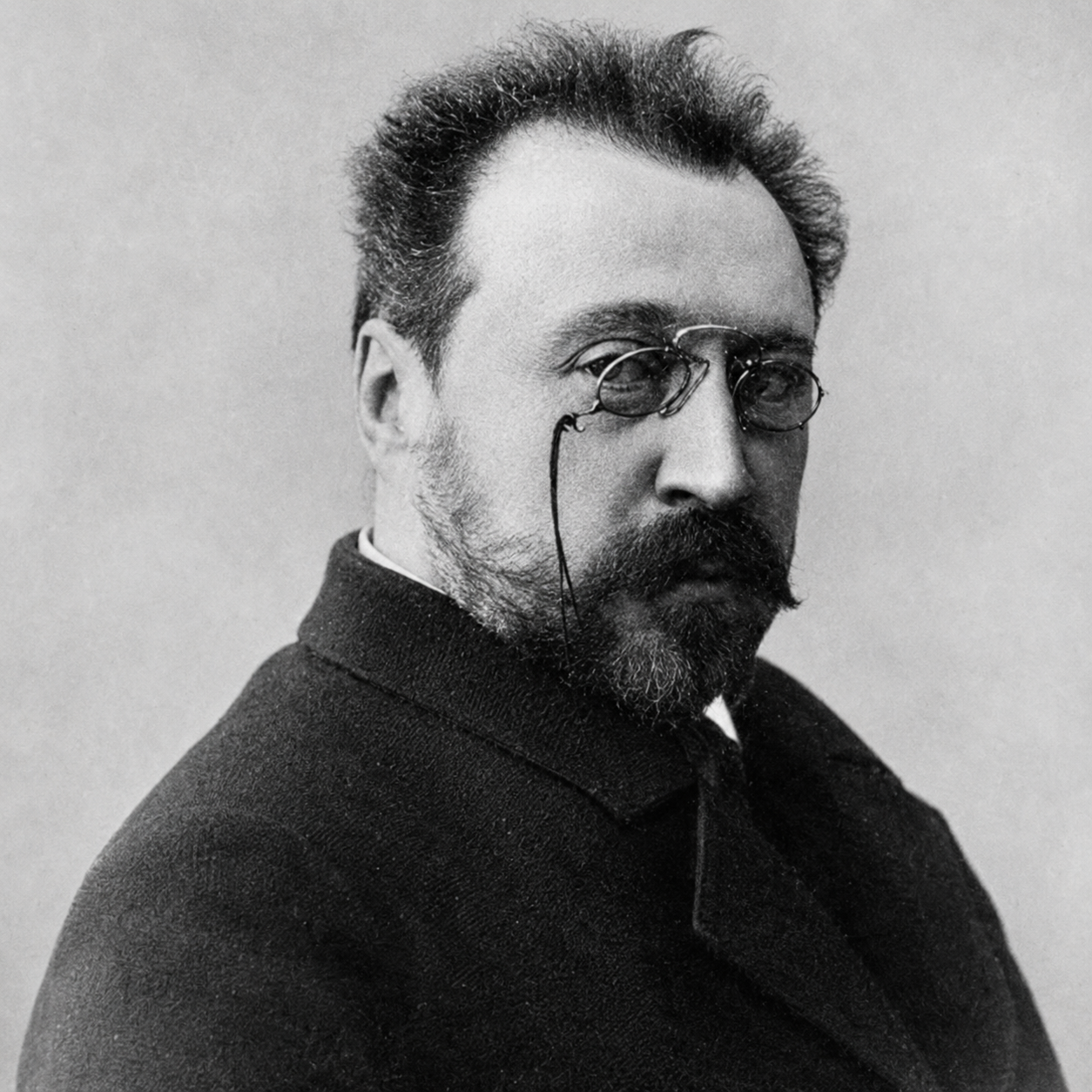
Pyotr P. Gnedich
Prose writer, art historian, and memoirist of the Silver Age
00:00
(Continuation)
Exactly at noon, Signora Beatrice appeared in Andrei Ivanovich's workshop with a heap of steaming pasta. It was prepared in the Italian way — that is, undercooked, and stuck to the teeth. But Andrei Ivanovich had gotten used to this sticky and tasteless dish during his first visit and therefore started eating it with appetite, offering the hostess a glass of Chianti.
— Oh, I don't drink at all, Signor Andrea, — she said sadly, sitting opposite him. — It was my husband's favorite wine, and it always brings sad thoughts to me.
And indeed, a tear rolled from her eyes, but, however, it dried up immediately, not having time to reach the handkerchief. The wine not only did not contribute to her sadness but, on the contrary, gave her face the most joyful expression.
— If you only knew how happy I am, Signor Andrea, — she said: — how happy I am with my daughters. Inessa, although she was only ten years old, supported me in my grief and provided the means for existence. She is incredibly smart. A phenomenon among children. When I buried my husband, my grief knew no bounds. I lay on the slabs of this courtyard and was in hysterics. And suddenly, Inessa comes up to me and says: "Mom, why are you so sad? Do you really think I won't support you?" You understand, this is a ten-year-old child speaking, a little one!
— Amazing! — confirmed Andrei Ivanovich, and refilled her half-empty glass. She pretended not to notice his maneuver.
— I said: My angel, is it for you, little one, to support me? And she replied: "Don't you know that Alessio Barbieri is painting the Resurrection of Christ and wants to surround the tomb with angels? He can't find an angel and said he is ready to pay two lire an hour if he manages to find a suitable head — like Inessa's, who lives opposite. That's what he said, mom, and you'll see, we'll have money." Of course, I immediately ran to Barbieri, started crying and saying how unfortunate I was. He understood my situation and offered Inessa three lire an hour. And soon the rumor spread throughout Rome that Barbieri had the perfect child posing for him. Genovese from Bologna offered four lire. Schmidt from Vienna — five. And Lord Stevens, a wealthy amateur, offered twenty-five lire per session, painted very poorly, but depicted her as a cupid with a rose pierced by an arrow.
— What kind of allegory is that? — inquired Andrei Ivanovich.
— I can't tell you, but he assured me that his heart was pierced by a little girl. He offered to adopt her and gave forty thousand lire for it, but of course, I didn't agree because I will never part with my charming little one. He was passionately in love with her. But, of course, at all the sessions, I never left them alone for a minute. He could have kidnapped her — you can expect anything from the English... And excellent wine you have, Signor Andrea. Where did you get it? Not in the alley to the left, where the pharmacy is?
Andrei Ivanovich pushed the bottle towards her.
— Well, how long did Inessa pose? — he asked.
— Until she was fourteen. When she turned fourteen, I told her: my dear, now it's inappropriate for you to pose in front of men. You have a small dowry, accumulated by your own labor. Increase it, but don't dare to expose even your shoulders in front of men. However, two months ago she posed as Psyche for the Bavarian artist Grünwald. Her canvas caused a sensation. Inessa is offered two hundred francs per session, but I won't allow it even for a thousand.
She poured the last drops from the bottle.
— But if you, my tenant, want to paint Inessa — of course, in costume — then for ten lire an hour she is at your service. She poses charmingly — like marble.
— Very pleasant, — said Andrei Ivanovich. — I will ask for m-lle Inessa tomorrow.
— And what is your subject? — she asked.
— I have many subjects. I need to paint Saint Barbara.
— Oh, she is wonderful for a martyr! When she raises her eyes upward, something unearthly spreads across her face. In a long white dress, with a lily in her hands, — it will be delightful! You won't find another Barbara like her in all of Rome. I won't even mention Naples. In general, look at her profile. Do you know why it's like that? Because her father is from Genoa. And you know, Genoese are the most beautiful people in Italy. We lived on a hill in Genoa, and from above we could see the entire harbor, and that white lighthouse and the endless blue sea. In Genoa, in Campo Santo, my poor mother is buried. From there we moved here because my husband got a job here...
— Mom! — Julietta's voice called out: — your milk is boiling over, you need to move it...
The signora jumped up.
— What a nuisance, can't do it herself! — she exclaimed. — Thank you, Signor Andrea! Tomorrow Inessa will be with you in the morning.
She rushed out of the studio, and soon her ringing voice was heard from the courtyard:
— This little devil will drive me crazy! I'll kill him!..
And in response, Julietta's silvery laughter was heard.
XIX.
After breakfast, Andrey Ivanovich, wandering aimlessly through the streets, ended up in some little shop, where a clerk forcibly dragged him in by the coattails. To get rid of him, he bought a string of bright coral. He bought them without any purpose, put them in his coat pocket, and only when he got home and saw Juliet's round head, like a cabbage, in the window again, did he remember the purchase. She was chewing something and throwing crumbs to the pigeons spinning on the stone pavement of the courtyard.
"Juliet!" he called out. "Look what I bought."
Her little eyes lit up.
"Is it for your sister?" she asked.
"No, not for her."
"Then for whom?"
"For whoever first enters my studio. If it's your mother..."
He didn't have time to finish. The head disappeared from the window. In two jumps, she flew across the yard, her shoes clattering on the stairs, the studio door flew open, and the red, excited face of the girl with hair sticking out in all directions and two rows of sparkling sharp teeth appeared right next to his face. Her hands lay on his shoulders, and she, trembling with anticipation, could only say:
"Here, I'm first."
He hadn't yet managed to put down the corals, he was holding them spread out in both hands. He threw them over Juliet, she deftly dived into them, wrapped her arms around his neck, kissed him firmly, leaning her knee on his, then jumped back, dashed out the door, and immediately her voice was heard in the yard:
"Mama! Mama! Look!"
Then the voice sounded in the house below, then on the second floor, then on the street. Some other voices were heard, then everything fell silent.
Andrey Ivanovich was naturally stingy; but he didn't mind a few rubles thrown on this string. He knew that this immediately put him in friendly relations with the landlady's family. He didn't clearly realize why he needed this, as he had no demonic intentions, and generally knew how to control himself. The idea of bringing a pretty Italian model to St. Petersburg, who would stay with him to manage the household, seemed very attractive to him, but he didn't want to specifically pursue this goal. How circumstances would unfold, so be it. Now he had bribed the younger sister, and he would have to cautiously approach the older one from all sides so that she herself would want to go with him. He even envisioned the picture like this: both—the mother and Inessa—would beg him, the famous professor, to take the girl to a distant, wealthy city where she could make a brilliant career. But for him to take even a step towards this—this could never be allowed.
The string of corals soon had an effect. Beatrice immediately appeared in the studio, leading Juliet by the skirt.
"Signor, is this your necklace?" she asked sternly.
"It was mine, and now it's Juliet's," he replied.
"You gave it to the child?"
"Yes. Why shouldn't I give it? She told me she never washes her neck; I gave it to her on the condition that she washes it daily."
"I will wash, Mama! I will!" confirmed the girl.
"But it's too expensive a thing, signor," Beatrice insisted.
"Not for me," he boasted playfully. "I'm too well-off a person to bother talking about such trifles. And it pleases the child."
"For this, you must, Juliet," said the mother, "pose for the signor for a week for free. No, signor, no, don't object. Gratitude is the best adornment for a woman. You give her a jewel, she gives you her time. In short, I want it that way."
The rumor of Andrey Ivanovich's generosity spread throughout the house like an electric current. When he went out into the street in the evening, the cook—a fat Calabrian—cheerfully bowed to him, which had never happened before; obviously, she expected to receive at least glass earrings from him.
Andrey Ivanovich prepared for the next day. He ordered a canvas, bought himself a new large easel, made several pencil sketches. He had already bought a long chiton long ago: it was sold to him by a departing boarder as unnecessary. He wanted to depict a young girl with a palm in her hands, in the circus arena. Later, this image could be adjusted to the canon of some saint, but for now, he did not have a specific goal. The artist in him, almost completely suppressed by church orders, awoke. The beauty of the girl ignited the spark that had appeared in him. He didn't recognize himself. Something stirred him, made him pull himself together, feel his strength. He even went to the barber to get a haircut, as he even felt a certain grooming before a woman.
He slept poorly at night, often waking up and waiting for dawn. He deliberately did not draw the curtain at the windows, and when the dark sky began to lighten, filling with pink paint, and the pigeons stirred on his windowsill, he felt a surge of joyful happiness of life—and immediately fell into a deep, peaceful sleep.
He woke up at half-past seven to a knock on the door. It was coffee and eggs being brought to him. A slanting ray of sunlight stretched sharply across the room and played a rainbow in the faceted glass.
"Signora Inessa asks when the session will start?" asked the old cook.
He said in half an hour, and asked to have his bed made immediately. He quickly, nervously had breakfast, placed a chair by the bed, and screened it with screens. From the screens, he laid a carpet path to the pedestal where the model was to stand. The florist, whom he had ordered to bring flowers the day before, brought a whole heap, and he scattered them wherever he found it more decorative. Exactly at eight, there was another knock, and Inessa appeared on the threshold.
He approached her and shook her hand. She was wearing a light pink blouse and skirt. She looked at him calmly, only her nostrils slightly flared.
"Very glad to see you," he said. "Please sit here in the chair."
She sat down, picked up a flower from the carpet, and brought it to her nose.
"Tell me, do sessions tire you? How long can you pose?" he asked.
"I'm used to it," she said in a low, chesty voice. "I can sit calmly for two hours, and stand for about an hour. If I get tired, I don't hesitate to ask for a break."
"Yes, yes, please," he quickly confirmed. "The main thing is, don't hesitate. If you're tired, or feel dizzy, just say so immediately."
He handed her the sketch.
"See what I need."
He went behind her, leaned on the back of the chair, and began to explain. He wanted her, when he was painting the head, to suggest to him the expression on her face that suited the circumstances. She needed to feel the approach of the beast, but not fear it, and trust in Providence. It would be easy for her to imagine because Signora Beatrice said yesterday that Inessa is very religious and, as a true Catholic, never misses a Sunday service. Therefore, she is not unfamiliar with religious ecstasy, and she can to some extent embody the plot that now torments him so much.
She listened to him calmly and said:
"Okay, signor, I'll try."
He said that the clothes were behind the screens. She stood up, placed the drawing on the table, glanced at the mirror in passing, and slowly went behind the screens. He heard her slip off her shoes, heard the rustle of her dress and the soft sound of the wide cashmere chiton. He drew the lower curtain of the window, moved the easel closer, opened the box with charcoal, and waited.
She came out, adjusting her sleeves. The chiton seemed to be made for her. A small bare foot showed only the tips of the toes when she stepped forward. Her neck was barely exposed, wide sleeves allowed her arms to be seen up to the shoulder when she raised them to let her hair down in front of the mirror. Her hair was not particularly long, but thick and fell in black waves over her shoulders and chest. Her face changed because of this, becoming even more virginal and stern. She turned to him and asked:
"Like this?"
"Like this," he replied.
She leaned on his hand, stepping onto the pedestal, he followed her, positioned her, and began adjusting the folds on the chiton. He saw the bare arm laid on her chest with a golden tint of a lingering tan, and the down covering the skin.
"You're Genoese, aren't you?" he asked. "You have Greek blood in you."
"Maybe," she replied indifferently, and added, "it's more comfortable for me to hold my fingers like this."
"Wonderful!" he praised.
He stepped down from the pedestal. She froze in the given pose. The session began.
XX.
He had already grown unaccustomed to such professional models who wouldn't move a single fold and stood motionless like marble for hours. Quickly and boldly, he sketched the general outline of the figure, trying to capture the overall rhythm of the pose. She immediately left him, like a girl, the landlady's daughter, like Inessa, who made him trim his beard shorter. Before him was a Christian martyr—and nothing more. Out of habit, he didn't pick up the brush until the face was drawn in the finest detail with red charcoal, so he didn't touch the paints. He was silent, his eyes burning, moving back and forth to the canvas, measuring with a caliper the distance that seemed incorrect to the eye, for which he stretched out his arm far, squinted one eye, and checked the contours with a plumb line. Years of academic experience showed: he worked confidently, with the techniques of a trained technician, easily overcoming all the difficulties of drawing. When the wall clock struck nine, he stopped in amazement.
— What? An hour has passed?—he asked.
She stirred.
— Yes, — she said. — And therefore, ten minutes of intermission.
She easily jumped to the floor, put on her shoes, and approached the easel.
— What do you say?—he asked.
— My nose is longer,—she said after thinking.
— I'm not painting a portrait,—he objected.—I'm taking from nature only what I need. And the nose is in perspective.
— You all hide behind perspective. Whenever something doesn't work out, it's immediately perspective.
He blushed.
— In your opinion, is it unsuccessful?
— No, it's good, but not similar. And I only recognize exact likeness to nature. I generally don't like the whole old school. I don't like any of the old artists.
— And Raphael?—he asked in horror, bulging his eyes.
— Yes, and Raphael. His paintings are not ideal for Madonnas, and there are no such girls.
— And what do you need?
— I love old portraits, of living people. I stand before them, look, and think. There were people, and now they're gone. They thought, ate, drank, just like us. And now they're gone, but I feel them, I understand them, and they understand me. There are such old men in dull frames. If they were alive, they would be three hundred years old. Then there are ladies in silk brocade dresses with fans. I love them too. But those statues in the Vatican, they're completely boring because they're white and eyeless. To hell with them.
— However, you do reason! — Andrey Ivanovich was surprised.
— I told this to Schmidt,—she continued:—to the one who lived here in the studio before you. I told him, if I were an artist, I would paint a window, flowers on the window, and a warm spring day outside. Then I would paint the German woman who lives here on the corner, the wife of the artist Wagner. She is very pale, her hair is light golden, and her eyes are like amethyst. Her neck is like a bird's—thin and straight. If you put a golden band on her head, it would be I don't know what, but it would be something very good, so pleasant, strange, like a fairy tale. When I meet her, I always remember something very nice, forgotten, and I can't recall it. Therefore, it would be so good to paint her in profile. But her husband paints her as a bacchante, and it doesn't work out, and in general, why paint bacchantes when they don't exist?
Andrey Ivanovich looked at her with wide eyes.
— Well, then, what else would you paint?—he teased.
— And then, I would paint a storm, night, and black ruins. Black towers, and people going somewhere, where—unknown where and why,—to make it scary. So that when someone looked, they would feel frightened. Then I would paint fog in the mountains. When we traveled from Florence here, we saw fog in the mountains. And the rocks float in this fog in the morning. They appear, then hide, like giants.
— But I'm not a landscape artist, — said Andrey Ivanovich.
— An artist should be able to do everything, — she insisted:—both portraits and landscapes, everything.
— Well, that doesn't happen. And you are strict and bold. That's good.
— No, it's not good,—she objected.
— Why?
— I won't have happiness in life. I'll ruin everything with my tongue. I told all the artists who painted me that they were doing it all wrong, and that none of it was necessary. You know, two artists proposed to me, that is, they wanted to marry me. But then, when we started seeing each other more often and talking, they began to fear me and backed out. And both of them said the same thing: that a wife like me can't be kept in the house.
— Why?
— Because I will talk and criticize. And a woman should be silent and cook macaroni.
— Is that all? But we, Russians, love when a woman is equal to us.
She raised her black eyes to him in surprise.
— Not true!—she said:—such a man doesn't exist. A man always wants to be a king because his muscles are stronger. And muscles are always valued more in life than the soul.
Andrey Ivanovich felt amused.
— Where did you get all this from! Who developed you?
— No one developed me; I see and know everything myself.
— Why do you never smile?
— What is there to smile about?
— Is life boring?
— █████████████████████████████
— █████████████████████████████████
⟨Fragment hidden according to the requirements of the current legislation of the Russian Federation. — Ed.⟩
— Well, Juliet is a child, babbling whatever comes to mind. ██████████████████████████ It's all the same. Always the same sky, the same sun. In autumn and winter, it's cold, in summer—it's hot. On the streets, vendors shout, dogs run, bells ring on the bell towers.
— And will you get married?
— Then I'll be in the kitchen more than now; I'll bathe the children and sew my husband's clothes.
— And if you marry a rich man?
— Then I'll look at the wall and the ceiling, and once a day ride along the Corso. I don't like Rome.
— Do you want to go to St. Petersburg?
— How is it better?
— Better, not better, but cleaner. There's a huge, wide river there,—not muddy green like the Tiber, but light blue, azure. In winter, everything is covered with snow, and this river is covered with ice, and on the ice stands a tent made of reindeer skins, and Samoyeds-pagans ride on horned reindeer, and for half a lira, they'll take anyone for a ride. And in summer, the sun almost never sets, and at midnight the sky is pink and golden, like after sunset, and for two months there are no twilights at all.
— Like in a fairy tale!—she said thoughtfully.
— It's a city of granite, — he continued. — There are huge cathedrals, with a whole forest of granite columns and bronze pediments. There are endless bridges, there are huge squares that can fit ten of your forums. There, at Christmas, the snow crunches and sparkles with millions of sparks, and in every house, Christmas trees are lit. There is the border, there is the end of Europe, and further north, there is already a completely fairy-tale country, Finland—with transparent, glass-like lakes, quiet forests without birds and without singing, with pale nights and huge rivers foaming among granite shores.
— Well... I would go there, — she said. Then she shuddered, shrugged her shoulder, and added:—Time to work.
She returned to her place. He picked up the paints. They were silent, but... the work didn't go well. She looked into the distance with a distracted gaze. He cautiously and carefully tried the tones of the paints. Suddenly, a cat jumped in through the open window. They laughed but said nothing.
The door opened, and Juliet slipped into the room. As usual, she was chewing something.
— Why are you here?—asked her sister.
— Mom sent me to watch over you,—said the girl:—so you don't kiss the artist.
— What nonsense!—Inessa said through her teeth.
Juliet sat on a stool and watched Andrey Ivanovich work.
— Paint the Annunciation,—she suddenly said.—Sister really wants someone to paint her as the Virgin Mary. And make me the angel kneeling. I'll say: "blessed is the fruit of your womb."
— Stop lying!—her sister stopped her.
— Inessa wants,—Juliet continued, not listening:—to marry a famous artist. She said she wants to go to America and hunt wild horses there. She was told a lot about America and how American women live there, so she definitely wants to go there. But that's all nonsense, and here's the main thing. Mom lets us go for a walk together on Sundays after mass. We'll go somewhere, Signor Andrea, won't we? You'll treat us to lunch with wine, then buy us a box of chocolates each, and you'll court both of us? Mom wants to be alone with the papal guard who visits us on holidays.
— This is outrageous!—Inessa shouted.—I'll tell mom what you're saying here, and she won't just not let you go with us on Sunday, but she'll lock you in the closet with the rats and spiders for a whole night.
— She'll never do that because you'll never tell her anything!—Juliet laughed in response.—And on Sunday, you'll wear your pink dress, take the pale umbrella, put on gloves, and I'll be in a white dress with lace, and we'll go to Tivoli or I don't know where, — wherever the maestro wants. Right, Signor Andrea? Right!
— You have to lock yourself away from her like the plague,—muttered the sister.—I absolutely can't pose with her around.
— I'm quiet! quiet!—Juliet shouted, and grabbing the cat by its front paws, she started dancing the tarantella with it in the studio.
XXI.
They certainly spent Sunday together. Inessa was still strict and stopped her sister when her jokes went beyond the bounds of decency, which happened every five minutes. They dined out of town, in a shabby little restaurant where wandering beggars played violins all the time, and a tipsy group of French artists sang the Marseillaise. Juliette kept asking Andrey Ivanovich:
— What will you give us?
He joked, saying he would give the Vatican to Inessa and St. Peter's Basilica to her. But Juliette did not like such jokes. She demanded that he move to more realistic ground. Then he said that the sisters should decide what they wanted.
— I want silk for a dress!—said Juliette.
— All right, I will give you white satin for your wedding dress,—said Andrey Ivanovich.—You will receive this gift on the day of my departure from Italy. And when you get married, on the day of the wedding, kneeling before the priest, remember that far in the north lives an artist in cold and fog who made you this gift.
Juliette suddenly pouted and stopped talking.
— And you, Inessa, what do you want from me?—he asked.
— You will give me a revolver or a dagger,—she said.
— Why?
— ██████████████████████████████████████████████████████████████████
— I absolutely do not want to give you such a weapon,—he said.—If you had a revolver, I would steal it.
— █████████████████████████████████████████████████████████████████████████████████████████████████████████████████████████████████████████████
— █████████████████████
— Really?—he asked, laughing, thinking she was joking.
— ██████████████████████████████████████████████████████████████████████████████████████████████████████████████████████
— What is she saying, mademoiselle Inessa?—he asked.
— █████████████████████████████████████████████████████████████████████████████████████████████████████████████████████████████████████████████████████████████
⟨Fragments hidden in accordance with the requirements of current Russian legislation. — Ed.⟩
— But did you risk drowning?
— I don't know.
— Can you swim?
— No. I have no idea.
— But don't forget,—Juliette interjected:—that Don Jose was supposed to marry an Austrian duchess, and Inessa did all this out of jealousy. She had a picture of Jose under her pillow, and she kissed it so much that she wore a hole in the portrait with her lips.
By evening, the three of them returned home. The guardsman was still sitting with Signora Beatrice, silent and smiling broadly. This was probably because he was terribly drunk, having consumed an incredible amount of wine throughout the day. Beatrice herself was also very cheerful. She greeted her daughters with joyful cries, introduced the guardsman to Andrey Ivanovich as the best friend of the house, the only man she could rely on in case of trouble. Then she took the tenant aside and seriously began to tell him that she was completely confident in him and considered him the most honest person; otherwise, she would not have let two girls go with him. She knew an Englishman, a very wealthy man, and she would never have let her daughters go with him. Then she asked him and the guardsman to drink the last bottle. She wouldn't ask again. She was an enemy of drunkenness. She especially hated wine after the unfortunate death of her husband, which happened precisely because of this cursed drink. But once a week, on Sunday, to drink an extra glass, she understood that.
The wine turned out to be sour and watery. The guardsman drank it like water. Andrey Ivanovich clinked glasses with him and the widow. The last rays of the sun fell on the wall and played with golden spots on the old wardrobe.
— Oh, this wardrobe, — said Signora Beatrice:—my husband bought it the day after we moved to Rome. I can't see it without tears. Everything reminds me of him.
She cried and shook the guardsman's hand tightly.
(To be continued)