Art
PONTVS TEAM
Content produced by our editorial team
In the covered passage of Vero-Dodat, just a few steps from the Louvre, there was almost always a crowd in front of one shop window. The window belonged to the publishing house "Maison Aubert," and every few days a new sheet appeared in it: a fresh caricature of the king, a minister, or a deputy. People would come up, peer in, recognize faces, laugh, and move on to recount it. Those who couldn't afford a subscription could visit reading rooms and cafes where the same sheets lay on the tables. The drawing that came out of the lithographic press yesterday was known throughout Paris by evening.
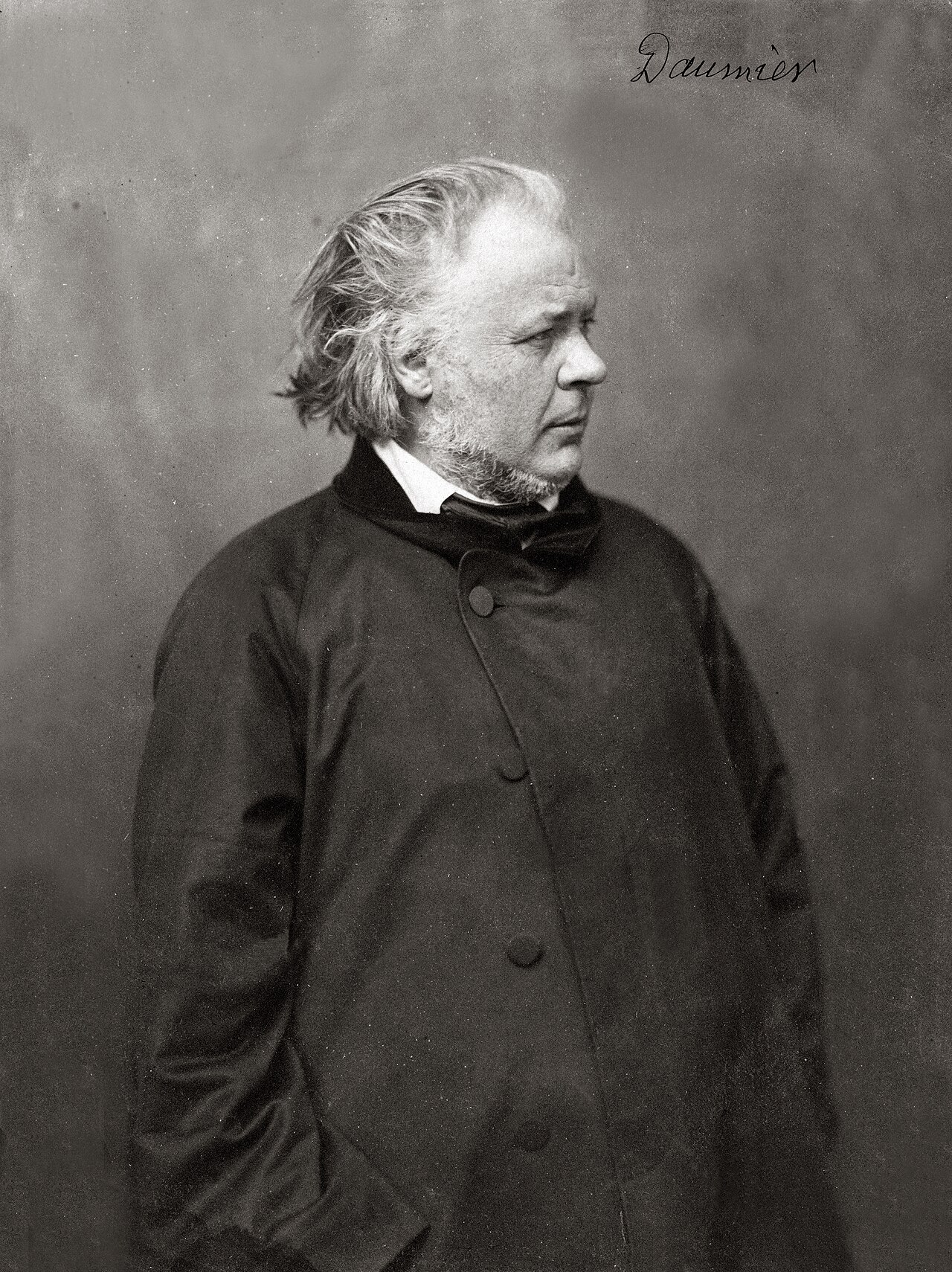
This was how the new machine of public opinion worked, and few in the 1830s understood its power better than two people. One was the publisher who figured out how to trade in laughter at the expense of the powerful. The other was the artist who went to prison for this laughter. The history of French political lithography fits between them, between the calculating Charles Philipon and the stubborn Honoré Daumier, and it is shorter than it seems. Its true heyday lasted only five years, but the mark it left proved more enduring than the July Monarchy itself.
Stone
It all started with limestone. In the mid-1790s, Alois Senefelder, a Bavarian and unsuccessful playwright seeking a cheap way to print his own plays, stumbled upon the remarkable property of smooth Solnhofen stone. If you draw on it with a greasy pencil, then wet the stone with water and roll a paint-covered roller over it, the paint adheres only to the greasy strokes, while the wet areas repel it. Fat and water do not mix, and this simple principle underlies all lithography. No engraving tools or acid etching, as in engraving. The artist simply draws on the stone, and the stone remembers every movement of the hand.
The technique was brought to France by Godefroy Engelmann. In 1816, he presented the first prints made in his workshop in Mulhouse to the Royal Academy. Lithography returned the artist's handwriting to the printed sheet: the engraver, transferring someone else's drawing to copper, inadvertently smoothed it out and erased the liveliness of the original, while the lithographer drew himself, and what appeared on paper was not a copy, but a living line. Later, critic Philippe Burty would describe lithographs most accurately: they are "the most direct reproduction of the artist's thought."
Working on stone only superficially resembled drawing on paper. The surface was capricious. For pen, it was polished to a mirror finish; for pencil, on the contrary, it was left slightly rough so that the grease would adhere better. The stone feared any accidental touch: a sweat stain, dandruff falling from hair, a speck of dust would turn into a gray haze or dirty halo on the print. Masters were advised to keep new badger brushes ready, cover the stone during breaks, sharpen pencils to a special hardness so that the lead would not crumble under pressure. Daumier despised all these precautions. Poet Théodore de Banville, who visited his workshop in July 1848, remembered the bare walls painted light gray, the black iron stove, boxes with drawings that no longer closed, and a small table with stones. Daumier drew with stubs of old pencils, for which he had to find the right angle, suitable, in his words, "for the feverish mood of a nimble hand, a thousand times smarter than the dull and perfect blade of a penknife."
The stone also had its own commerce. The most popular sheets were hand-colored by professional colorists, and the colored version was valued more than the black-and-white one. In December 1838, "Caricature" invited subscribers to colored series as a special supplement, promising them decoration for the living room. Later, already in the late 1830s, Engelmann would patent color printing from several stones—chromolithography, and the cheap picture would finally conquer the bourgeois home.
But for now, it was only about pencil and black stone, which was cheap, printed quickly, and produced thousands of prints. Copper engraving required weeks of painstaking work and a special master engraver, whereas lithography could be done by the artist himself in a few hours, and the print run was in the thousands. The image ceased to be a unique item for the salon and became a commodity for the street. It remained to find someone who would turn this technical possibility into a weapon.
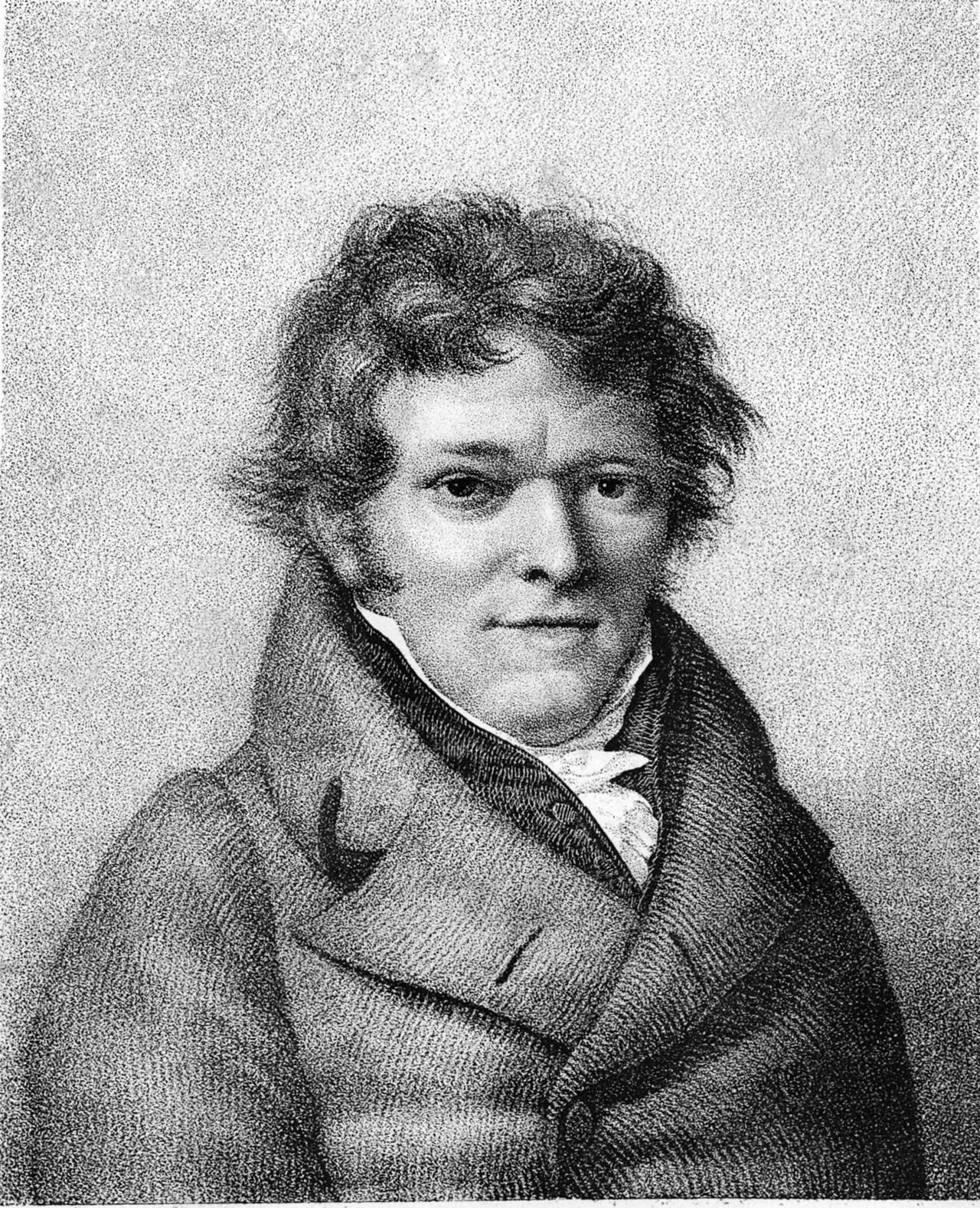
Philipon and His Machine
Charles Philipon had a business acumen more akin to a newspaper magnate of the future century than an artist. In the autumn of 1829, together with his half-sister Marie-Françoise and her husband Gabriel Aubert, he founded the publishing house "Maison Aubert" in Paris, which in the coming years dominated the satirical graphics market. In December of the same year, his first magazine, "Silhouette," was published, lasting until January 1831. In November 1830, Philipon launched the weekly "La Caricature," and from 1832 the daily newspaper "Le Charivari," which turned out to be a long-liver: the newspaper outlived its creator and continued until 1937.
Philipon's strength lay not only in the drawings but also in how he delivered them to the reader. Subscriptions cost money and were not affordable for everyone, but fresh sheets were available in reading rooms and on café tables, and the "Maison Aubert" showcase in the Passage Véro-Dodat served as a free daily exhibition for any passerby. The image reached places where no newspaper editorial could: to the illiterate, the hurried, and those who simply glanced at the showcase on their way. Laughter spread faster and deeper than any pamphlet, and this was felt at court.
Philipon gathered the best draftsmen of the era around him and set the business on a stream. A whole team worked on each sheet. The artist drew on stone, a professional printer prepared it for print, the caption author composed a biting text under the picture, and the threat of court loomed overhead. The first two or three prints on thick paper were made before the text was printed: they checked the quality and sent out samples. In 1830, the written press was freed from preliminary censorship, and caricatures were not checked before printing, but they were judged afterward: for one sheet, an artist could face trial and imprisonment. A mandatory print was submitted to the authorities, and a case could be initiated based on it if desired.
Daumier got into this machine early. He learned to draw from the age of fourteen, copying ancient statues in the Louvre, which gave him a lifelong taste for the heavy, sculptural corporeality of figures. By the age of twenty-one, in 1829, lithography was already supporting his impoverished family. Philipon usually paid forty francs for a drawing, and in 1843 briefly raised it to fifty. Daumier rarely made preliminary sketches, composing them directly on the stone, immediately in the final form. Over more than forty years, he left over four thousand lithographs. No caricaturist of the century worked so much and for so long.
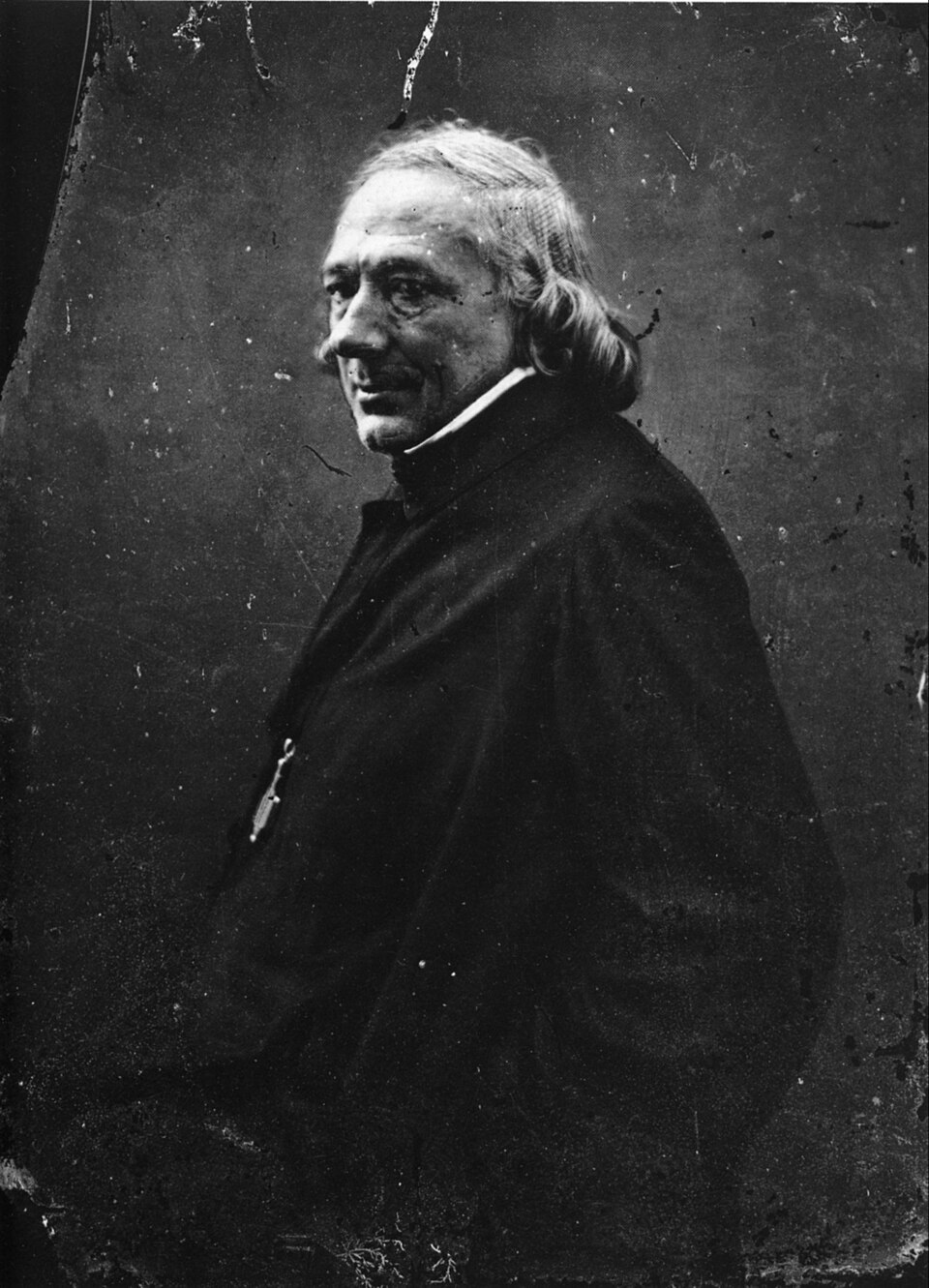
Груша
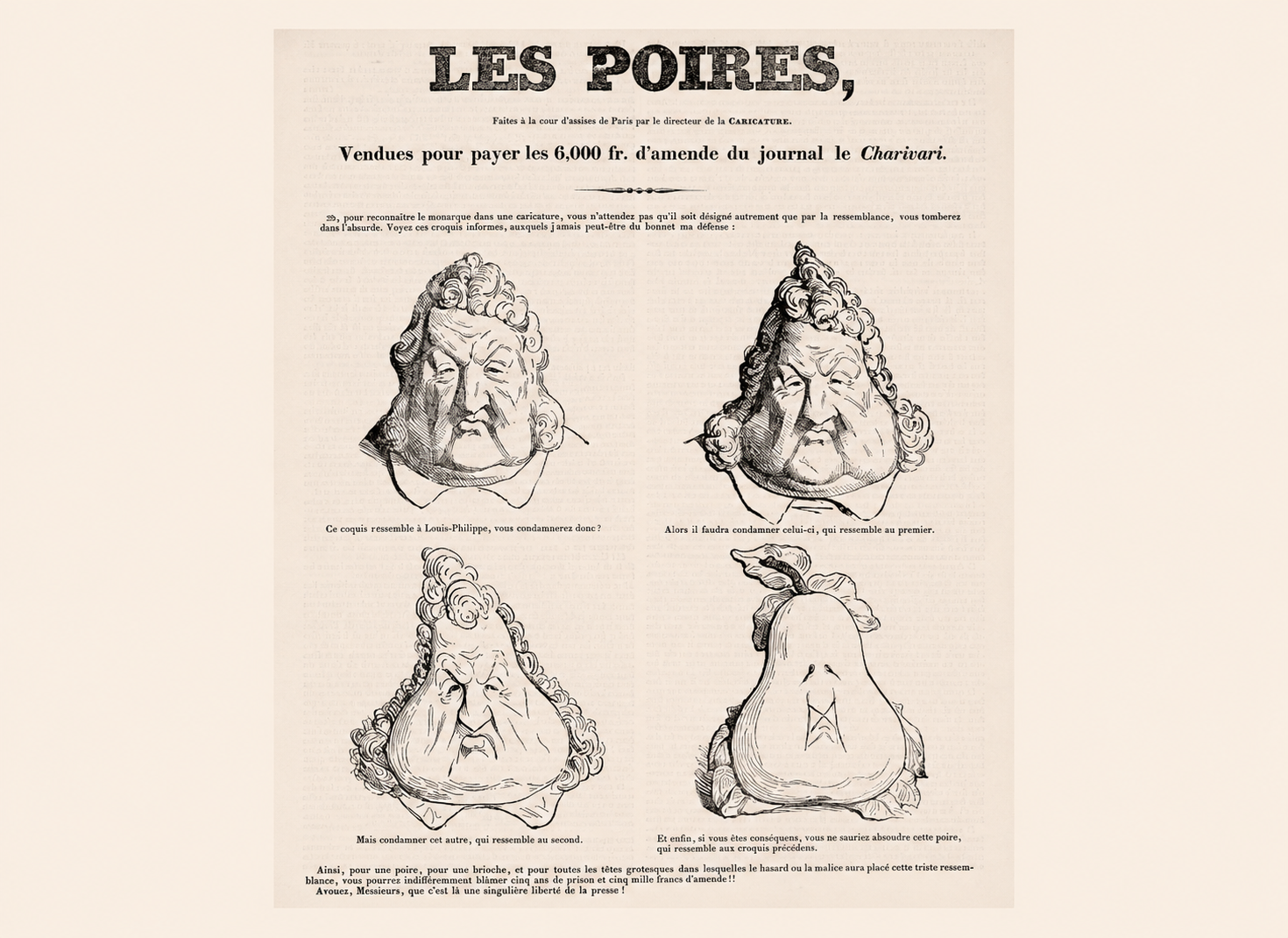
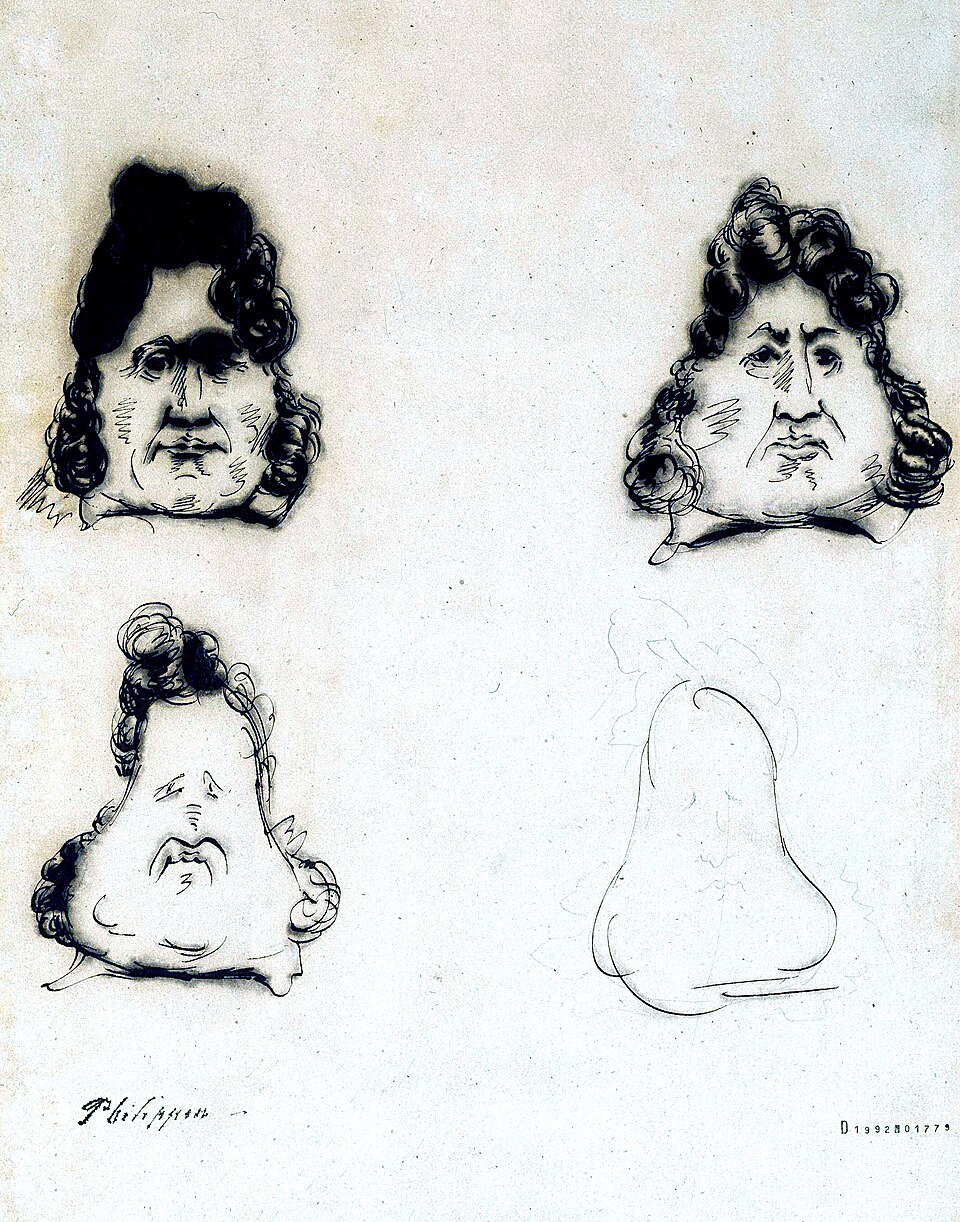
The symbol that became the banner of this entire war was invented by Philipon himself, and he came up with it in the courtroom. In November 1831, he was tried for insulting the king, and in his defense, he sketched four drawings in front of the jury. The first showed the bloated face of Louis-Philippe with lush sideburns, the last a ripe pear, and in between, two intermediate steps where one indistinguishably transitioned into the other. The argument was mockingly simple: if this face is to be banned, then the pear must be banned too, for where to draw the line? The joke spread instantly. Artists of "Caricature" drew the pear at every turn, street boys chalked it on walls and fences, and soon the face of the pear-king was looking at Paris from everywhere.
This was the genius of the idea. The pear was not just an insult but a trap for censorship. The authorities could ban a caricature of the king, but how to ban a fruit? If an official took issue with a drawing of a pear, he himself confirmed that he saw the king in it, thus doing all the work for the artist. The symbol proved invulnerable precisely because it was absurd. Paris instantly understood this and began drawing the pear everywhere chalk could fit.
Daumier drew the pear more often and more viciously than anyone. His most famous work on this theme, "Gargantua," was released at the end of 1831: the king-giant with a pear-shaped head sits on a throne-seat, baskets of gold taken from the emaciated people are dragged into his mouth, and after digesting the tax, the monarch drops down orders and parliamentary seats, which are caught by his entourage. The edition was confiscated, and in August 1832, the artist was sent to prison in Sainte-Pélagie for six months with a fine of five hundred francs. Daumier emerged from prison not broken, but embittered. (We wrote in detail about this episode in a separate post about Daumier and the censorship of the July Monarchy.)
Оружие 1834 года
The peak of French political caricature came in one year. The magazine was drowning in court fines, and in 1834 Philipon came up with a clever way to cover them: he launched a separate series under "Caricature" - "The Monthly Association for the Defense of Freedom of the Press." Subscriber-shareholders contributed money to a fund for paying fines, and in return received large sheets printed on thick paper without text on the back, true collectible prints. The format allowed Daumier to fully unleash his talent, and almost all of his major political lithographs were published here. The irony is that from 1834 the state required these sheets to be marked with a tax stamp, and Philipon complained that the official stamp spoiled the appearance and deterred collectors.
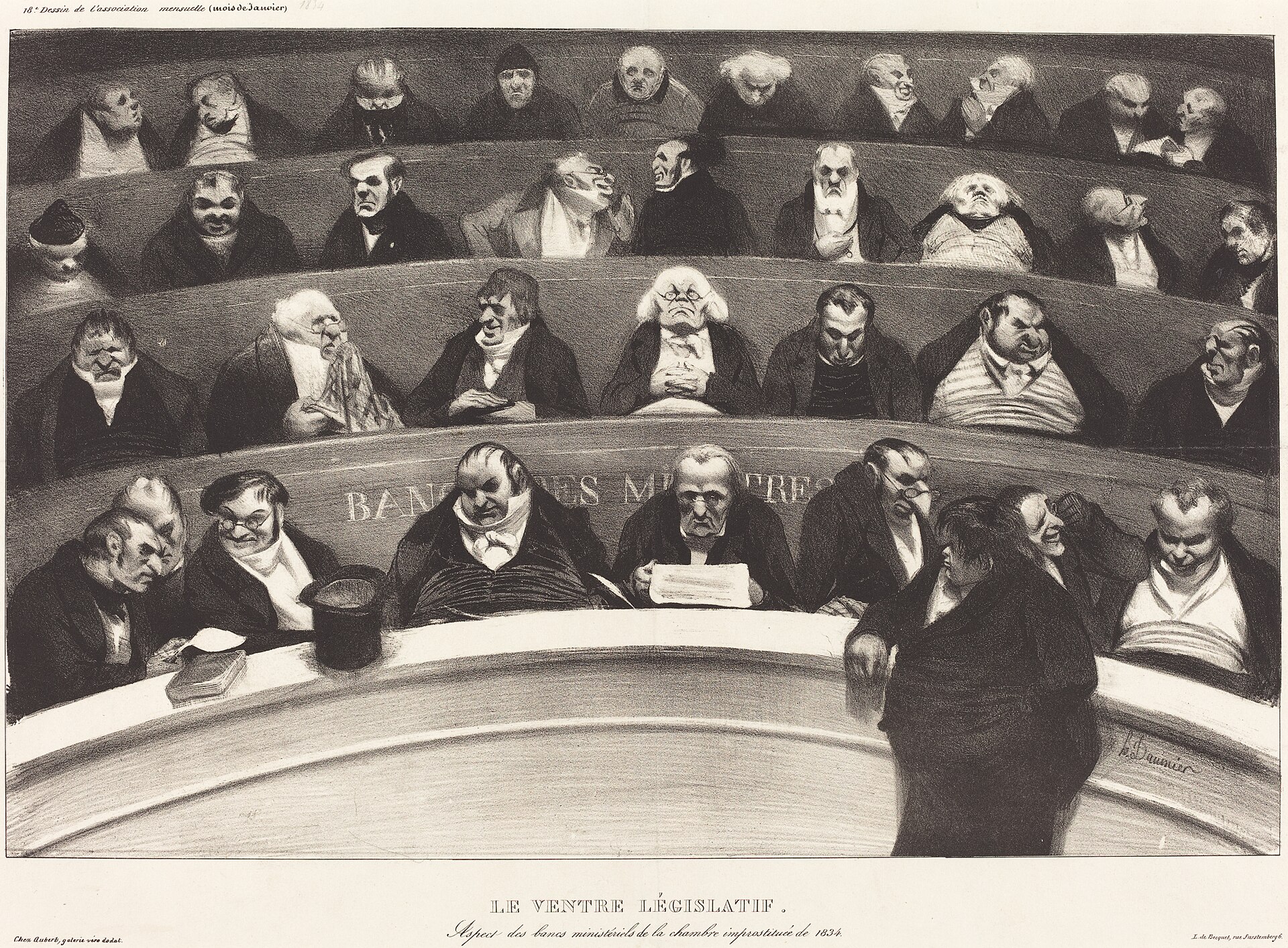
He struck at the entire top of the July Monarchy at once. In "The Legislative Belly," the viewer sees an amphitheater of deputies from the pro-government majority: rows of corpulent, heavy, dozing figures, each with a recognizable face of a real politician, a collective portrait of the July Monarchy's parliament as seen by Daumier. In the sheet "Don't Touch!" a sturdy printer with rolled-up sleeves stands guard over the freedom of the press, while behind him the king and his entourage huddle, not daring to approach. When in May 1834 the old hero of two revolutions, Lafayette, whom Louis-Philippe once used and betrayed, died, Daumier depicted the king dancing on his grave with the caption "Caught you, Lafayette! Take that, old man!" In another sheet, a pear-headed clown lowers the curtain on the political farce: "Curtain, the farce is played."
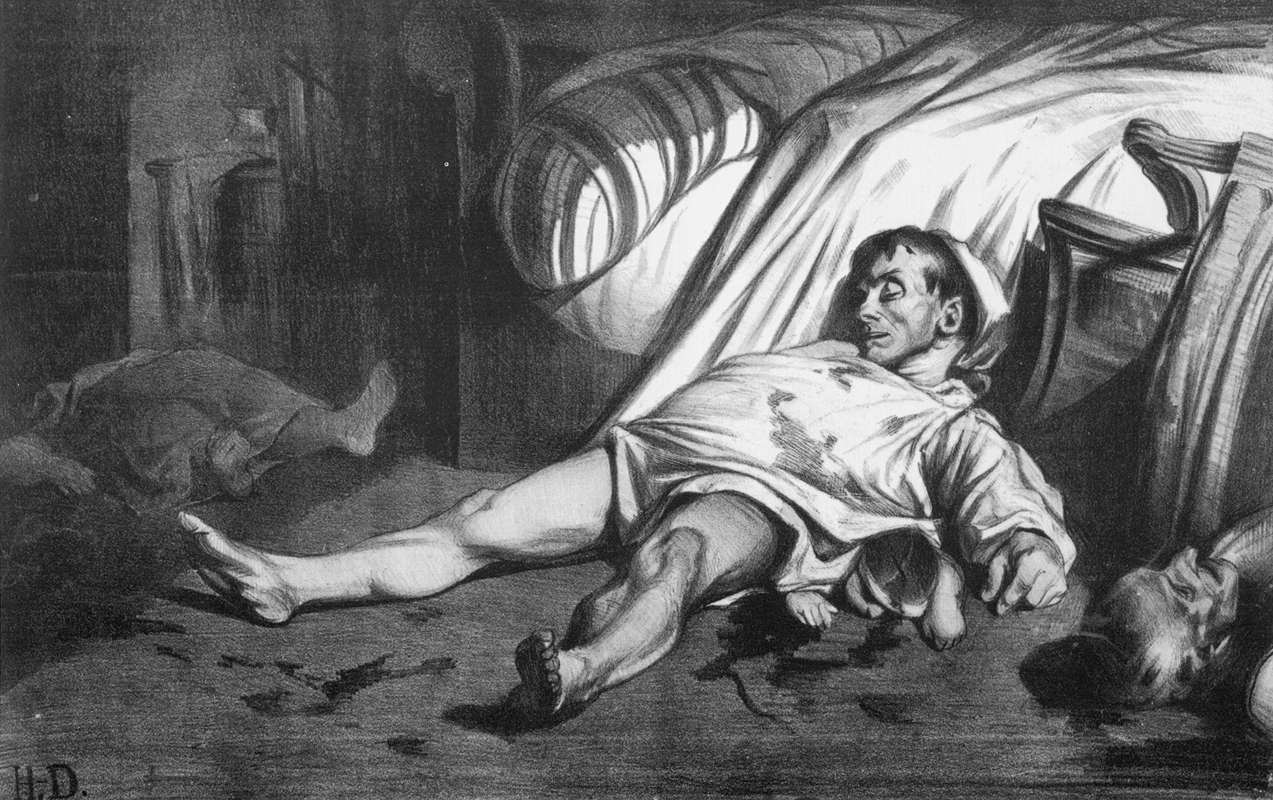
And then the caricature fell silent for a moment. In April 1834, while suppressing an uprising, the National Guard burst into a house on Rue Transnonain, from where shots were allegedly fired, and killed unarmed residents. Daumier created a lithograph with neither king, nor pear, nor a single caricature feature. A night room, an overturned bed, a dead worker in a raised shirt, and beneath him the crushed body of a child. The sheet was titled "Rue Transnonain, April 15, 1834." The government sent agents to buy up and destroy the prints, and the lithographic stone itself was seized and broken. In the history of art, this remains one of the first instances where a caricaturist spoke not with laughter, but with direct testimony, and his voice proved more terrifying than any satire.
Ответ государства
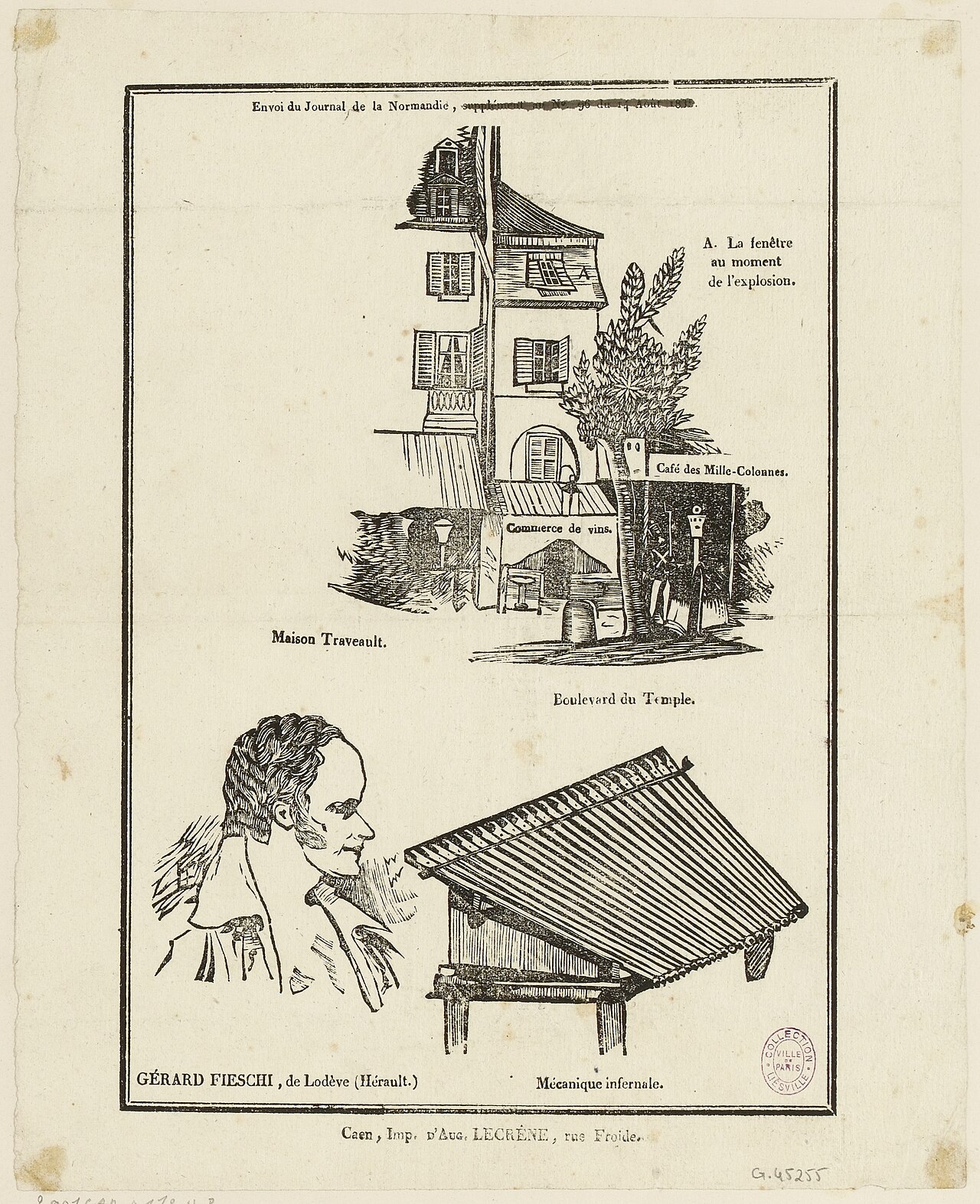
Laughter at court had long ceased to be considered harmless, and a reason for new restrictions was quickly found. On July 28, 1835, on the Boulevard du Temple, a Corsican named Giuseppe Fieschi fired at the king with a monstrous "infernal machine" with twenty-five barrels. Louis-Philippe survived, but eighteen people died, including Napoleon's Marshal Mortier. (We have a separate post about Fieschi's assassination attempt.) A few weeks later, the Chamber passed the September Laws. They did not ban individual Daumier sheets, but all political caricature entirely. The written word was hardly touched by the laws, but drawings were considered so dangerous that prior censorship was reinstated specifically for caricature: now each sheet went to the censor before printing, and he marked the margins with "oui" or "autorisé" if approved, "non" or "refusé" if banned. Any hint at the king did not reach print. These official markings are now examined in museums as part of the sheet itself. "Caricature" was closed. The weapon was knocked out of the hands of the entire workshop at once.
Daumier was left without his main target and turned his pencil elsewhere. He took up morals: corrupt lawyers, pompous judges, bourgeois in cramped stagecoaches, "blue stockings," ladies who fancied themselves writers, whom he mocked in a separate series. Around 1836, his Robert Macaire appeared in "Le Charivari," a charming swindler in a tailcoat selling shares of nonexistent companies to gullible simpletons, an eternal type of conman businessman that the July Monarchy had spawned in abundance. It became impossible to target the king, so Daumier began targeting those who served the king and fed at court. Of his more than four thousand lithographs, only a small part was devoted to politics in the narrow sense. He dedicated about three and a half thousand sheets to what writer Balzac called "the chronicle of great trifles": the endless human comedy of the Parisian street, where Daumier counted, by later estimates, about twenty thousand drawn faces. Contemporaries rightly placed him alongside Balzac. One composed the "Human Comedy" with a pen, the other drew it on stone, and both chronicled an entire era.
From Dirt to Art
Herein lies the main paradox of this story. Daumier was the king of cheap newspaper illustrations, a product inherently short-lived. The sheet would come out in the morning, be outdated by evening, and the next day it was thrown away with the newspaper. This very topicality and huge print runs long prevented people from seeing art in caricature. As early as 1878, journalist and politician Camille Pelletan wrote that Daumier needed to be freed from the triple disdain: disdain for caricature, lithography, and journalism.
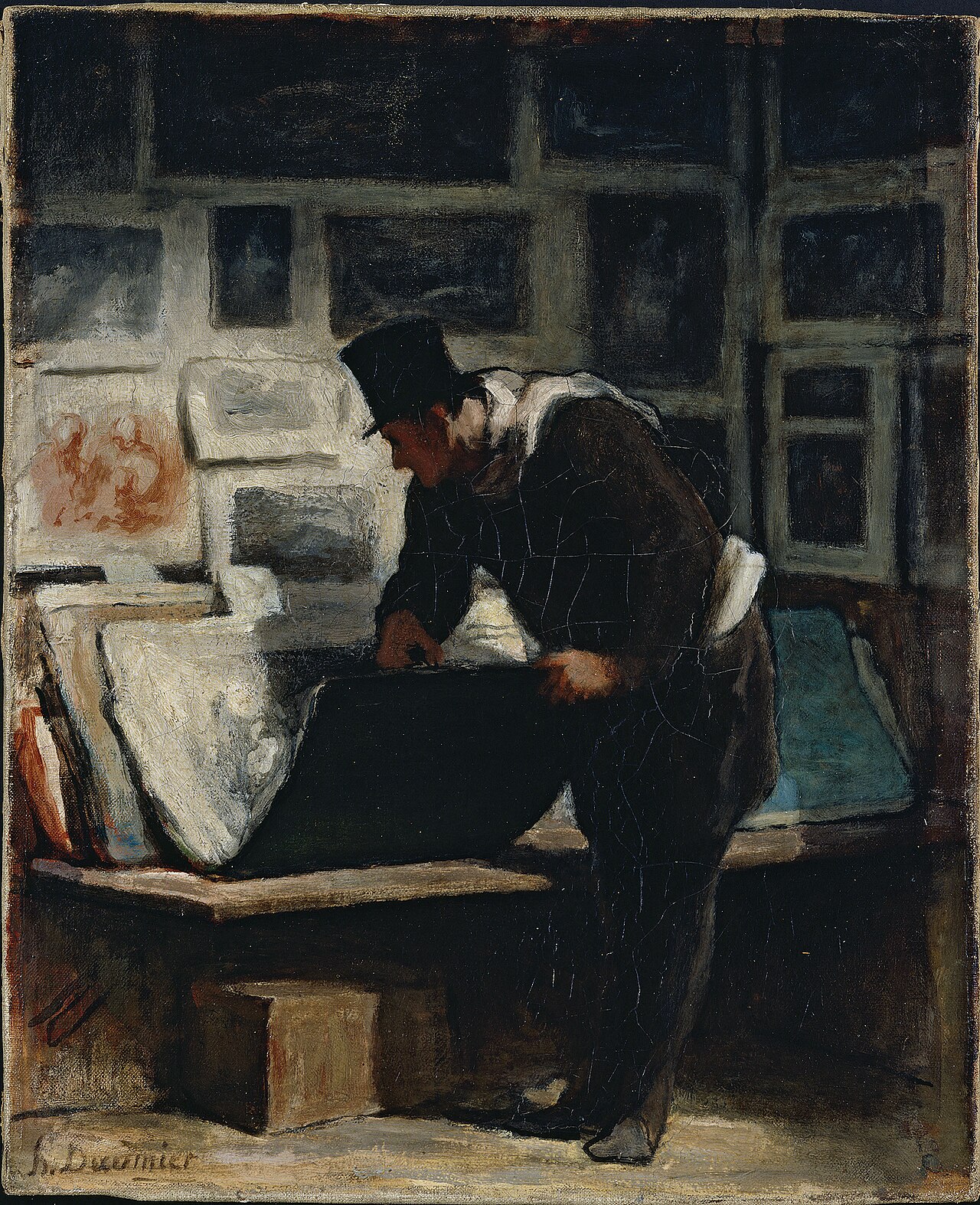
The liberation began earlier and from an unexpected side. In a salon review of 1845, the young poet Charles Baudelaire placed Daumier alongside Ingres and Delacroix, the two best draftsmen of the era. To recognize such a level of artist in a caricaturist meant to reconsider the very concept of beauty in art, to allow the ugly, the funny, and the tragic all at once. Baudelaire was ready for this. In 1857, he returned to Daumier in the text "Some French Caricaturists," admiring his line and the keen memory that allowed the artist to build a composition without nature, from his head alone. Critic Charles Blanc wrote that Daumier's pencil, thick and oily, "often gives birth to mysterious, deep, sometimes truly tragic black tones on stone." No one had written about newspaper illustrations like that before him. Others followed Baudelaire. Critic Champfleury admitted in 1862 that the fame of the caricaturist long prevented recognizing Daumier as a great master.
And collectors began hunting for Daumier's prints during the artist's lifetime. Sculptor Pierre-Jules Mène, neighbor and photographer Geoffroy-Dechaume, and later Edgar Degas collected his sheets, valuing especially the early prints "before text," made on thick or thin Chinese paper, still without censorship marks and typographic signatures. Engraving expert Philippe Burty predicted as early as 1861 that the price of rare and quality prints would inevitably rise. Philipon, by the way, warned back in 1860 that Daumier's works would only increase in value as they disappeared from the market, and he was right. Hans Singer, curator of the Dresden Print Cabinet, recalled in a 1914 book: "Fifteen years ago, Daumier's works could be bought for pennies." The pear, which was drawn to humiliate the king, turned into a museum treasure.
Return of Politics
Domier did not intend to remain silent forever. The Revolution of 1848 swept away Louis-Philippe, and the seventy-four-year-old pear-king fled to England under a false name, hunched and heavy, exactly as the artist had depicted him for fifteen years. Freedom of the press briefly returned, and with it, politics on stone. By the early 1850s, Ratapoil appeared, the most caustic character of late Domier: a gaunt Bonapartist agent-provocateur in a shabby frock coat and crumpled top hat, with a club under his arm and the false demeanor of a retired soldier, recruiting gullible simpletons as supporters of the future emperor. In him, Domier captured the very air of the era, that cheap street Bonapartism that paved the way for the coup. Domier let Ratapoil roam the pages of "Charivari," from sheet to sheet, as if showing France in advance who exactly was leading it to a new empire. In December 1851, Napoleon's nephew staged a coup, and a year later declared himself Emperor Napoleon III, and censorship descended once more.
During the Second Empire, Domier worked under the same supervision as in his youth, sporadically, between bans. He drew not only politics. In addition to four thousand lithographs, he left about a thousand drawings for wood engraving, worked for a dozen newspapers and magazines, and his images echoed from sheet to sheet for years, as if the artist was having an endless conversation with the viewer. He parted with "Charivari" only once, from 1860 to 1863, and then returned and remained loyal to the newspaper almost until the very end. He drew until the last, until his vision began to fail. His last lithograph was published in "Charivari" on September 14, 1872. Even earlier, in 1848, that very Banville noticed in his empty studio the only picture on the wall: not his own, but another's lithograph with "Pariahs" by the sculptor Préault, rejected by the Salon jury at the height of the romantic battles. Domier kept the image of rejected art before his eyes all his life. Seven years after the last sheet, he died, blind and impoverished, in a small house near Paris, which the artist Corot graciously gave him.
Louis-Philippe once dreamed that caricature would forget him. The opposite happened. The king, who ruled for eighteen years, is remembered today mostly as the pencil made him: round, bloated, with sideburns, resembling a ripe pear. One stone, from Rue Transnonain, was seized and destroyed in 1834. All the others survived and are now preserved in museums around the world.