History
Said Zalyaev
Author of the Telegram channel “Slova i konflikty”
00:00
When it comes to the anti-Bolshevik movement during the Civil War, the images of the formed White movement traditionally come to mind. In the South - Anton Ivanovich Denikin and Pyotr Nikolayevich Wrangel with their named regiments of shock troops; in the East - Alexander Vasilyevich Kolchak and Vladimir Oskarovich Kappel with an army under the national tricolor and the two-colored Siberian banner; in the North and Northwest - Yevgeny Karlovich Miller and Nikolai Nikolayevich Yudenich with parts of British interventionists and colorful "Liventsy" in steel helmets. The entire conflict of 1917 - 1920 under such conditions seems extremely polarized and understandable: on one side - the Reds, on the other - the Whites.
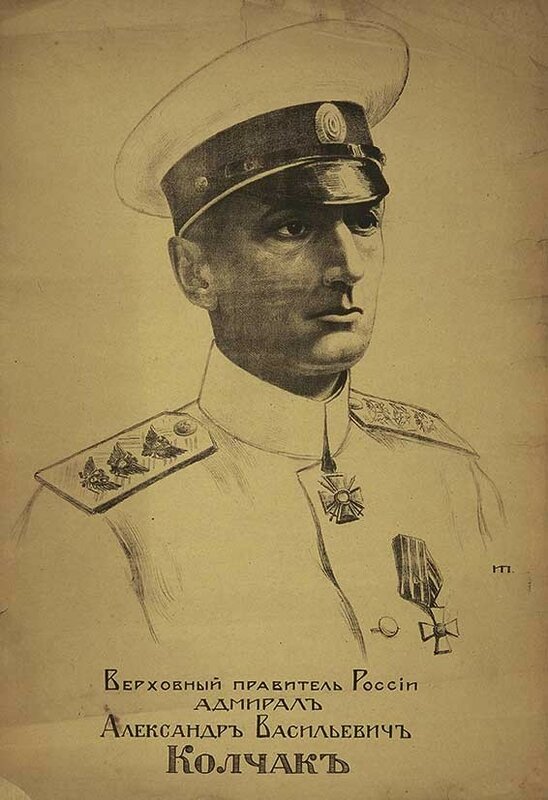
In reality, the ideological formation of the White movement happened significantly later than the end of the Civil War. Even the centralization of anti-Bolshevik forces around Admiral Kolchak occurred already at the height of the conflict in 1919. Against the backdrop of major victories, attractive aesthetics, and overall influence on culture, the first stage of the Civil War, which contemporaries called the "democratic counter-revolution," seems extremely neglected.
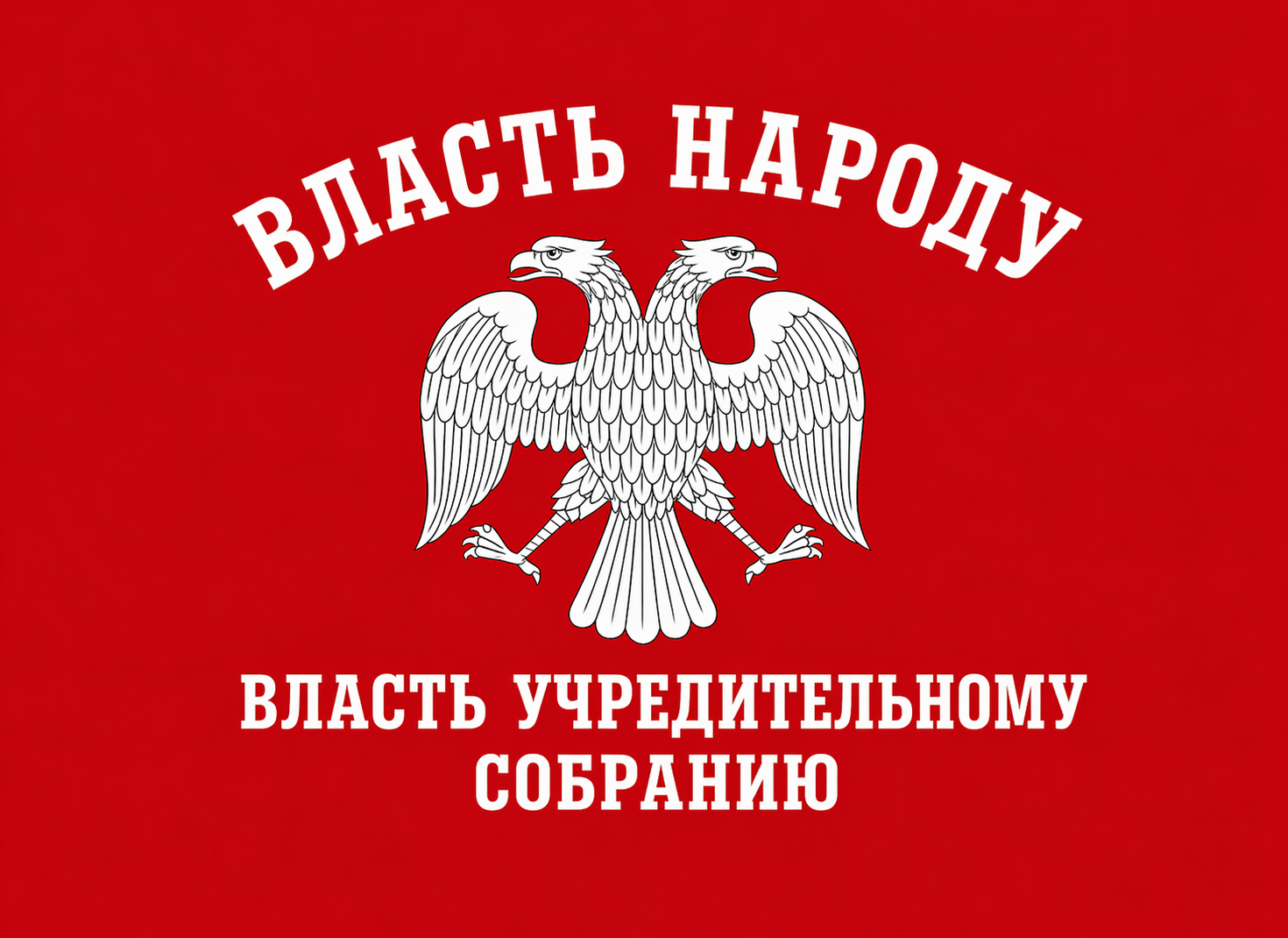
Advocating a third path for Russia's development, neither "red" nor "white," appears as a very ambitious and extremely contradictory attempt at a democratic compromise in the conditions of revolutionary changes. Such state formations as the Provisional Siberian Government of Pyotr Vasilyevich Vologodsky (Omsk group), the Provisional Government of Autonomous Siberia of Pyotr Yakovlevich Derber (Tomsk group), the Provisional Administration of the Northern Region under the leadership of the "grandfather of the Russian revolution" Nikolai Vasilyevich Chaikovsky, and the most famous - the Committee of Members of the All-Russian Constituent Assembly (Komuch) in Samara, attempted to implement this "compromise." It is about the latter that I would like to talk in more detail.
A distinctive feature of Komuch, which set it apart from all other governments of that period, was its direct legitimization as the All-Russian Constituent Assembly dissolved by the Bolsheviks. Neither the Volunteer Army of the South, which was the first to declare civil-democratic principles of power, nor the Cossack circles, nor the Omsk, Tomsk, or Arkhangelsk blocs had a legal basis for recognizing themselves as the all-Russian government. The absence of legitimizing principles stimulated not only political struggle among anti-Bolshevik leaders for the centralization of forces in the region (such as the confrontation between the Cossacks of Pyotr Nikolayevich Krasnov and the Volunteer Army of Denikin or the confrontation of the Omsk government of Vologodsky against the Tomsk cabinet of Derber), but also a mass movement of "self-determiners" (Siberian regionalists, the South-Eastern Cossack Union, Alash-Orda). Often, the political crisis forced governments to recognize the supremacy of a more legitimate entity over themselves. For example, a similar scenario occurred in the Chaikovsky government in September 1918 after the unsuccessful military coup of Georgy Yermolaevich Chaplin. It was precisely the authority of the Constituent Assembly that forced the Northern government to submit to the Samara center.
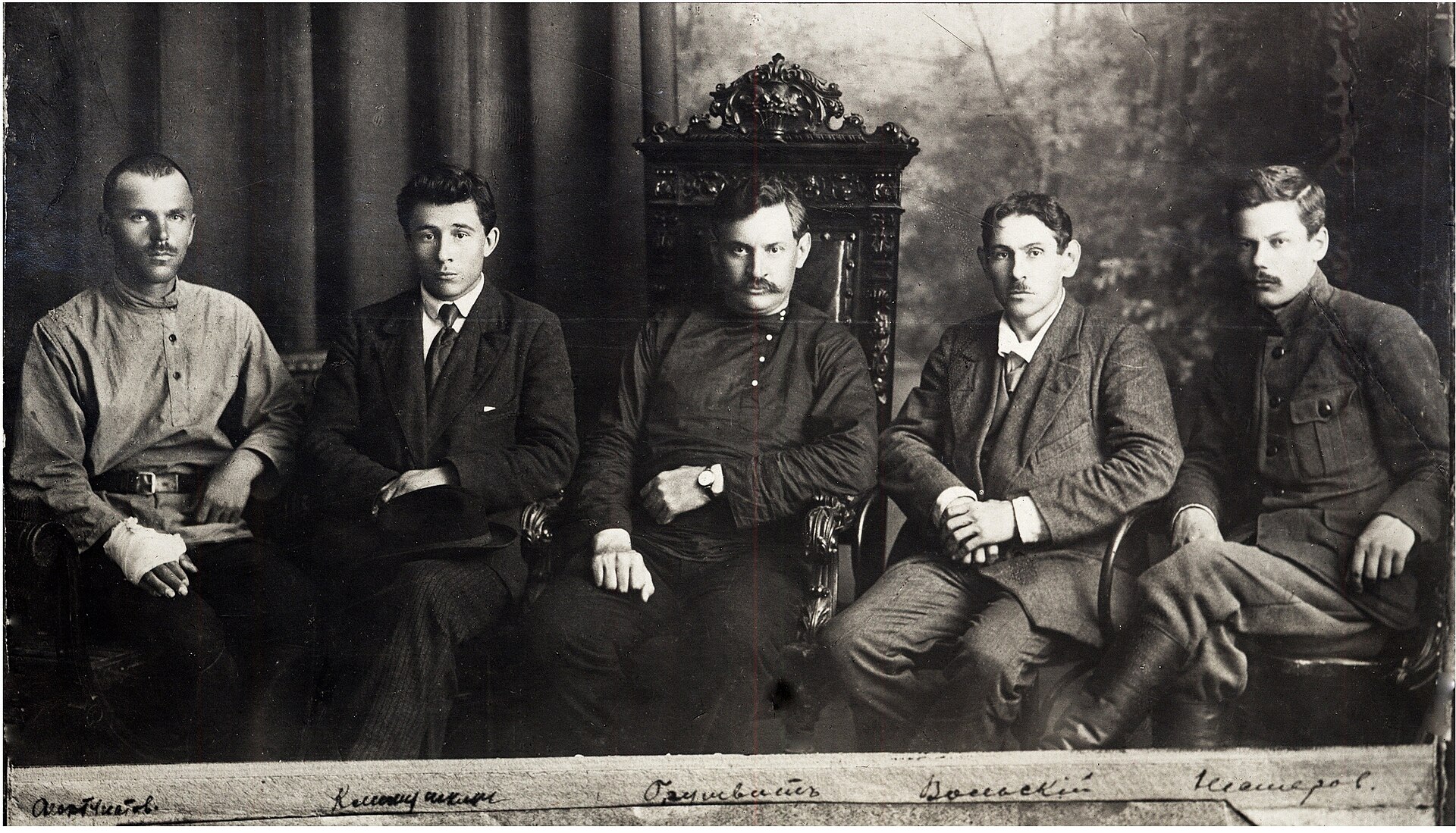
The history of Komuch itself is inextricably linked with the activities of the rebellious Czechoslovak Legion. It was after the Penza group of Czechoslovaks led by Lieutenant Stanislav Chechek entered Samara on June 8, 1918, that civil power was formed in the city in the form of the first government five. It included Vladimir Kazimirovich Volsky as chairman, Ivan Mikhailovich Brushvit for finance, Prokopiy Diomidovich Klimushkin for internal affairs, Ivan Petrovich Nesterov for communications, and Boris Konstantinovich Fortunatov as formally responsible for the organization of the army. None of them had anything to do with the dissolved Constituent Assembly, nor did they have the slightest experience in leadership. As Vasily Gavrilovich Arkhangelsky, the Extraordinary Commissioner for the Kazan Province, later honestly admitted: "In all this, there was much from the unfamiliarity with power, from political romanticism, and from the naive belief in the possibility of a 'broad coalition'..."
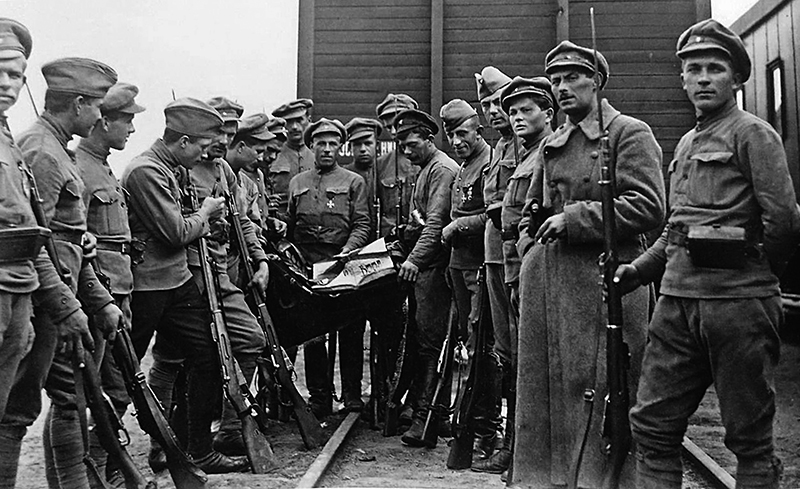
The general principle in the construction of Komuch was civic initiative. Support for local self-government, local political and public organizations played a key role, as it was precisely on the basis of grassroots self-organization that central authority was constituted. The incorporation into the Samara Komuch, which combined the functions of legislative and executive power, in addition to election in accordance with the principle of universal suffrage, was carried out on the principle of representation from local self-governments. The burdens of restoring institutions of all levels and courts liquidated by the Bolsheviks were placed on the shoulders of the new authority's representatives. In fact, the role of the representatives was reduced to the previously existing institution of commissioners with such competencies as the right to remove officials, detain and close meetings and congresses, "which may pose a danger in military terms or in terms of public order and tranquility.".
Although the ideological character of Komuch was distinctly socialist, this did not prevent right-conservative officer cadres from joining the army on the principle of having a common enemy. Such future prominent White commanders as Kappel, Alexander Petrovich Stepanov, Vasily Osipovich Vyrypaev, Fyodor Fyodorovich Meybom, Pavel Petrovich Petrov, and many others fought under the red banner of Komuch in the summer of 1918.
Alongside the use of the red flag in the new armed forces (the People's Army), there were other revolutionary attributes, such as the prohibition of military salutes, old forms of address (soldiers were to be addressed as "citizen"), wearing officer insignia, and imperial symbols. According to Klimushkin, during the military reforms, the government quintet was inspired by the Czechoslovak Legion: "The Czech army with its democratic management structure, with its fraternal relations between soldiers and officers, was the ideal we aspired to when creating our army."
The "successes" of the democratization being carried out are eloquently evidenced by later general military orders: "...one must observe rank and give due honor and greeting," "All servicemen, both in formation and out of formation, should say 'You'," "To the greeting addressed by the Commander to the subordinate out of formation, the latter responds by raising his hand to his headgear or standing 'at attention'... hello Mr. General, Mr. Colonel, Mr. Lieutenant, etc."
Fearing the military circles' inclination towards autocratic power, the government decided to concentrate all military leadership in the hands of the Military Department of Nikolai Alexandrovich Galkin with the introduction of two attached commissioners. At the same time, the army was divided into three groups: Northern - Alexander Petrovich Stepanov, Central - Andrey Stepanovich Bakich, and Southern - Fyodor Evdokimovich Makhin.
Since by the beginning of the summer of 1918, following central Russia, the Volga region was engulfed by a severe famine, the legalization of trade by Komuch with the abolition of fixed prices was met with extreme approval by the people. The future plenipotentiary ambassador of the USSR to Great Britain, and at the time in the summer of 1918, the head of the labor department of Komuch, Ivan Mikhailovich Maisky, described his first impressions of Samara as follows: “These mountains of white bread, freely sold in stalls and on carts, this abundance of meat, poultry, vegetables, butter, lard, and all sorts of other food delights completely overwhelmed us. After Moscow, the Samara market seemed like some fairy tale from 'One Thousand and One Nights'.”
The peak of Komuch's successes was at the beginning of August when the People's Army was rushing along the Volga in a swift raid. By that time, the Committee had grown to 29 people, and by the end of September, it consisted of 90 people. After lengthy discussions, Komuch's leadership decided to unite the front with the Volunteer Army of the South. To this end, the Samara cabinet concentrated all its forces and resources on the priority Southern group of Makhin, as it was the one that had to break through Saratov directly to the besieged Tsaritsyn by the Don Cossacks. However, emboldened by their crushing successes, representatives of the Northern group led by Kappel, Stepanov, Fortunatov, and Vladimir Ivanovich Lebedev decided to defy the Operational Headquarters' orders and organized a liberation campaign to Moscow on their own.
After a brief battle, the Northern group captured Kazan on August 7. Komuch gained possession of a huge gold reserve of the Russian Empire amounting to 651 million rubles in gold and 110 million rubles in credit notes, the evacuated Academy of the General Staff, two evacuated aviation schools, 100 steamships, 300 barges, and full warehouses of quartermaster supplies. Although the success was impressive, from that same day, Komuch was forced to hold two fronts simultaneously, which led to complications in the southern direction of Makhin.
Building on its success, Komuch intended to become the main force in the entire East of Russia. By the beginning of autumn 1918, about eleven disparate governments had formed over the vast expanses from the Volga to the Pacific Ocean. Besides Komuch, the Provisional Siberian Government, which by that time had managed to overcome the Derber cabinet and subjugate the most important economic zone of the Chinese Eastern Railway, was also a contender for uniting the entire Eastern anti-Bolshevik movement.
The first meeting of representatives of these two state entities took place back in mid-July in Chelyabinsk. The so-called "Meeting on the Rails" was held in an atmosphere of fierce disputes. Komuch considered itself the "sole master of the Russian land" and demanded immediate and unconditional recognition of itself as the only legitimate government. Moreover, by that time, the Ural and Orenburg Cossack troops had already sworn allegiance to Komuch, and the ataman of the Orenburg Cossacks, Alexander Ilyich Dutov, had even joined the Committee. In turn, the Siberian representatives agreed only to discuss formal unification with the recognition and preservation of the Siberian cabinet. The situation was exacerbated by the disunity within the Omsk government itself. For example, the moderately right-wing Vologodsky, Georgy Konstantinovich Gins, and Alexei Nikolaevich Grishin-Almazov were forced at the same time to conduct discussions with the radical left Siberian Duma, which ultimately led to an armed confrontation.
Be that as it may, thanks to the representatives of the Entente and the Czechoslovak Legion, a rupture between Komuch and the Provisional Siberian Government was avoided. The delegates decided to convene a second congress, at which the issue of final unification was to be raised.
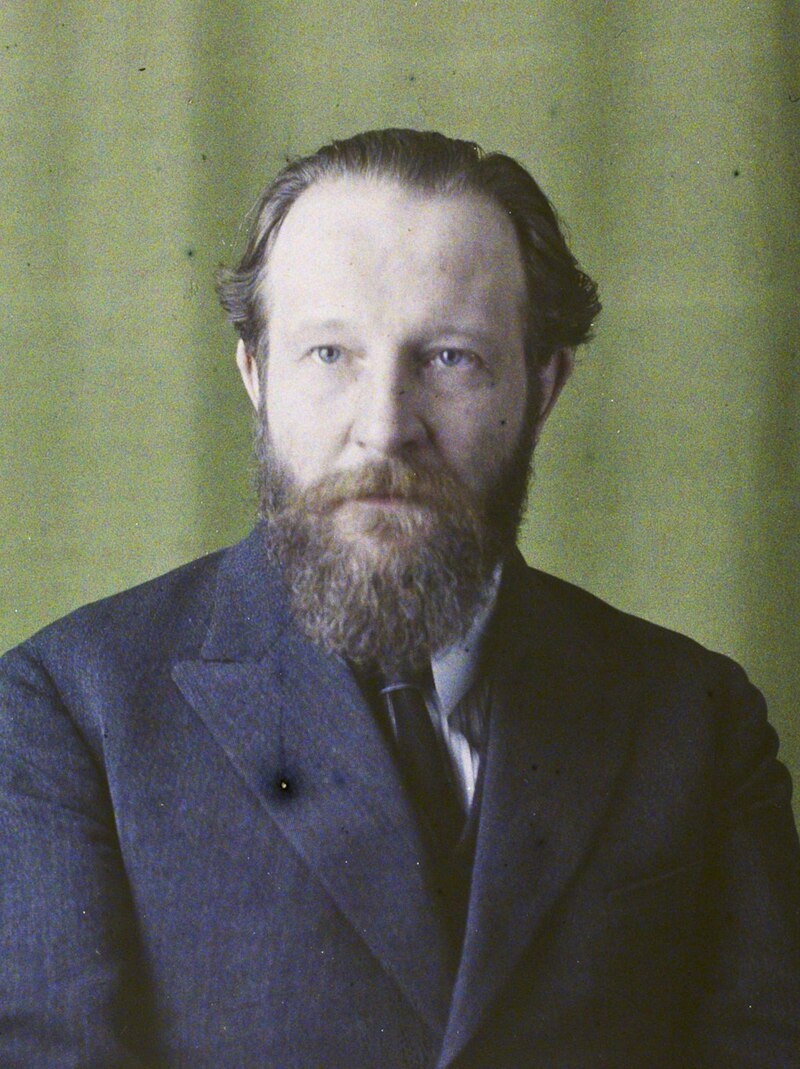
The second meeting opened on August 23. This time it was held in a solemn atmosphere, with consuls from France, Great Britain, and Czechoslovakia invited. By tradition, the meeting was opened by the oldest deputy, who was the legendary "grandmother of the Russian revolution," Ekaterina Konstantinovna Breshko-Breshkovskaya. At the same time, the Presidium of the meeting was convened under the chairmanship of the famous former head of the Provisional Council of the Russian Republic, Nikolai Dmitrievich Avksentiev, with deputies (i.e., vice-chairmen) Yevgeny Frantsevich Rogovsky - head of Komuch's departments, and Ivan Adrianovich Mikhailov - Minister of Finance of the Siberian Government.
Although there were plenty of mutual claims this time as well (for example, regarding the status of the powers of the arriving delegations, national representation, budget drafting, military unification procedure, and even the location of the next meeting), it was the Second Chelyabinsk Conference that established the final principle of uniting the disparate governments of Russia into a single coalition according to the "directive order" of governance.
On September 8, after all preparatory activities were completed in Ufa, the State Conference began its work. It was attended by 23 delegations (more than 200 people), representing Komuch, the Provisional Siberian Government, the Regional Government of the Urals, the Orenburg, Ural, Siberian, Irkutsk, and Yenisei Cossacks, the Bashkir National Government, Alash-Orda, the Turkestan Government, the national administration of the Turkic-Tatar internal Russia and Siberia, the Provisional Estonian Government, as well as political parties, organizations, and self-government bodies.
Five people were elected to the Government Directory with one deputy each: Avksentiev – deputy Andrey Alexandrovich Argunov, Nikolai Ivanovich Astrov – deputy Vladimir Alexandrovich Vinogradov, Vasily Georgievich Boldyrev – deputy Mikhail Vasilyevich Alekseev, Vologodsky – deputy Vasily Vasilyevich Sapozhnikov, and Chaikovsky – deputy Vladimir Mikhailovich Zenzinov.
According to the program of the Provisional Government, the following tasks were outlined for the restoration of state unity and independence:
The struggle for the liberation of Russia from Soviet power;
Reunification of the detached, fallen away, and disparate regions of Russia;
Non-recognition of the Brest and all other international treaties concluded on behalf of Russia or its parts after the February Revolution by any authority other than the Russian Provisional Government, and the restoration of the actual force of treaty relations with the Entente powers;
Continuation of the war against the German coalition.
The newly formed Provisional All-Russian Government pledged to assume full supreme power until the convening of the All-Russian Constituent Assembly, while maintaining broad autonomy "on the ground."
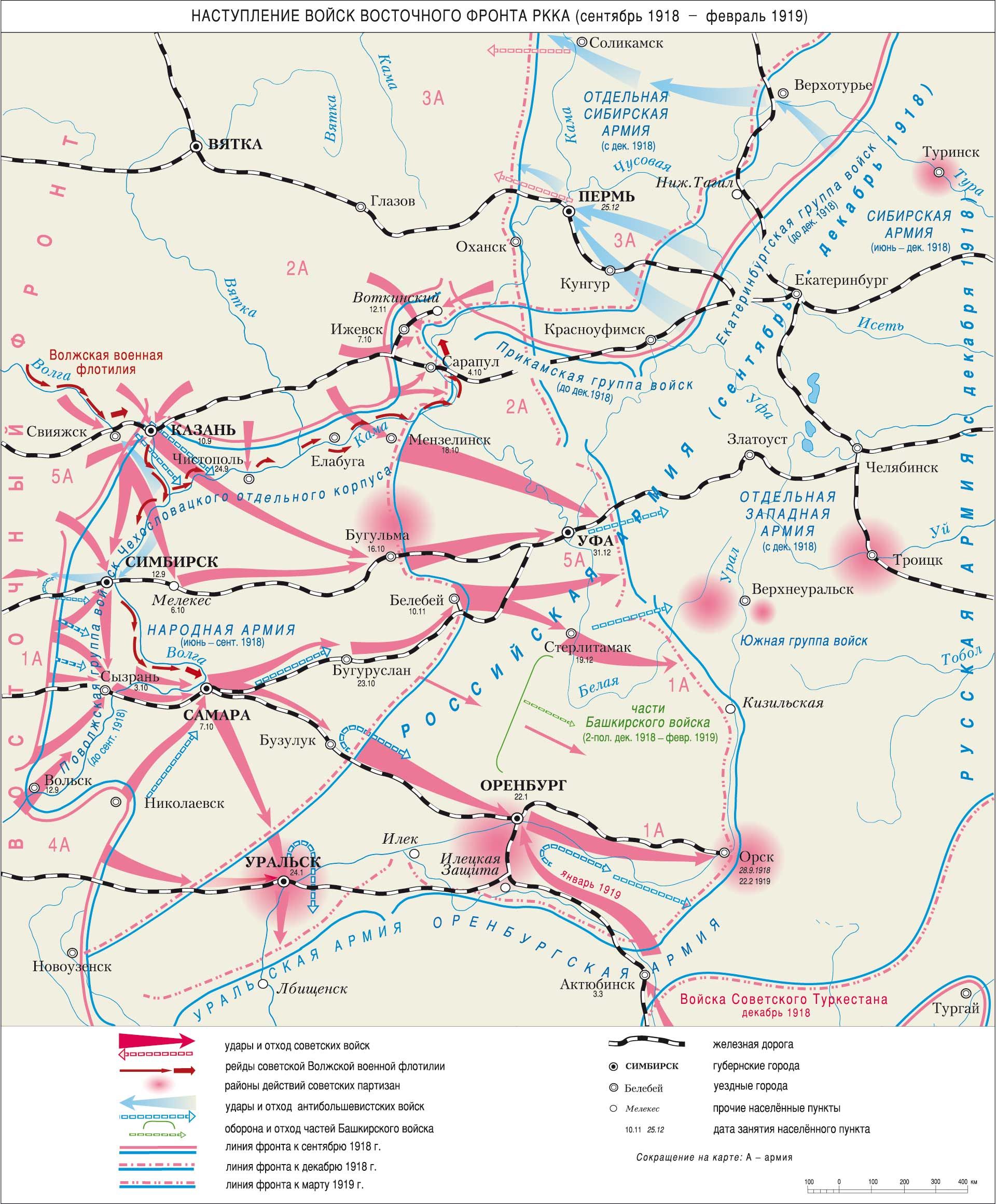
By the time of the formation of the Ufa Directory (September 8 – 23), Komuch was living its last days. The Northern group of the People's Army was unable to advance towards Moscow and was stopped at Sviyazhsk. On September 10, the 5th Army of the RKKA, having a fourfold numerical advantage, recaptured Kazan and forced the units of Stepanov and Kappel to retreat along the entire front.
In the southern direction of Makhin, the situation was even worse. After capturing Khvalynsk and Volsk, the group was unable to advance on Saratov and slowed down more each day. When about 120 km remained to the city, the group was forced to urgently begin retreating under the pressure of the Reds.
By mid-September, the People's Army had abandoned not only Kazan but also Simbirsk, Volsk, Khvalynsk, and Syzran. Tactical defeats began to grow into a full strategic failure. By that time, many army cadres began to openly oppose their socialist government, dressing in the uniform of the "right-wing" Siberian army, raising the banned national tricolor, and openly singing "God Save the Tsar!" and "How Glorious." Demoralization also reached the Czechoslovak Legion. For example, due to mass disobedience of his units, Colonel Josef Švec committed suicide.
On October 7, the capital of the Committee of Members of the All-Russian Constituent Assembly, the city of Samara, was abandoned.
What were the reasons for Komuch's defeat?
Firstly, the open socialist slogans continued to alienate a significant number of officers, industrialists, right-wing parties, and organizations. Even Kappel, who tried not to interfere in politics, was forced to appeal to the Committee with a request to stop criticizing "officers from the bourgeoisie" in the periodical press.
Secondly, Komuch's fear of a possible military coup generated distrust and antagonism. Boris Viktorovich Savinkov wrote with irritation: "The Samara counterintelligence was less interested in the Bolsheviks than in the officers, searching among them for constitutional monarchists." On the other hand, sometime in mid-summer, a detachment of Cossacks arrived in Samara without permission, and when asked why they were there, the commander boldly replied: "To disperse the constituent assembly."
Thirdly, due to Samara's unwillingness to establish a clear military hierarchy at the front, the issue of subordination became evident. The Czech units could not directly coordinate operations with the front commanders, as they acted only with the direct consent of the head of the Penza Legion group, Stanislav Chechek. Independently of operational plans, the Special Detachment of Kappel, groups of Serbs, Poles, and Cossacks also fought. The most classic example of the lack of military discipline and subordination was the "Kazan Adventure."
Fourthly, by the end of summer, the Volga movement was no longer able to single-handedly resist the Bolsheviks. For example, in the northern direction, 5,000 people's army soldiers opposed 40,000 soldiers of the 5th Army of the RKKA.
Of course, for tens of thousands of former representatives of Komuch, the Civil War did not end with its defeat. The "democratic counter-revolution" continued to exist for some time in the form of the Ufa, and then the Omsk Directory, but for most contemporaries, the project already seemed doomed to failure. As a result, the Directory lived only slightly longer than Komuch. Already on November 18, 1918, Admiral Kolchak appeared on the political scene, beginning a new "white" phase of the anti-Bolshevik struggle.