History

"White Nights"
Historian
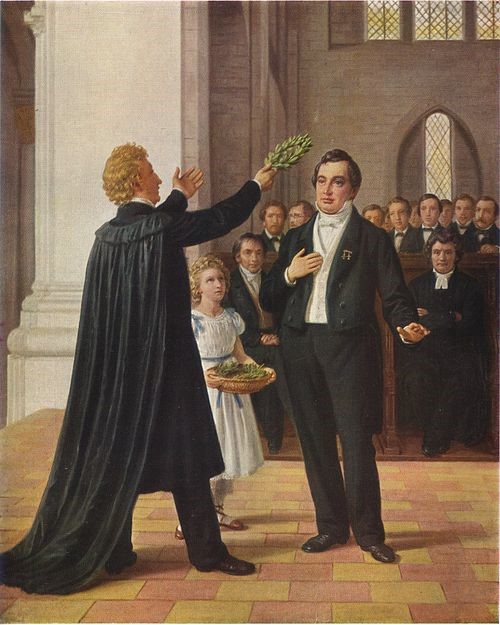
Over time, the pan-Scandinavian idea lost its direct political orientation and increasingly turned into a cultural project. This non-political but profound sense of cultural belonging was vividly expressed by Hans Christian Andersen – a Danish author usually associated with children's fairy tales, but in this case acting as a poet of northern identity. His poem "I Am a Scandinavian" (1837), inspired by a recent trip to Sweden, became a manifesto of cultural pan-Scandinavianism. Here Andersen speaks not on behalf of a single state, but on behalf of the North as a whole:
"We are one people, we are called Scandinavians,
Our homeland is divided into three kingdoms,
But today among the great gifts of heaven –
It is so: our hearts become one whole!
Let us forget all past grievances;
The spirit of the times, like the great Margaret,
Unites us, grants us a threefold strength,
The very language unites us,
In the mountains, in the forests, and by the night-blue sea
I shout with joy: I am a Scandinavian!”
«Vi er ett Folk, vi kaldes Skandinaver,
I trende Riger er vor Hjemstavn deelt;
Men mellem Nutids store Himmel-Gaver
Er den: vort Hjerte voxer til et Heelt!
Lad være glemt, hvis os en Uret skete;
Tidsaanden, som en luttret Margarethe,
Forener os, den trefold Kraft forlener,
Selv Sproget os forener.
Paa Fjeld, i Skov og ved det natblaa Hav,
Jeg jubler høit: jeg er en Skandinav!»
"The great Margaret" in Andersen's poem refers to Queen Margaret (1353 – 1412), who united Denmark, Sweden, and Norway into a single state – the Kalmar Union, which existed from 1397 to 1523. The Dane Andersen naturally sought in the union, when practically all of Scandinavia was united under the Danish crown, the origins of the idea of Scandinavian unity.
However, not all pan-Scandinavianists shared Andersen's position. In Swedish historical memory, the Kalmar period is remembered as the Danish yoke, and liberation from Danish rule in 1523 became one of the key events in national history. Paradoxically, the only historical example of real political unity in Scandinavia did not become a common motif in pan-Scandinavian texts – especially those written by Swedish authors.
Instead, Andersen's notion of Northern unity, based on a common language, history, and geography – "in the mountains, forests, and by the night-blue sea" – became entrenched in the pan-Scandinavian discourse. These elements merge into an indivisible cultural space that transcends state borders. It is this macro-national image of Scandinavia as a whole that inspires Andersen to proudly and enthusiastically exclaim: "I am a Scandinavian!".
Students as the Vanguard of the North
Scandinavianism soon moved beyond literary salons and found expression in mass student demonstrations. In the spring of 1843, about 200 students from Copenhagen and Lund traveled to Uppsala, where the first pan-Scandinavian student event took place. This was followed by other meetings – in Copenhagen and Lund (1845, 1862), Oslo (1852, 1869), and again in Uppsala (1856, 1875). University towns became laboratories of northern unity.
At these gatherings, the academic youth spoke of themselves not as Swedes, Danes, or Norwegians, but as bearers of a single Scandinavian culture. At the 1845 demonstration in Copenhagen, professors called these meetings "great festivals of the North" and compared them to a mystical "Midsummer Night's Dream," in which the vision of a "union of Scandinavian peoples in brotherly friendship and mutual pursuit of common life interests" materialized.
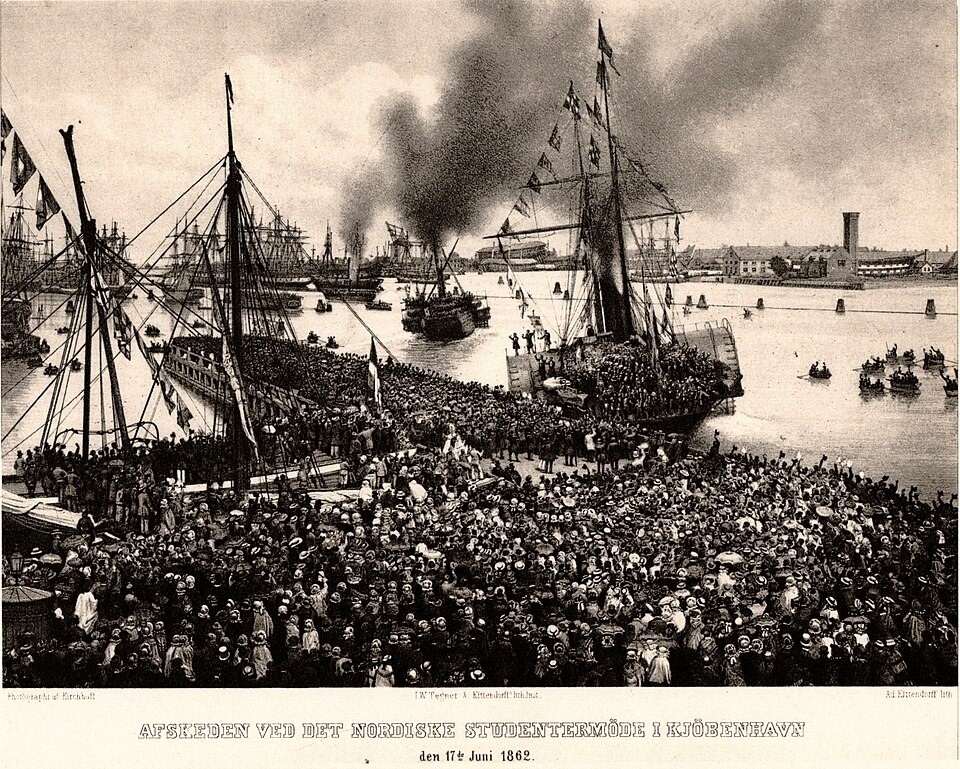
Students raised their glasses "for Scandinavia" and "for a free and united North." A key motif in the concept of a united "Homeland" and people was the common geography: vast landscapes, harsh climate, endless forests, and low population density contributed to the formation of a democratic society of free, hardworking, and united Scandinavians.
To this natural unity was added a spiritual heritage. Christian motifs organically coexisted with themes from Scandinavian mythology. At student gatherings, odes were heard praising: "How unforgettable are Odin's hills / And glorious is the wind in His holy grove...". Mythology, as ancient as the northern landscape itself, became a symbol of common cultural continuity.
History also served as the cement of pan-Scandinavian unity. The central figure of this symbolic pantheon became the Swedish king Charles XII. His image was romanticized and reinterpreted: he was portrayed as having fallen in the struggle for the entire North, although in reality, he died from a Norwegian soldier's bullet while trying to conquer Norway in 1718. Paradoxically, a figure whose fate reflected inter-Scandinavian enmity was turned into a symbol linking the past, present, and future of the region.
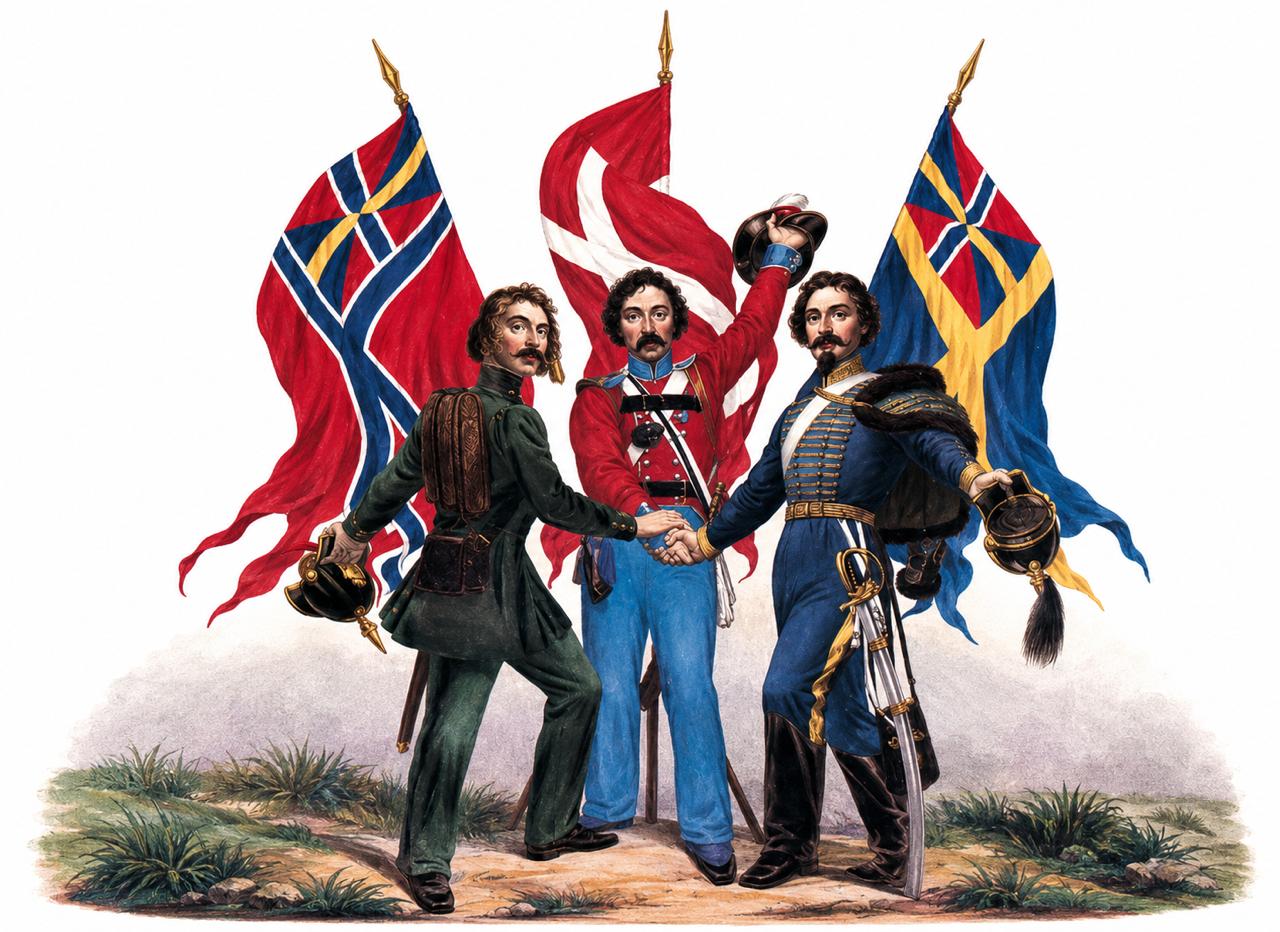
Although student demonstrations emphasized cultural unity, they were not apolitical events. Supporters of Scandinavism argued that the union of Sweden, Denmark, and Norway was no less realistic than the current processes of unification in Germany and Italy. Among students, there was enthusiastic discussion about the possibility of creating a single state under the rule of one monarch as a symbol of harmony, order, and historical continuity.
Kings and the Limits of the Scandinavian Dream
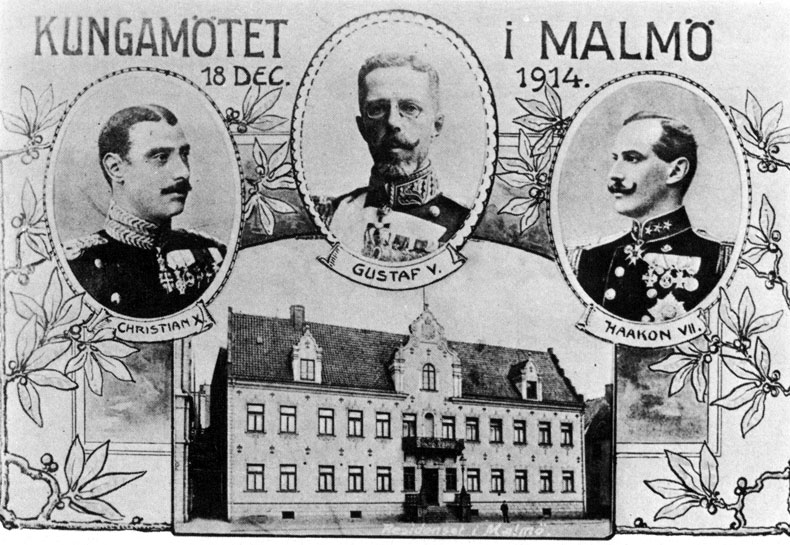
Swedish King Oscar I (1844 – 1859) regarded pan-Scandinavism with cautious sympathy. In 1848, responding to a request from Danish King Frederick VII for help in suppressing pro-German uprisings in Schleswig-Holstein, he agreed to send 15,000 soldiers to the Danish border. Although the war ended before their arrival, the gesture itself had important symbolic significance: Sweden for the first time indicated its readiness to support Denmark not only with words but also with force.
Oscar I demonstratively patronized the pan-Scandinavian student movement. Speaking at a meeting in Uppsala in 1856, he addressed Swedish, Danish, and Norwegian students as the future elite, who would "one day lead the affairs of their [united] Homeland – in science and state administration." His speech easily recognized the rhetoric of pan-Scandinavism: words about the "brotherly" peoples of the North, a common historical destiny, and a supranational northern space. However, this enthusiastic support remained at the level of words and was not backed by concrete political steps.
His successor, Charles XV (1859 – 1872), became a much more decisive supporter of the idea of Scandinavian unity. In the early 1860s, he openly spoke not only about cultural rapprochement but also about the need for a political union of the northern countries. According to the Swedish king, a stable union of Sweden, Denmark, and Norway was possible only with a common dynasty and a single crown.
However, the king's dreams soon collided with the realities of a constitutional state. In 1863, when Denmark was again threatened by Prussia and Austria, Charles XV promised military assistance and agreed to send up to 20,000 Swedish and Norwegian soldiers to Schleswig-Holstein. However, the decisive word no longer belonged to the king but to the Riksdag. The parliament refused to sanction the intervention, and in the 1864 war, only a few hundred Swedish volunteers sided with Denmark.
The defeat of Denmark became a turning point for the pan-Scandinavian political project. It exposed the gap between enthusiastic rhetoric and political possibilities. The idea of military and dynastic unification of Scandinavia failed, leaving behind only the cultural memory of an unfulfilled northern dream.
The Second Swedish Disappointment
The emergence of a new state, Finland, temporarily disrupted the peaceful course of the pan-Scandinavian movement.
In January 1918, a Civil War began there, and many Swedes felt responsible for preventing a communist revolution in the former possession. Swedish volunteers formed a brigade of 1,000 men who went to assist the Finnish "whites."
However, the motivation for Swedish participation in the Finnish Civil War is described more through the prism of Swedish imperialism than pan-Scandinavianism. The rhetoric of many participants in the Swedish Brigade showed clear traces of imperial ambitions. Official publications of the "Swedish Brigade" stated the goal was to protect the "culture and laws inherited from Sweden," rather than Finnish culture or the Finnish people as such. The brigade fought for the "salvation of Finland and the glory of Sweden," where the former was a prerequisite for the latter.
At the beginning of World War II, in October 1939, the heads of the northern states met again in Stockholm to demonstrate solidarity and mutual support.
When the Soviet Union attacked Finland in November 1939, the Scandinavian countries had the opportunity to show their solidarity in practice. Fearing Germany's reaction, they declared neutrality but found ways to support their neighbor without official intervention. Denmark and Norway sent rifles, guns, shells, and even military aircraft to Finland. In Sweden, activists with covert state support raised almost 500 million Swedish kronor and recruited 8,260 volunteers. The Swedish Volunteer Corps arrived in Finland by the end of the Winter War, and to the dismay of Swedish civil society, could not prevent the surrender of Finnish territories. Many volunteers felt that Sweden had betrayed Finland with its insufficient support.
On April 9, 1940, Nazi Germany invaded Denmark and Norway. Sweden again chose to remain neutral rather than intervene in the conflict on the side of its neighbors. Prime Minister Per Albin Hansson made it clear that maintaining peace on Swedish territory was more important than pan-Scandinavian solidarity.
The Nordic Council
Despite disappointment with Swedish inaction, after the war, the northern countries returned to seeking sustainable forms of cooperation that would not infringe on the sovereignty of individual states but would nonetheless strengthen regional unity. A project for a Scandinavian defense union was discussed, but it lost relevance after Denmark and Norway joined NATO in 1949.
Instead of a military alliance, another path was found. In 1952, Sweden, Denmark, Norway, and Iceland established the Nordic Council, a pan-national legislative advisory body designed to coordinate the policies of the northern countries. Finland joined in 1955. Notably, the Nordic Council does not have formal power: each of its decisions is advisory and only takes effect after approval by national parliaments.
The Council's first decision was to create a common labor market and passport union. Citizens of the northern countries gained freedom of movement and the right to work throughout the region without additional permits.
Today, the Nordic Council consists of 87 delegates from five independent countries – Sweden, Denmark, Norway, Finland, and Iceland – and three autonomous territories – Greenland, the Faroe Islands (belonging to Denmark), and the Åland Islands (belonging to Finland). Delegates form supranational political groups based on ideology rather than nationality. As of 2025, the Council has 5 parliamentary groups: social democrats, conservatives, liberals, greens, and right-wing nationalists. Each group includes national parties from different Scandinavian countries. For example, the nationalist group includes the True Finns, the Sweden Democrats, and the Danish People's Party.
An important part of the Council's work concerns cultural cooperation. Through funds, grants, and awards, the Nordic Council supports academic exchanges, joint cultural projects, environmental initiatives, as well as cooperation in the fields of literature, cinema, and music.
Pan-Scandinavian ideas were realized quite differently from what the early ideologists envisioned: not through wars and dynastic unions, but through a common labor market, cultural interaction, and a supranational parliamentary forum.
Scandinavism began as a call to arms to save a crumbling empire. It experienced a romantic rise in the first half of the 19th century, bitter disappointment in 1864, and fragmentation into cultural associations in the second half of the century. At the beginning of the 20th century, it oscillated between an expansionist geopolitical project and a pacifist union of neutral states. The Nordic Council became the result of this long evolution – a rejection of imperial ambitions in favor of cooperation among equal democracies. The Scandinavian countries long lost their status as great powers but gained unprecedented unity of course in the Nordic Council – both in successes and in mistakes.