Political science
Said Zalyaev
Author of the Telegram channel “Slova i konflikty”
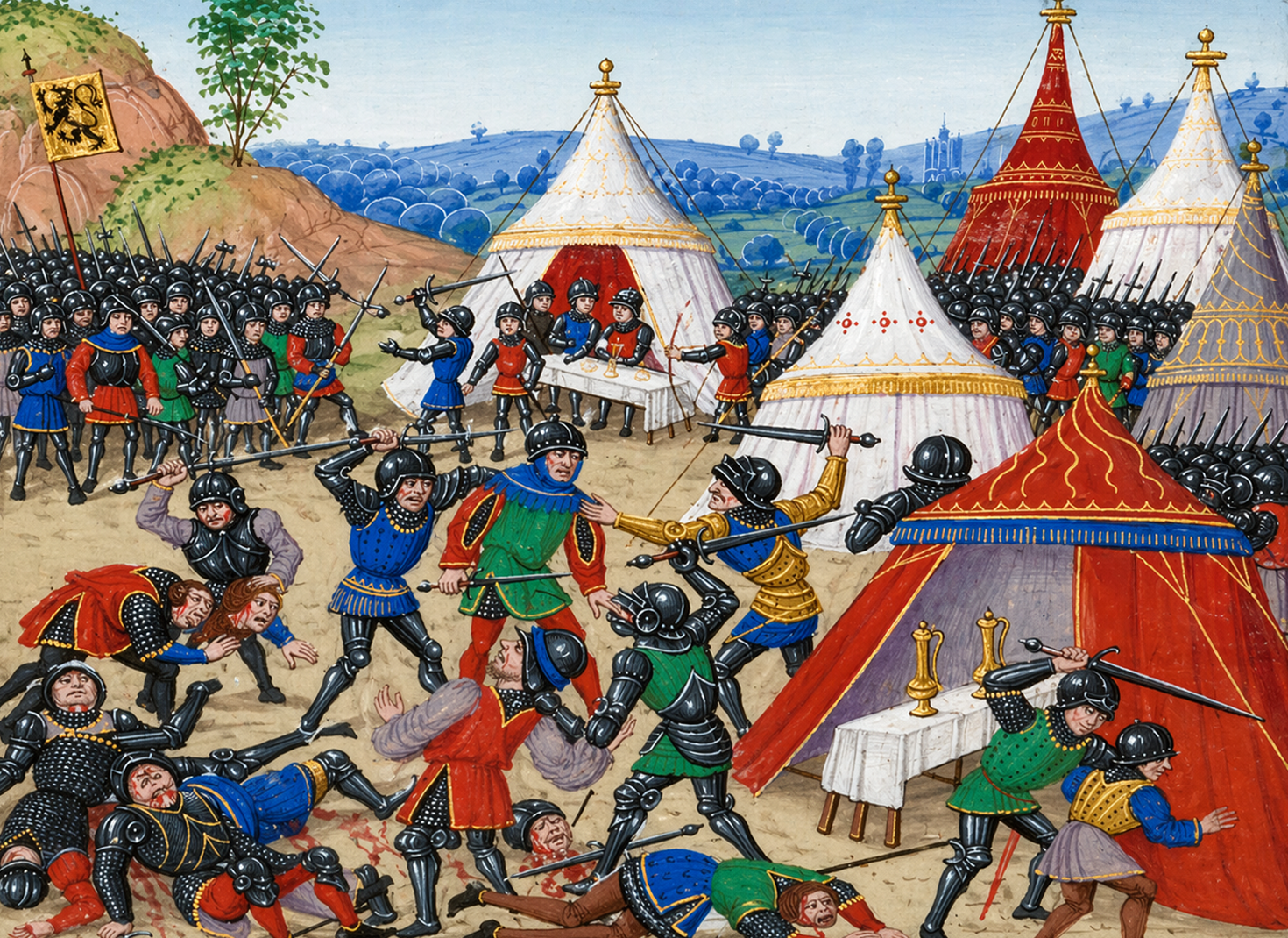
Civil war has the reputation of being the most destructive and aggressive of all types of human conflicts. Nowadays, the risk of civil wars is talked about from every corner, just look at the flashy headlines of American periodicals alone: «The Risk of a New American Civil War» (The New Yorker), «Opinion: Is the US on the brink of another civil war?» (CNN), «More than 40% of Americans think civil war likely within a decade» (The Guardian). The recently released film «Civil War» («The Fall of the Empire») has become one of the most discussed films in the English-speaking segment of the Internet. A similar situation is characteristic of Brexit-era Britain – in 2019, a film starring Benedict Cumberbatch was released with the telling title «Brexit: The Uncivil War». During the crises of the early 2020s, European tabloids were filled with warnings about a possible conflict between left and right radicals: «The new European civil war» (Social Europe), «The Threat of Civil War in Europe» (The American Conservative), «The coming civil war on Europe’s Right» (UnHerd).
The main reason why civil war is eternally a rhetorical "scarecrow" lies in the insufficient understanding of the term itself. As many researchers have noted, there is no great work "On Civil War" that could stand alongside the canonical "On War" by Carl von Clausewitz or "On Revolution" by Hannah Arendt. Until now, civil war has not been given separate consideration, which has led to the term being used without much caution, acquiring vague and slippery features.
As correctly noted about the ontological confusion of the term by the representative of the "violence studies" direction, Stathis Kalyvas:
"The process of classifying civil wars often resembles opening a matryoshka doll: one layer of interpretation pulls another, resembling an endless and unsolvable search for the 'true' nature, supposedly hidden deeper."
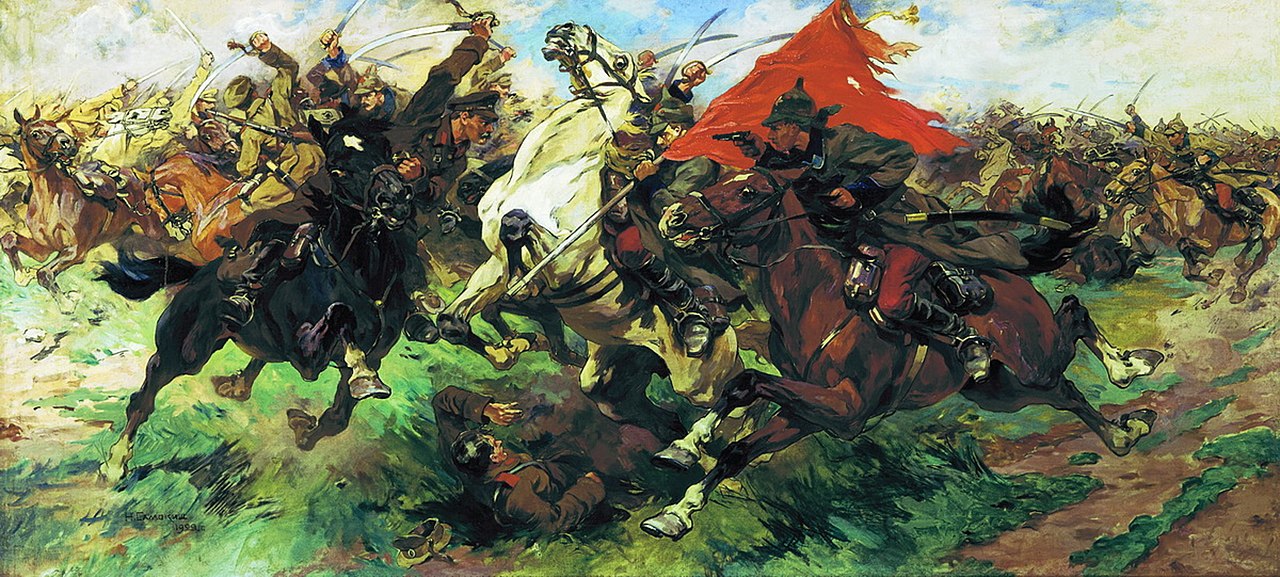
Often due to such confusion, even the most renowned researchers of state breakdowns prefer to push the phenomenon of civil war to the background. For example, the major classic in this field, Theda Skocpol, although she distinguished between revolutions and civil wars, did not explain their essential difference or interconnection. The situation was not eased by Skocpol's main follower, Jack Goldstone, who decided to divide internal wars into several types. What happened in Russia from 1917 to 1922, according to him, would be more appropriately called a "revolutionary civil war," as it not only occurred after the revolution but also mobilized all those who enjoyed privileges under the Old Regime, and even those who simply did not want any changes. If the agents of the October Revolution did not have a "dream of realizing a new vision of social justice," the conflict that flared up could simply be called a "civil war." Later, Goldstone himself acknowledged the conditional nature of this division, doubting the correctness of even using the term "revolution," preferring to replace it with the phrase "social breakdown."
The conditional nature of defining civil war was also noted by the aforementioned Kalyvas:
“A more accurate term would be ‘internal war’” – he wrote – however, the term ‘civil war’ is still more familiar and commonly used. It is an ‘armed confrontation’ (this concept implies some organization of each side and a certain violence of actions), undermining the authority of the current government, which can serve various purposes, but some of them are quite definitely political.”.
The problem with this definition lies in its excessive generalization. Kalyvas calmly analyzes the events of the Peloponnesian War, the feudal war in Japan, the German occupation of Soviet territories during World War II, the Vietnam and Iraq campaigns of the USA as equivalent episodes of civil wars, although the difference between the extreme events is almost two and a half thousand years.
Of course, listing authors can go on endlessly. Some analyze civil war from a philosophical-political paradigm, while others do not bother to define terms at all. What is important in this path is one thing – the problem of civil war has deep historical roots that need to be considered.
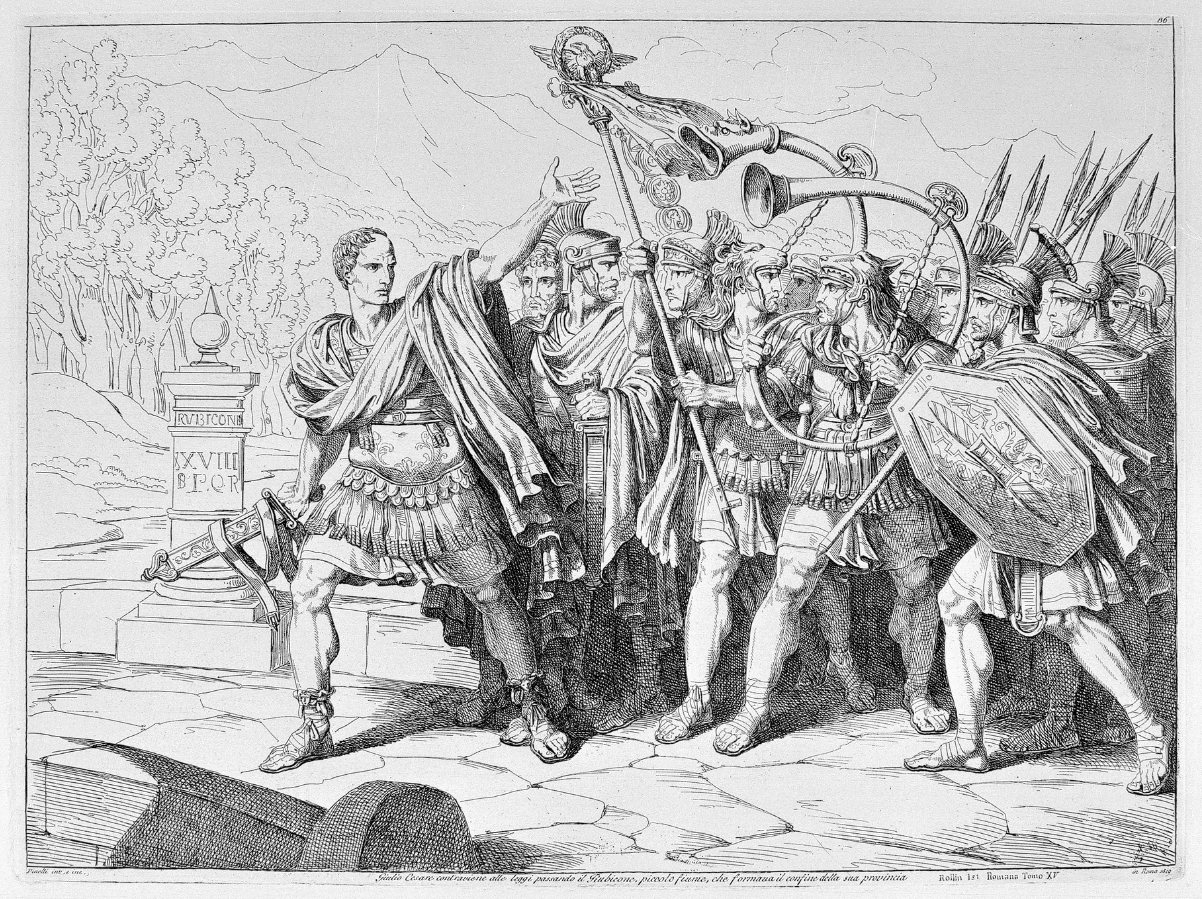
For the first time, the term “bellum civile” (from which “Civil war”, “Bürgerkrieg” and “гражданская война”) is encountered in Cicero's enthusiastic speech in favor of Pompey the Great in 66 BC. For the Romans, the phrase “bellum civile” was contradictory and somewhat taboo. For any Roman citizen, it was obvious that bellum (i.e., “war”, in the manner of the Greek “polemos”) could only be waged against people outside the civic community. This feature is well seen in the names of Roman campaigns: “Punic War” (i.e., war directed against the Carthaginians), “Gallic War” (war against the Gauls), “Slave War” (war against Spartacus), etc. “Bellum civile” (war of citizens) for contemporaries was a clear oxymoron. Internal wars, previously seen as misunderstandings (between Sulla and Marius, between Caesar and Pompey, between Octavian and Antony), with the beginning of our era become constant companions of Roman history. Thanks to Tacitus, Horace, Sallust, Appian, and many other intellectuals of Antiquity, a strong narrative is created about a cursed empire mired in constant internal war. This narrative, thanks to the efforts of Blessed Augustine, contributes to the development of a later understanding of civil war in early modern Europe.
After the revival of classical education during the early Renaissance, Italian scholars and students began studying poetry and rhetoric through classical Latin texts by Caesar, Sallust, Tacitus, and Cicero. Gradually, these works began to penetrate Europe and exert an incredible influence on contemporaries. For example, Lucius Florus's "Epitome of Roman History," which contained plots from the civil wars of Marius, Caesar, and Pompey, became the main textbook on history at Oxford.
With the beginning of the 16th century, the phenomenon of civil war began to be perceived again through the prism of forgotten ancient tradition. Clashes between Spanish conquistadors in the New World were increasingly referred to by contemporaries as "tragic civil wars." Religious wars were often also called civil wars. One of the greatest English historians and writers, Samuel Daniel, in 1595 wrote the greatest historical epic "The Civil Wars Between the Houses of Lancaster and York." Following him, inspired by parallels with Rome, William Shakespeare began writing a historical chronicle about Henry IV. In 1637, the work of the Italian Francesco Biondi, dedicated to the history of the civil war of the Red and White Roses in England, became popular.
Gradually, by the mid-17th century, discussions about the nature of civil war moved from the realm of poetry and history into the realm of emerging political theory. According to the founder of political science, Thomas Hobbes, civil wars are unleashed precisely when there is a division of sovereignty, when a new entity is born within a single political body. Since Leviathan (i.e., the state) is a mortal god, any rebellion or internal war is akin to suicide or a deadly disease for it. Hobbes, openly expressing his aversion to any uprisings against supreme authority, made the prevention of political turmoil the main goal of civil philosophy.
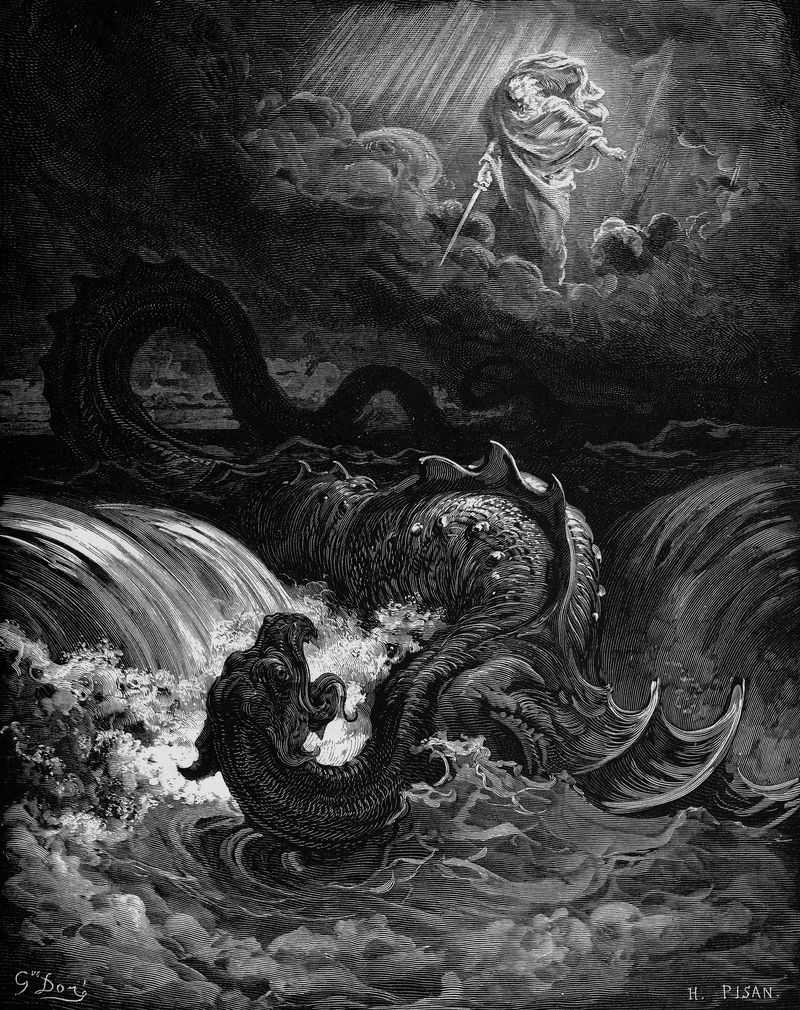
A different perspective was held by the equally great theorist of the 17th century, John Locke. Although he agreed that civil war leads to the disappearance of the state, the collapse of civil society, and a departure from civilization, he still recognized the legitimate right of the people to resist. In cases where legislators attempt to take away or destroy the people's property or subject them to the slavery of despotic power, they put themselves in a state of war with the people, who as a result are freed from any obligation of obedience.
By the mid-18th century, the musings of representatives of the English Enlightenment on the nature of civil wars found their response in the emerging theory of international law. The most authoritative jurist of his era, Emer de Vattel, unlike Hobbes or Locke, paid no attention to the chaos accompanying civil war. Vattel was interested in a much more intriguing matter: the situation in which Leviathan grows a second head, leading not only to the destruction of a unified state but also to the creation of entirely new political entities. From this, it followed that new representations formed from the fragments of a destroyed state acquired sovereignty based on the principle of having their own authority, laws, army, and independence. Thus, any internal war where the people are freed from their old obligations escalates into an "international" one. Adhering to the right to national self-determination, other sovereign states are fully entitled to enter the raging conflict as if it were a war between two equal states. It seems unsurprising why Vattel's work "The Law of Nations" played the role of a true "desk Bible" for the Founding Fathers. The principle of national sovereignty would be laid in the foundation of the United States Declaration of Independence.
At the end of the 18th century, there was a sharp turn in all political thought. The source of reflection was once again a revolution, this time the French one. After active reflection on the events of 1789, the concepts of "revolution" and "civil war" found themselves in fierce opposition. For some, this may seem counterintuitive, but the term "revolution" is significantly younger than its terrible "sibling."
Although revolution as a political phenomenon began to be written about as early as the 17th century, the term existed in several linguistic traditions. On one hand, ancient roots made themselves known: the Latin term "revolution," formed from the verb "revolve," implies an action suggesting a return back or a transformation into a previous state. On the other hand, under the influence of Italian thinkers and events in 17th-century England, the term acquired political meanings—revolution came to be characterized as a spontaneous and uncontrollable phenomenon leading to a change of regime.
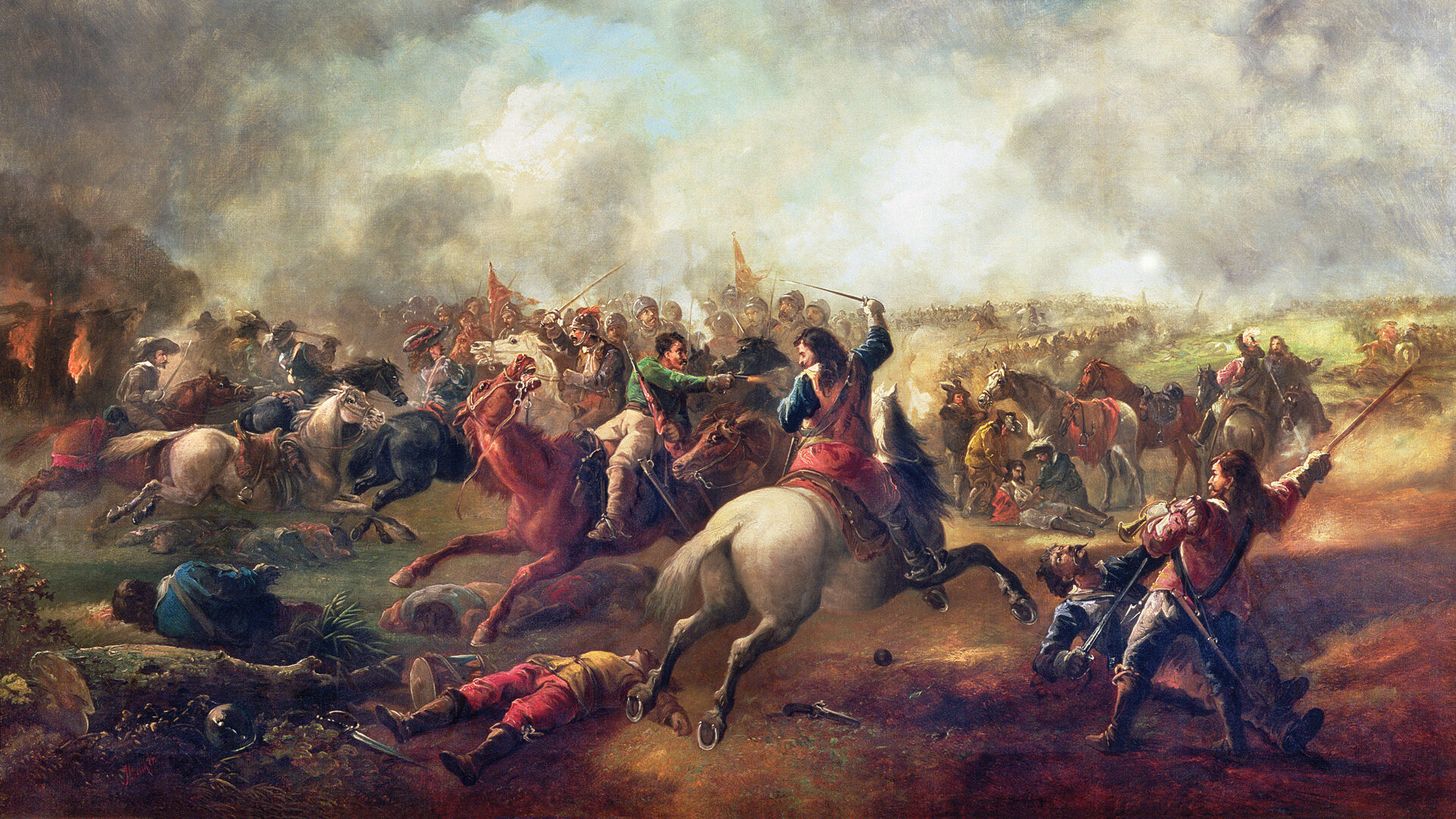
The linguistic dualism of the revolution is well expressed in the words of a character from Hobbes' "Behemoth" about the events of 1649 – 1660:
"I saw this revolution as a circular movement of Sovereign Power through two usurpers, Father and Son [Oliver and Richard Cromwell], from the late King to his Son [Charles I and Charles II]".
Later, the "Glorious Revolution" of 1688 became part of the general revolutionary context of the 17th century and acquired the features of the final stage of a process that restored the "old order" of things.
However, the distinctive feature of the French Revolution was its distinctly progressive and utopian character, expressed literally in all spheres: education, morality, law, politics, and religion. Eric Hobsbawm called the French Revolution a turning point in all European history. It was then, in his opinion, that the "Age of Revolutions" began, which was to unfold a liberating expansion throughout the world. The revolution, from a phenomenon beyond human control, turned out to be a source of sovereign power, in whose name any political violence could be proclaimed in defense of the new regime.
Of course, there were those who continued to uphold the old principles of the cyclical nature of revolution. The founder of conservatism, Edmund Burke, used the comparison of the situation in France with the period of the "Glorious Revolution." According to him, the main difference in the English experience lies in the principles of "preservation and correction," where the general structure of statehood is not destroyed but only restored in favor of lost rights and freedoms. In turn, the true essence of what was happening in France, Burke continued, was a civil war, where the face of the French nation was represented by royalists. Although these musings ultimately create a conservative point of support, where the dominant principle was the "conservative revolution," the progressive view still turned out to be dominant in Europe.
The concept of revolution gradually began to be contrasted with the concept of civil war. The most famous victim of this "rebranding" was the Anglo-American conflict of 1775 – 1783. At the time of the events themselves, the term "civil war" was freely used by journalists, congressmen, representatives of the British government, and parliament. In the midst of the conflict, a historical novel by writer Samuel Jackson Pratt, "Emma Corbett or the Miseries of Civil War," was even published. As mentioned above, there were grounds for such a designation because among the colonists there was a split between "patriots" and "loyalists." On the side of the British crown, in addition to slaves and the indigenous American peoples of the Mohawk and Cherokee, there were about half a million white people out of a total of 2.2 million colonists. Approximately 19,000 of them volunteered for the British army. After the end of the war, about 60,000 "loyalists" emigrated from the USA, mainly to British Canada. However, after the French Revolution, Americans increasingly began to use the term "American Revolution" to emphasize the progressive nature of the War of Independence.
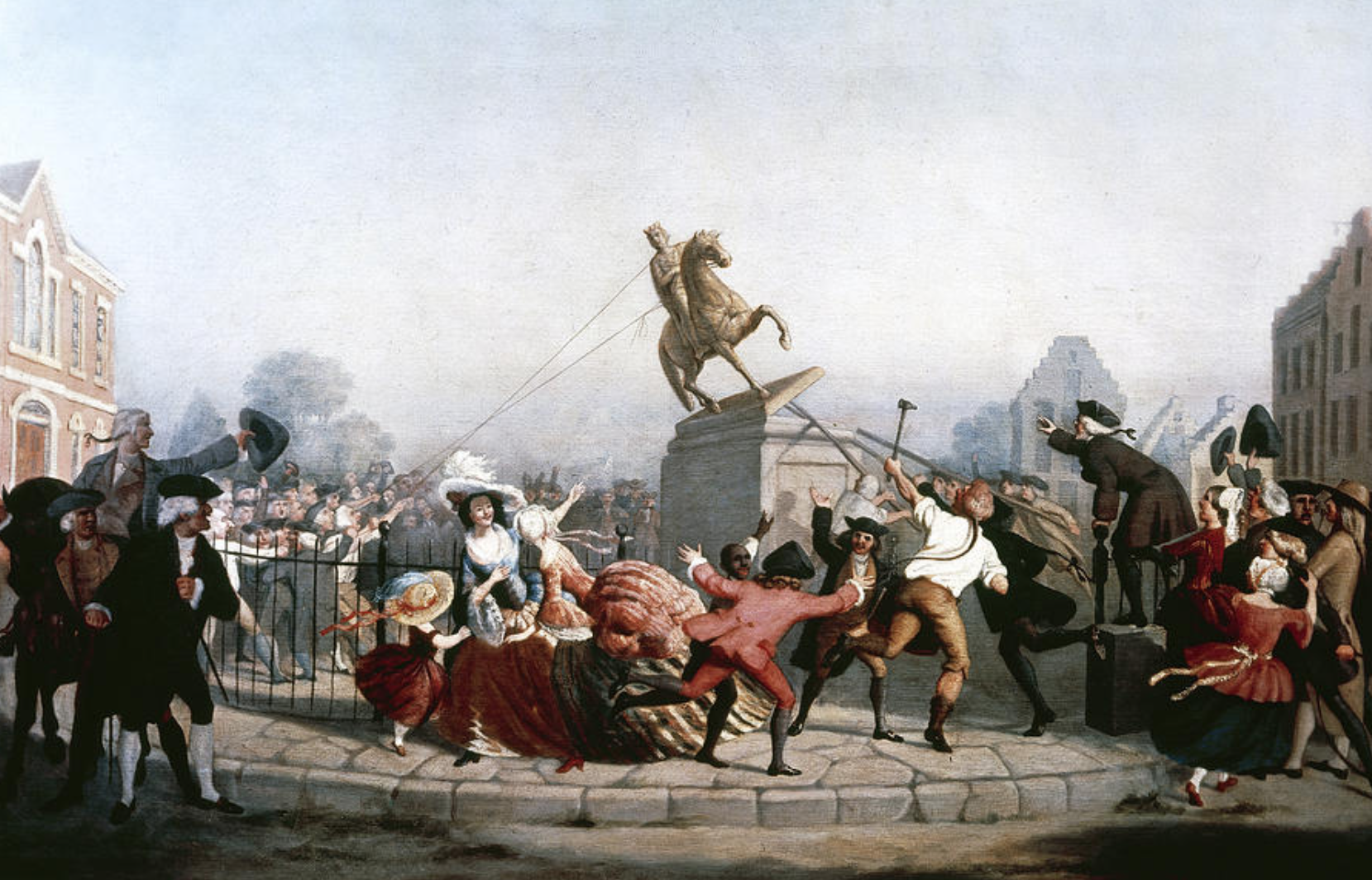
In general, the influence of the French Revolution was so enormous that it fundamentally changed the established semantics of words. Throughout the 19th and early 20th centuries, a huge number of intellectuals were engaged in spreading revolutionary ideals that opposed the old reactionary monarchical system. The Civil War, however, completely fell out of political and legal connotation and became identified with the terrible "paralysis" of civil society. For example, during the American War of 1861-1865, neither side of the conflict wanted to acknowledge the outbreak of a civil war: while the Northerners positioned the conflict as the suppression of an unconstitutional rebellion, the Southerners proclaimed the beginning of an international war between independent American states - "War Between The States."
In Russia, after the February Revolution at the April All-Russian Conference of the RSDLP(b), the Bolsheviks were forced to take into account the growing fear of the population of civil war, so they adjusted their public position and temporarily removed the slogan of turning the imperialist war into a civil war.
Throughout the 20th century, the term "civil war," like the term "genocide," stirred the minds of the international community, but nevertheless remained rather vague in its definition. The intention to limit internal conflicts was reflected in the protocols of the Geneva Conference of 1949. However, after the start of the "Cold War" and the outbreak of dozens of proxy wars around the world, more clarifications were needed. In 1975, the Wiesbaden Protocol was drawn up, which served as the basis for the Additional Protocols of 1977. But even in this case, it all came down to the international community's definition of whether a particular conflict was of a non-international character or not.
The crisis in this area is illustrated by numerous disputes around the International Tribunal for the former Yugoslavia (ICTY). One of the accused by the ICTY was Bosnian Serb Dusko Tadic, who claimed that the tribunal had no right to judge his actions, as the statute establishing the tribunal applies only to international armed conflicts. In response, the Appeals Chamber ruled that under Article 39 of the UN Charter ("Threat to Peace"), internal conflicts could also fall, as was the case during the Congolese crisis of the 1960s or during the civil wars in Liberia and Somalia in the 1990s.
The situation is not simple with the war in Syria, which began in 2011. As David Armitage rightly pointed out, not everyone agrees to call this conflict a "civil war." The Assad regime saw it as an attempt at an unconstitutional uprising, the opposition perceived themselves as participants in a "revolution," and world powers, mainly the USA and Russia, fiercely debated the status of the conflict in the context of the right to intervention. Some researchers suggested calling this conflict a "regional war," as within a few months from the start of the uprising, almost all regional forces intervened: Iran, Hezbollah, Turkey, Jordan, Israel, Saudi Arabia, and Qatar.
Thus, the study of internal conflicts is a relevant task for a very understandable reason - most modern conflicts can be classified as "internal." However, among researchers, there is still no consensus on the measurement and definition of civil war. Even conventional agreements do not always allow for a clear determination of the form of the conflict that has flared up. It is not uncommon for the participants in internal wars themselves to avoid classification, preferring to use general terms such as "turmoil," "anarchy," "revolutionary war," etc. Without reconstructing the meaning and usage of words, it is impossible to formulate a general concept and ontology of the term, which we, unfortunately, still observe today.