Architecture

Danil Golovin
Historian
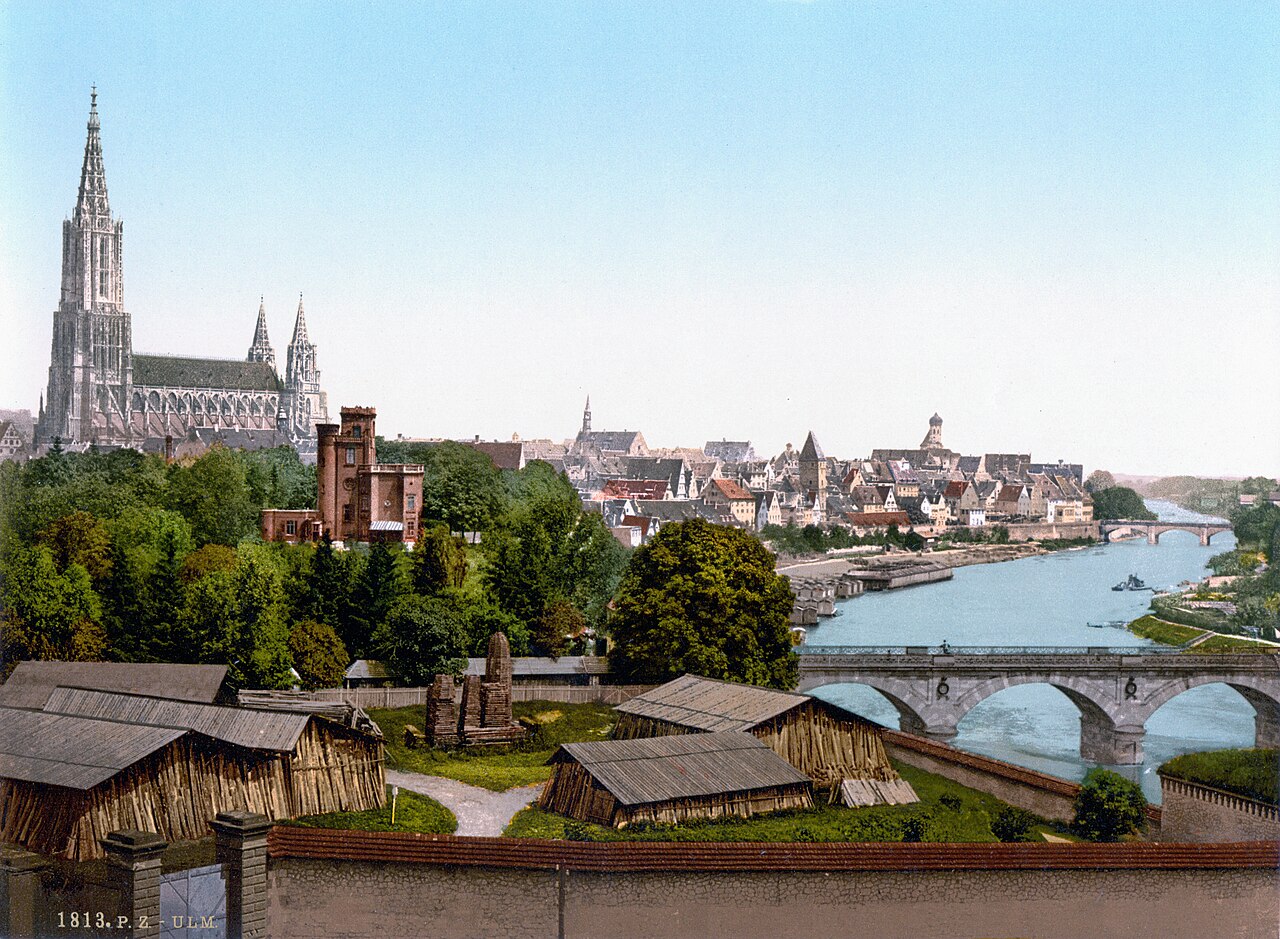
If Gothic held a "Who is the Tallest?" contest, the Ulm Minster would take first place. Its spire soars to a height of 161.5 meters – until October 2025, it was the tallest church tower on Earth, until it was surpassed by the under-construction Sagrada Familia in Barcelona. More than five centuries passed from the laying of the cathedral's foundation in the late 14th century to its final completion in 1890.
How did medieval European architecture make the shift from the austere romance to the skyward-reaching Gothic?
Gothic
The Romanesque style began to spread across Europe starting from the 11th century. It was based on the scheme of the Roman basilica—a secular building that in ancient times served as a market, a court, and a place for public gatherings: an elongated rectangular space divided by columns into naves with a raised central nave where light penetrated through narrow windows. Such buildings rarely impressed with their grace: minimal decoration, maximum stone. They were built like fortresses, and the aesthetics were subordinate to the idea of protection and stability.
With the "Renaissance of the 12th century," a new architectural style began—Gothic, in which buildings ceased to be constructed as fortresses and began to embody a striving for light. Romanesque architecture relied on semicircular arches—strong but "spreading" sideways, causing the walls to "thicken." Gothic masters replaced them with pointed (ogival) arches, which transferred the load of the horizontals downward rather than sideways. This allowed for taller and more graceful constructions.
The key element of Gothic architecture became the ribs—framework ribs that supported the vault. From the simplest ribbed vaults, entire families of complex and intricate vaults of various kinds developed. By adding additional ribs to the ribbed vault, a star pattern was created. Ribs emanating from one corner formed a fan vault. Finally, vaults without diagonal ribs were called net vaults.
Another engineering marvel of Gothic architecture was the "flying buttresses," which seemed to "fly" beyond the building and connected to it via arches – arc-boutants. This diverted the lateral pressure from the vaults outward, allowing the walls to be built almost weightlessly, so that they rather "covered" the building than supported it.
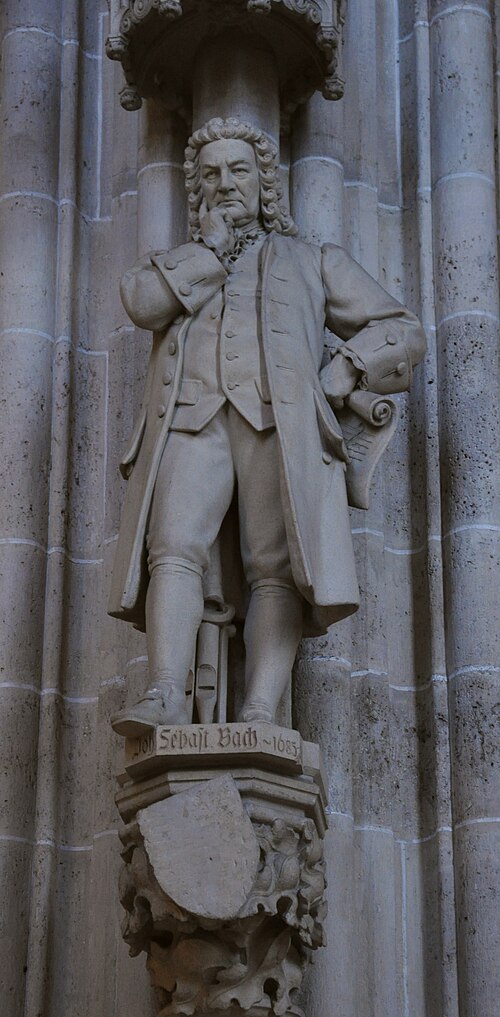
Of course, one cannot forget the rich sculptural decoration that adorns Gothic cathedrals. Statues and bas-reliefs tell religious stories while simultaneously highlighting the architectural features of the building. Sculptures accentuate entrances, lighten the weight of individual parts, serve as water spouts, or reinforce corners – all of this turns the cathedral into a living encyclopedia and a remarkable union of art and engineering.
Special attention was paid to portals or entrances. Usually, there are three: the central one is the largest and most ornate, while the two on the sides are more modest. Starting from the 13th century, a high triangular pediment called a wimperg was placed above the portals. Its edges were often decorated with carved plant curls (crabs), and it was topped with a carved finial (crock).
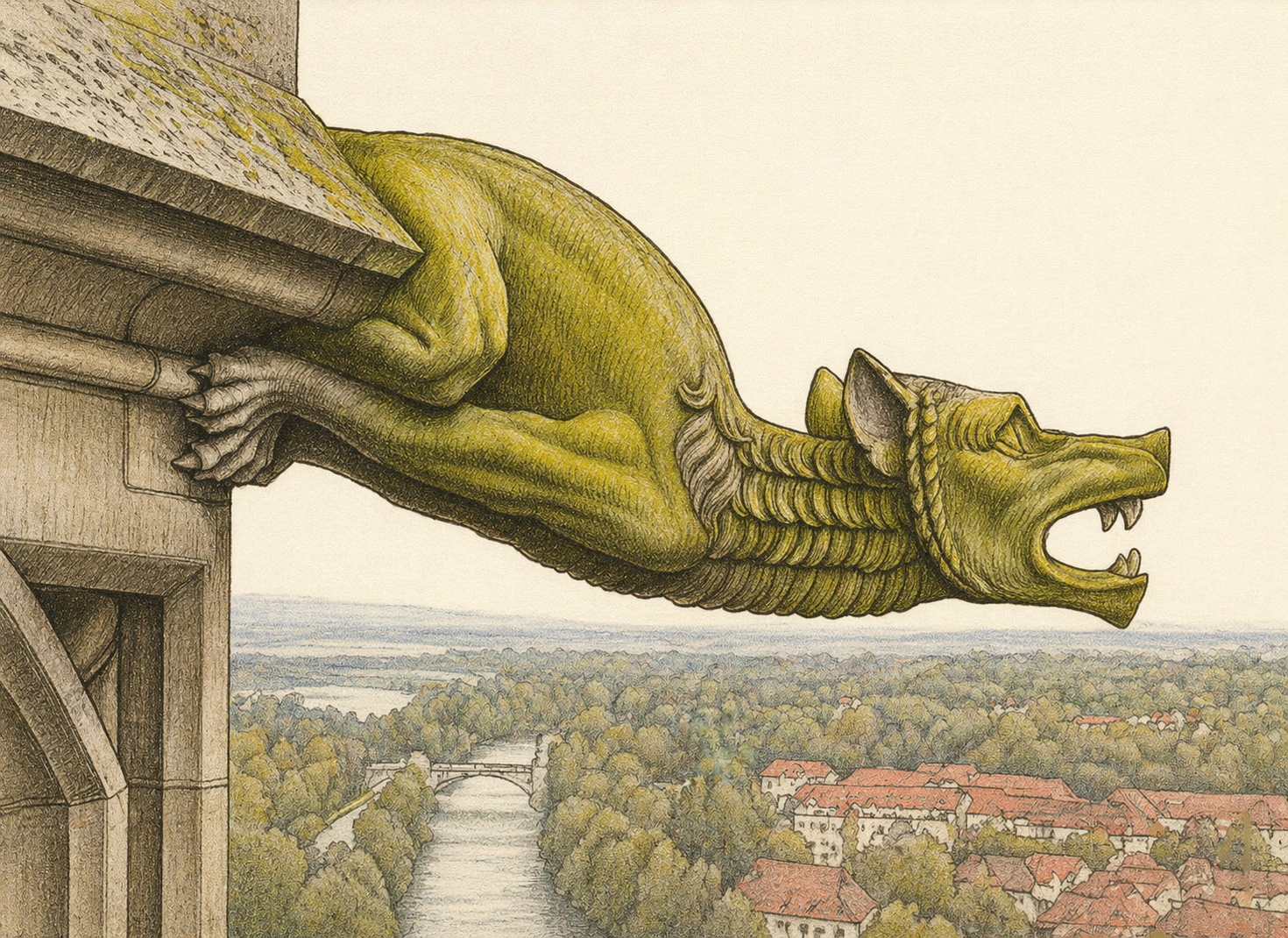
Gargoyles were carved in the form of fantastic beasts protruding beyond the cornice, as if guarding the cathedral. Their relatives are the chimeric figures on towers and galleries—fantastic creations with features of humans, animals, or mythical creatures.
Windows occupy a special place in the appearance of a Gothic cathedral. There are two main types: rectangular with an arched top and round. The former are most often multi-part, with two, three, or even more sashes assembled into a single frame. In late Gothic, special attention was paid to the design of window tracery: "flaming" forms and "fish bladder" motifs emerged, creating sinuous lines as if flames were breaking through the stone. Such solutions allowed for endless variations in compositions.
Rose windows—"wheels" with radial divisions—were already found in Romanesque architecture. However, Gothic made them enormous, with curved, complex tracery filling the facade and transforming sunlight into a miracle of colored brilliance.
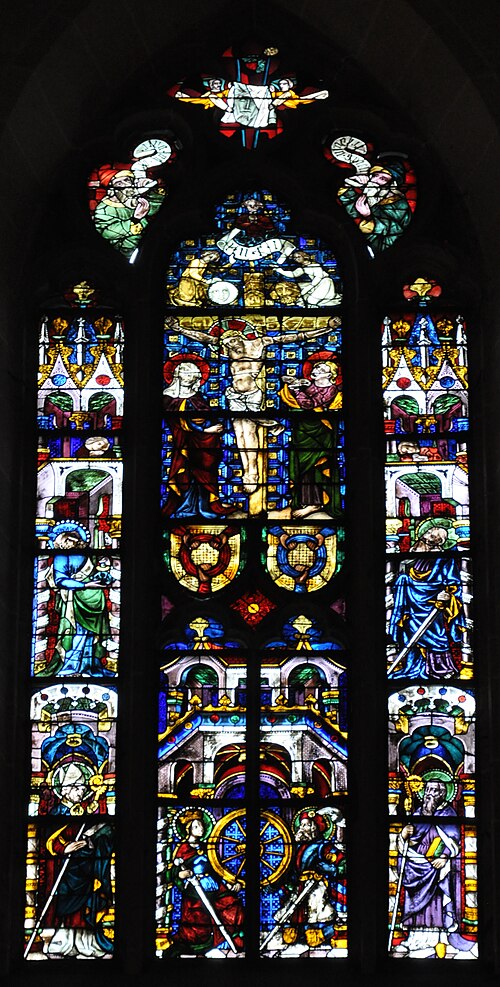
Ulm Cathedral
Ulm is a city in southern Germany on the border of modern Baden-Württemberg and Bavaria. In the 14th to 16th centuries, it flourished as a Free Imperial City located on trade routes between Germany and Italy. As a center of trade and art, Ulm needed to reflect its status in a giant Gothic cathedral.
Work began in 1377 on the site of the old Church of St. Martin. By the 16th century, most of the cathedral was completed, but in 1543 construction was halted for the next 300 years. During the Reformation, Ulm adopted Protestantism and was no longer interested in Gothic luxury, while the decline in trade with Italy and the reorientation of trade routes to the Atlantic significantly reduced the city treasury. The cathedral tower remained unfinished at the level of 100 meters.
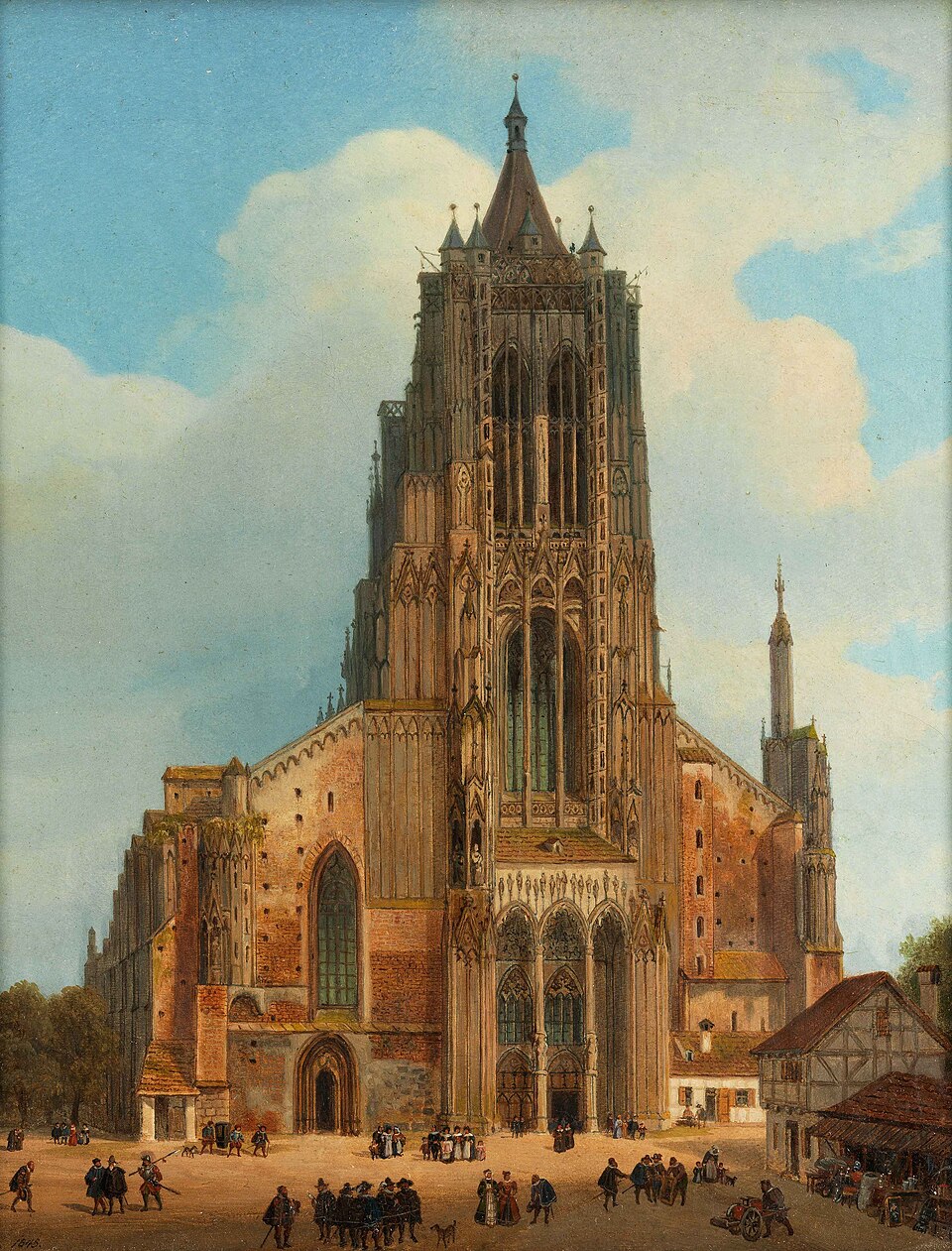
The resumption of construction, postponed for 300 years, took place in 1844 during the wave of Romanticism, which focused on the medieval past. The building was finally completed by 1890 in the unified German Empire. The cathedral successfully survived all the trials of the 20th century and even withstood the Allied bombings in 1944-1945.
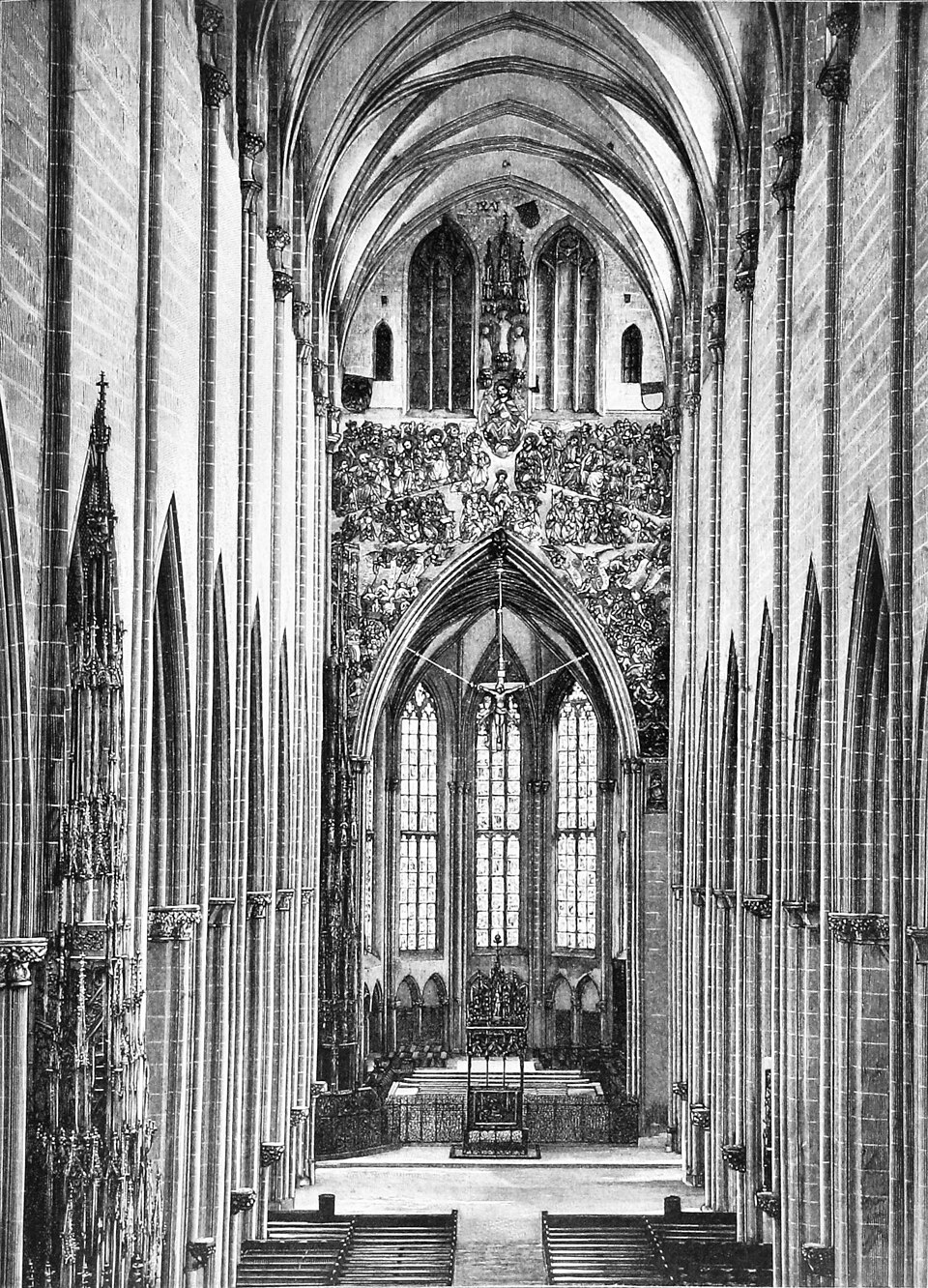
What makes the Ulm Cathedral the pinnacle of Gothic architecture? It is not just a building with a high tower, but a true textbook of Gothic, written in stone. The main nave—long, tall, and narrow—directs the gaze straight upwards. Perpendicular to it stretches the transept—a transverse nave, giving the building the shape of a cross.
One of the main architectural elements is the ribbed vaults. The ceiling of the cathedral is like a network of arches intersecting at certain angles. These ribs serve as a strong "skeleton" on which the entire vault rests. Huge spaces are spanned without the need for heavy walls.
And, of course, the cathedral's calling card is its tower, crowned with a spire 161.5 meters high. It starts with a rectangular base and rises upwards, gradually transforming into an octagonal spire adorned with decorations from stone crosses to miniature turrets and carvings, creating an illusion of lightness and flight.
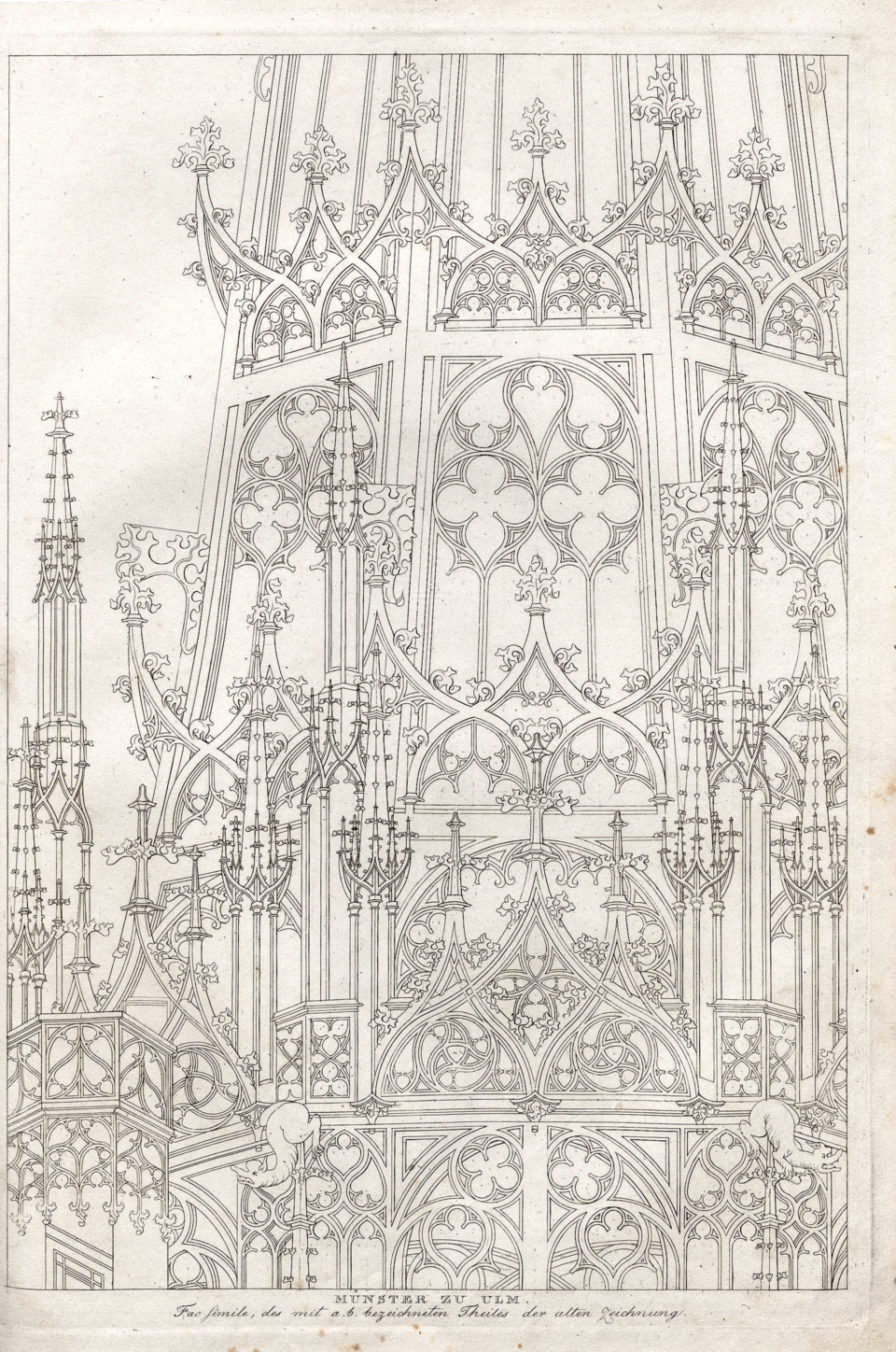
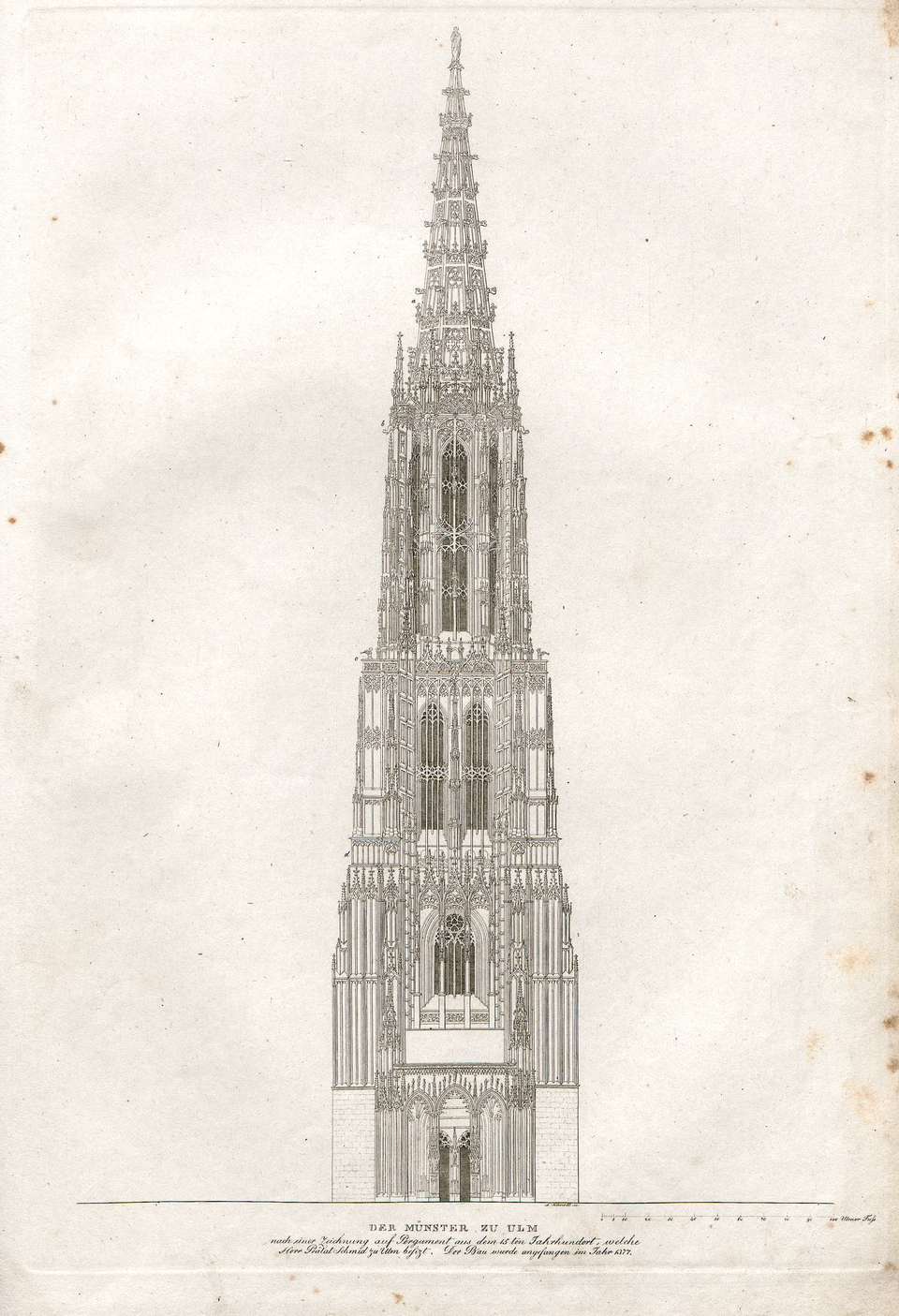
Ulm Cathedral is a vivid example of how technical achievements can serve artistic effect. Ribbed vaults, pointed arches, buttresses, and flying buttresses are not just structural elements, but tools for creating an atmosphere of elevation and light, reflecting engineering thought, the evolution of society, religion, and art.